- Women's Market
- Sofia's Synagogue
- Banya Bashi Mosque
- Central Mineral Baths
- Statue of Sveta Sofia
- Sveta Petka
- Church of St. George
- The Archeological Museum
- Ivan Vazov National Theatre
- Royal Palace
- Russian Church
- Central Military Club
- Saint Sofia Church
- Alexander Nevsky Cathedral
- National Assembly
- Monument to the Tsar Liberator
- 16 sights
- 0 h 53 min
- 4.45 km / 2.77 mi

Sights
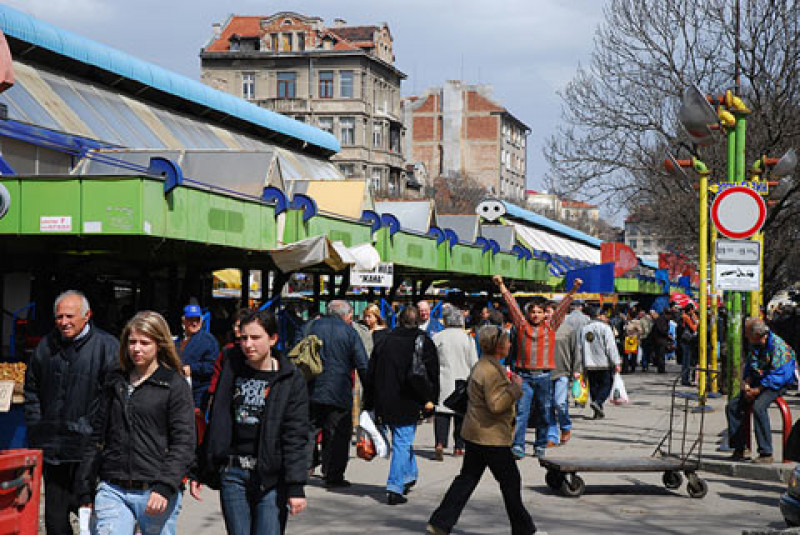
Women's Market
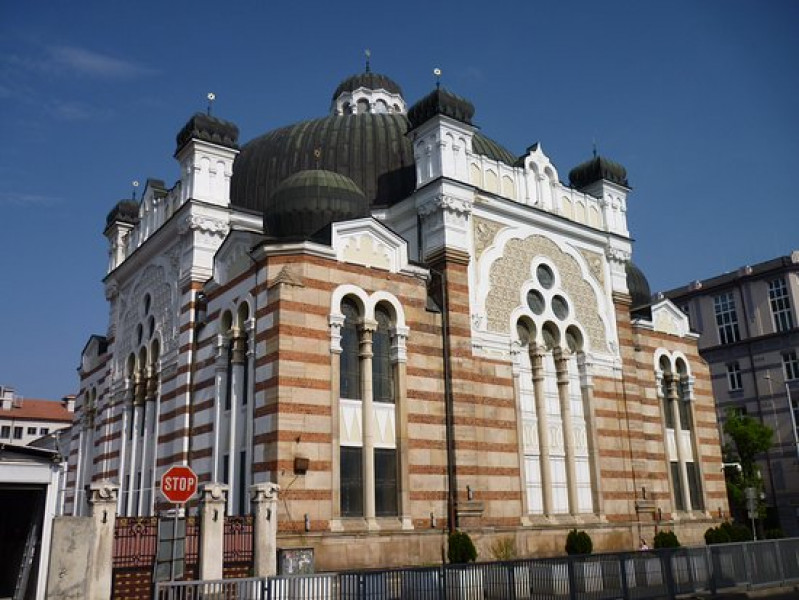
Sofia's Synagogue
The Sofia Synagogue is the largest synagogue in Southeastern Europe, one of two functioning in Bulgaria and the third-largest in Europe.Constructed for the needs of the Bulgarian capital Sofia's mainly Sephardic Jewish community after a project by the Austrian architect Friedrich Grünanger, it resembles the old Moorish Leopoldstädter Tempel in Vienna and was officially opened on 9 September 1909 in the presence of Tsar Ferdinand I of Bulgaria. The first preparations for the synagogue's construction date to 1903, while the construction itself had begun on 13 November 1905. The construction of a grand new synagogue was part of the reorganization efforts of the Bulgarian Jewish community under Lemberg-born Chief Rabbi Marcus Ehrenpreis and local leaders Ezra Tadjer and Avram Davidjon Levy. Prior to the construction of the new synagogue, the lot in central Sofia had been occupied by an older synagogue. One of the architectural monuments of Sofia, the synagogue, located in the very centre of the city near the Central Market Hall, can accommodate 1,300 worshippers. The Sofia Synagogue's main chandelier weighs 1.7 tons and is the largest in the country. Despite the building's size, the services are normally only attended by some 50 to 60 worshippers due to the aliyah of most of Bulgaria's Jews to Israel and the secularity of the local Jewish population. The architectural style is essentially Moorish Revival, with elements of the Vienna Secession and, in the facade, Venetian architecture. The main premise has a diameter of 20 m and is 31 m high. It is topped by an octagonal dome. The interior is richly decorated, featuring columns of Carrara marble and multicoloured Venetian mosaics, as well as decorative woodcarving. The entire building takes up 659 m². The biggest chandeliere in the Balkans is there and the rumor said it is made from gold from Ancient Palestine. Since 8 May 1992 the Sofia Synagogue also houses the Jewish Museum of History, which includes the Jewish Communities in Bulgaria and the Holocaust and the Salvation of the Jews in Bulgaria expositions. A souvenir shop is also in operation.
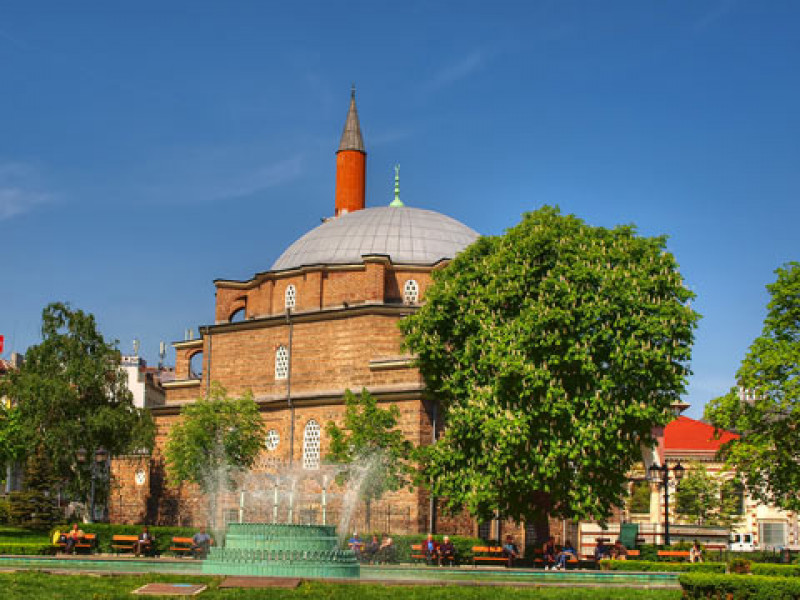
Banya Bashi Mosque
Banya Bashi Mosque is a mosque in Sofia, Bulgaria, built by the architect and civil engineer Mimar Sinan.
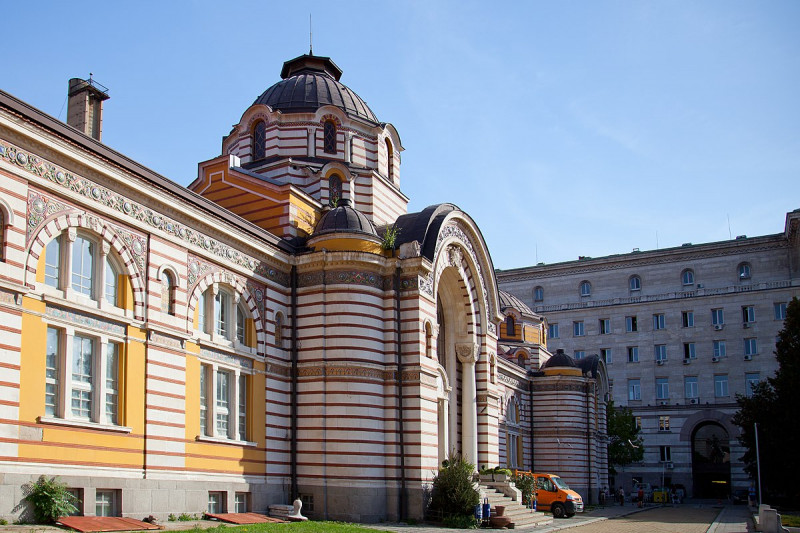
Central Mineral Baths
The Central Mineral Baths is a landmark in the centre of Sofia, the capital of Bulgaria, a city known for the mineral springs in the area. It was built in the early 20th century near the former Turkish bath and was used as the city's public baths until 1986. Public baths have existed in Sofia since at least the 16th century. During Hans Dernschwam visit to Sofia in 1553–1555, the Bohemian traveller noted the presence of 1 large bath and 2 smaller baths on either side of the city. Dernschwam described the baths as follows: The current Central Mineral Baths building was designed in the Vienna Secession style, but integrating typically Bulgarian, Byzantine and Eastern Orthodox ornamental elements, by the architects Petko Momchilov and Friedrich Grünanger in 1904–1905 and approved on 30 January 1906, as projects by an Austrian and a French architect were declined. The raw construction was finished in 1908 and a Bulgarian company constructed the complex roof and the mineral water conduit. The baths opened on 13 May 1913, but the building was completely finished after 2 more years and a garden was arranged in front of the baths. Artists Haralampi Tachev and St. Dimitrov designed the building's ceramic majolica decoration.The north wing was damaged during the bombing of Sofia in World War II, but was restored several years later. The baths continued to work as public baths until 1986, when the building was closed due to its bad condition and the possible collapse of the roof. It was subsequently partially reconstructed and thoroughly cleaned and accommodates the Sofia Regional Historical Museum since September 2015.
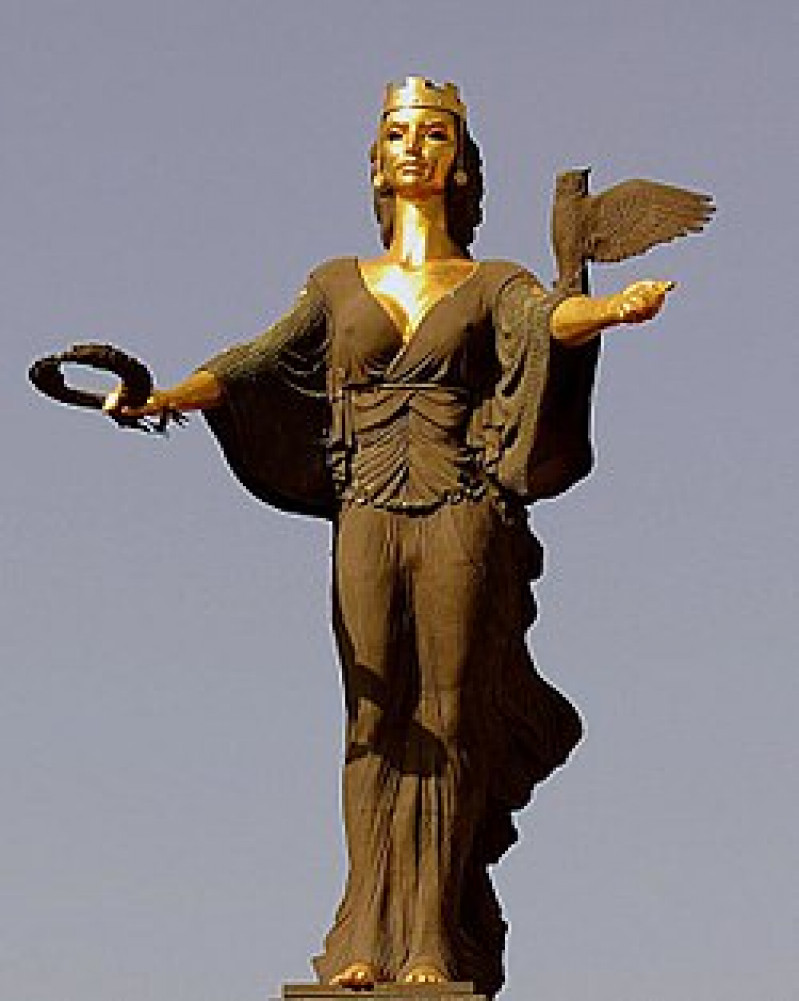
Statue of Sveta Sofia
The Statue of Sveta Sofia is a monumental sculpture in Sofia, Bulgaria. The statue, erected in 2000, stands in a spot once occupied by a statue of Lenin.Sophia was considered too erotic and pagan to be referred to as a saint. 24 feet in height, the copper and bronze statue by the sculptor Georgi Chapkanov, stands on a 48 feet high pedestal. Adorned with the symbols of power , fame and wisdom , the crown is also a reference to the Goddess of Fate – Tyche, inspired by the old emblem of Sofia dating back to 1900.
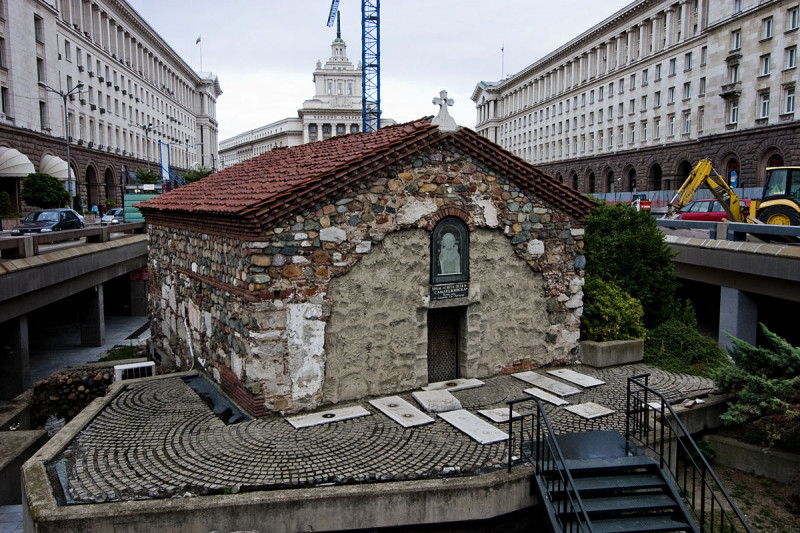
Sveta Petka
Sveta Petka is the Bulgarian, Serbian and Macedonian name for Saint Parascheva of the Balkans, which may refer to:
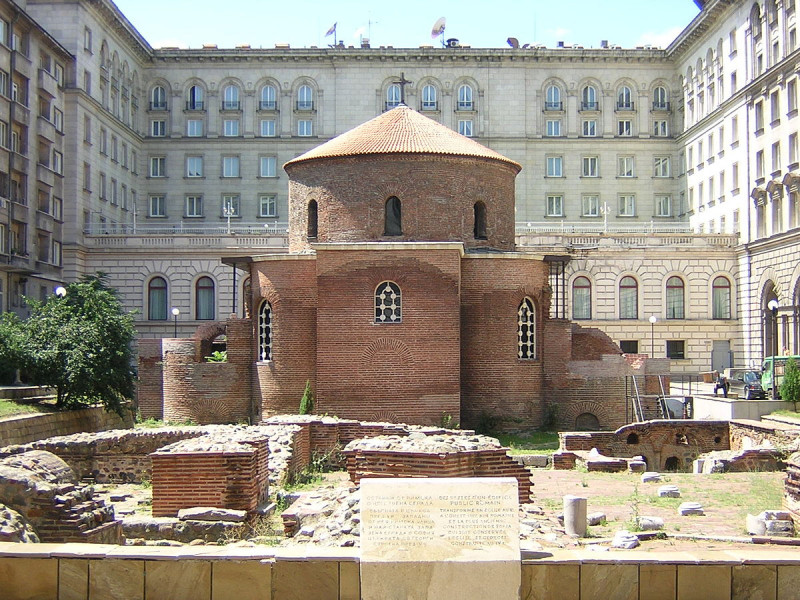
Church of St. George
For a larger gallery of church images, please see: Saint George's church gallery.St. George's Church, Church of St. George, or variants thereof, may refer to various churches dedicated to Saint George:
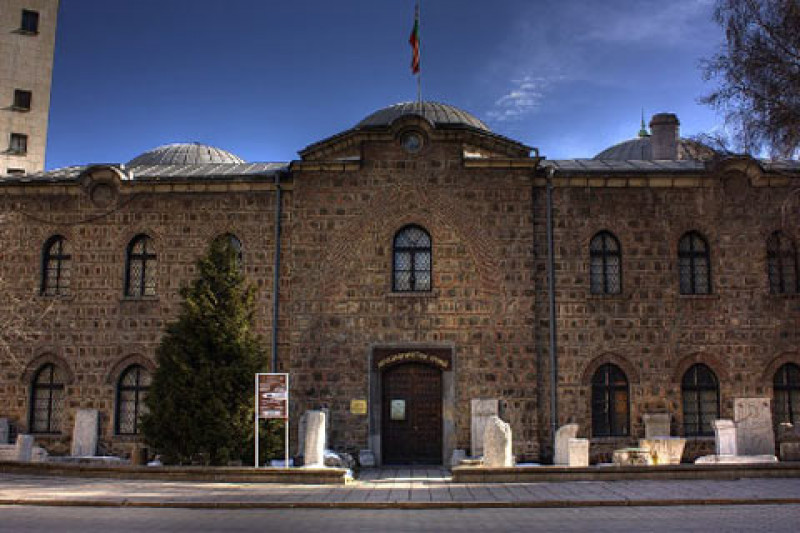
The Archeological Museum
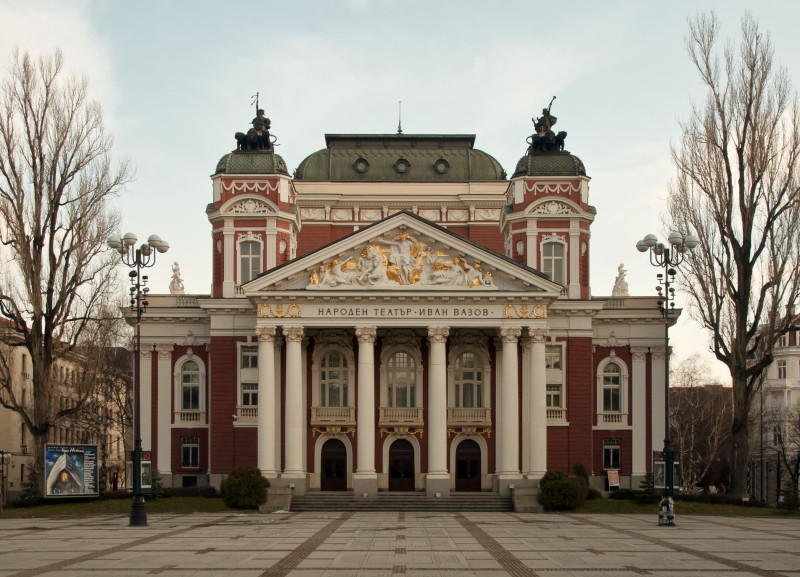
Ivan Vazov National Theatre
The Ivan Vazov National Theatre is Bulgaria's national theatre, as well as the oldest and most authoritative theatre in the country and one of the important landmarks of Sofia, the capital of Bulgaria. It is located in the centre of the city, with the facade facing the City Garden. Founded in 1904 by the artists from the Salza i Smyah company, it was initially called simply the National Theatre, but before being named after the prominent writer Ivan Vazov it also bore the name of Krastyu Sarafov between 1952 and 1962. Incidentally Vazov's play, "The Outcasts" was the first to be performed at the theatre when it opened. The theatre's Neoclassical building, designed by famous Viennese theatre architects Hermann Helmer and Ferdinand Fellner, was finished in 1906 and opened on 3 January 1907. The building was extensively damaged by a fire in 1923 during an anniversary celebration, but was reconstructed in 1929 by German architect Martin Dülfer. A theatrical school was established as part of the National Theatre in 1925. The bombing of Sofia in World War II caused considerable damage to the building, but it was reconstructed in 1945. Another reconstruction followed in 1971–1975, and a €100,000 restoration project was implemented in 2006.The Ivan Vazov National Theatre has a well-equipped main stage with 750 seats, a smaller 120-seat stage and an additional 70-seat one on the fourth floor. The building's facade is depicted on the obverse of the Bulgarian 50 levs banknote, issued in 1999 and 2006.The theatre has been host to productions from notable theatre directors such as Alexander Morfov who has been the Chief director since 1993.
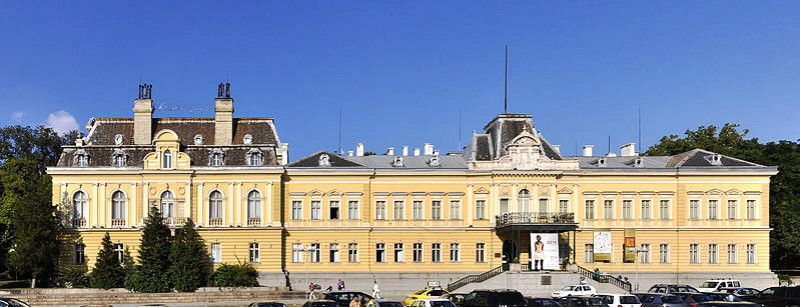
Royal Palace
This is a list of royal palaces, sorted by continent.
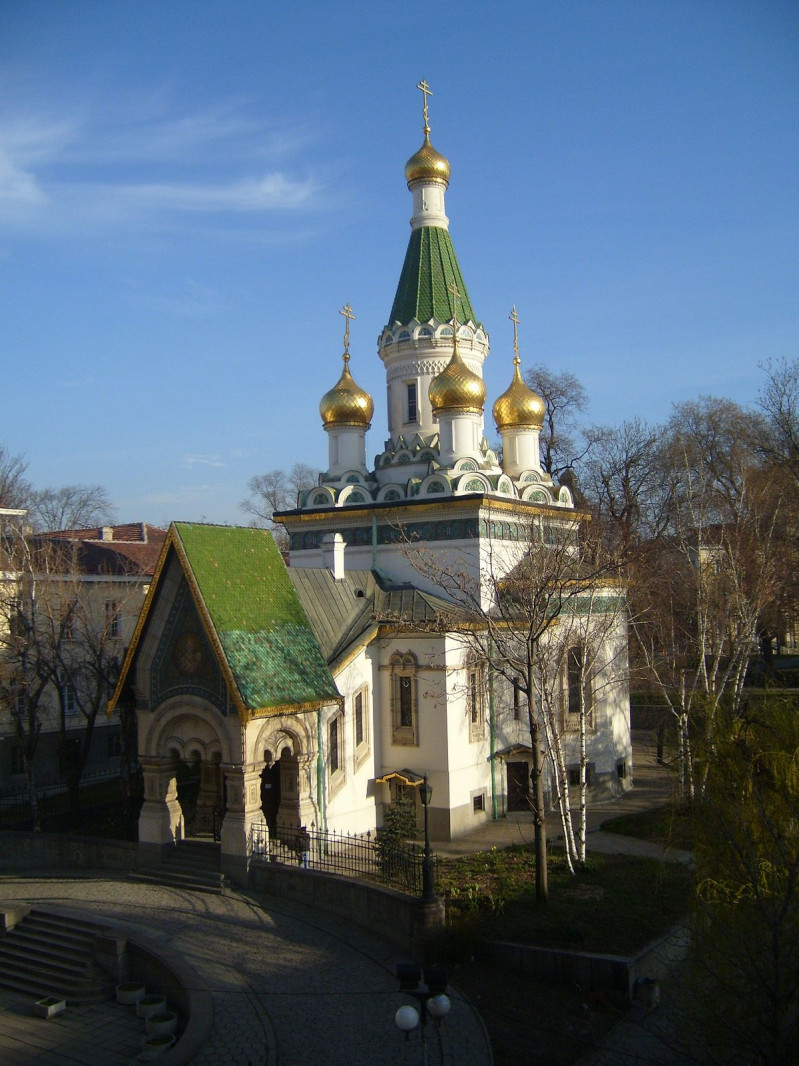
Russian Church
Russian Church may refer to:
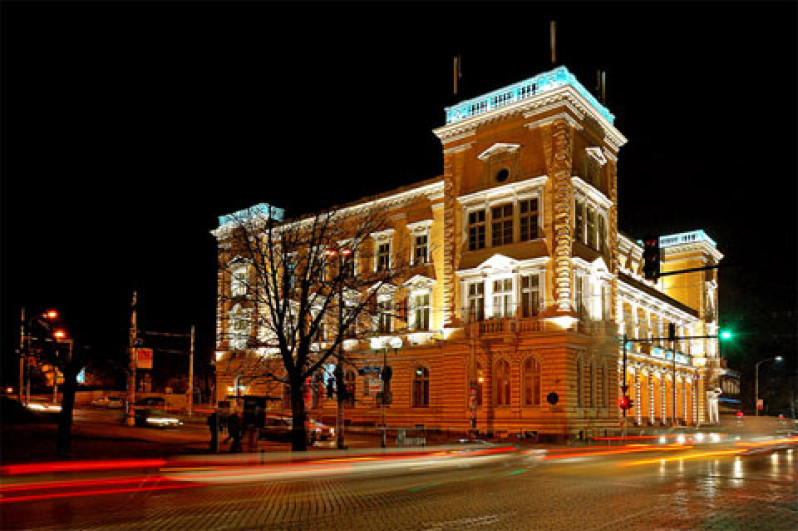
Central Military Club
The Central Military Club is a multi-purpose monument of culture building in the centre of Sofia, the capital of Bulgaria, located on Tsar Osvoboditel Boulevard and Georgi Rakovski Street. It serves the Bulgarian Army and is administered by the Executive Agency of Military Clubs and Information. The 2010 world chess championship match between Viswanathan Anand of India and Vaselin Topalov of Bulgaria was held in this building that was won by Viswanathan Anand. The foundation stone of the edifice was laid in 1895. The Military Club was designed by Czech architect Antonín Kolář in the Neo-Renaissance style and finished by Bulgarian architect Nikola Lazarov in 1907. The lot and the funding was provided by the Sofia Officers' Assembly. A stone from the battlefield at Slivnitsa from the Serbo-Bulgarian War was laid in the foundations. The building has three stories and features a coffeehouse, an art gallery, a number of refined halls varying in size, as well as an imposing concert hall with 450 seats. Due to all this, the Central Military Club has always been an important cultural centre of the capital, once exhibiting works by Ivan Mrkvička, Vladimir Dimitrov, Jaroslav Věšín and providing these noted artists with studios. The concert hall has also seen performances by actors and opera singers like Krastyu Sarafov, Nicolai Ghiaurov, Feodor Chaliapin, Boris Christoff, and bands like Ladytron etc.
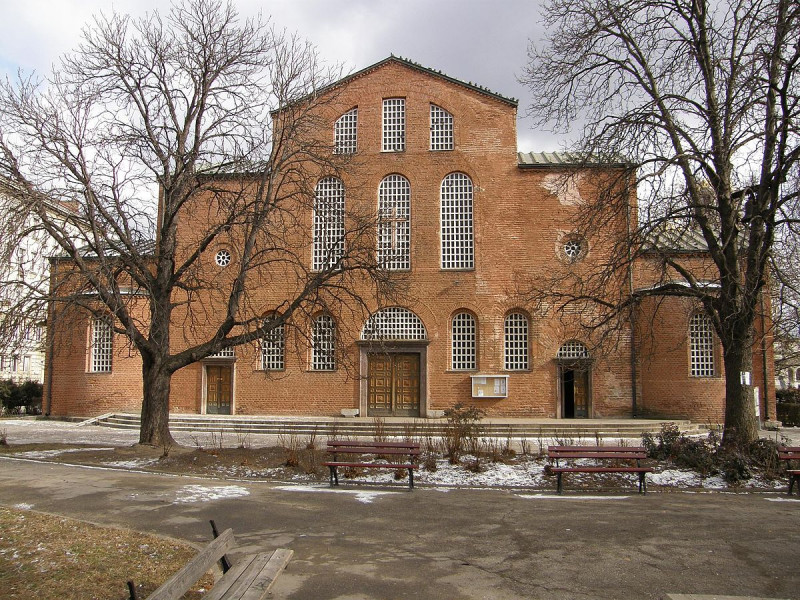
Saint Sofia Church
The Saint Sofia Church is the second oldest church in the Bulgarian capital Sofia, dating to the 4th-6th century. In the predecessor building took place the Council of Serdica held most probably in 343 and attended by 316 bishops. In the 14th century, the church gave its name to the city, previously known as Sredets .
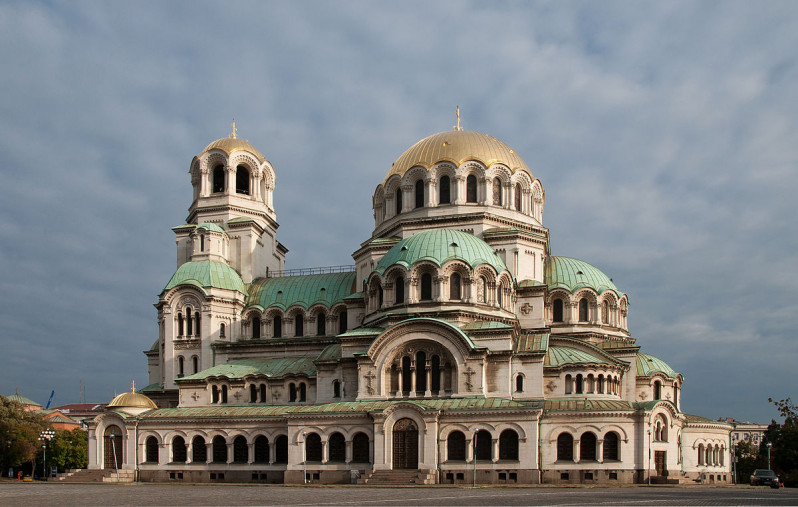
Alexander Nevsky Cathedral
Alexander Nevsky Cathedral may refer to the following : Alexander Nevsky Cathedral, Baku in Azerbaijan Alexander Nevsky Cathedral, Sofia in Bulgaria Alexander Nevsky Cathedral, Tallinn, Estonia Alexander Nevsky Cathedral, Paris, France Alexander Nevsky Cathedral, Tiflis, Georgia Alexander Nevsky Cathedral, Łódź, Poland Alexander Nevsky Cathedral, Warsaw, Poland Alexander Nevsky Cathedral, Izhevsk, Russia Alexander Nevsky Cathedral, Krasnodar, Russia Alexander Nevsky Cathedral, Moscow, Russia Alexander Nevsky Cathedral, Nizhny Novgorod, Russia Alexander Nevsky Cathedral, Novosibirsk, Russia Alexander Nevsky Cathedral, Petrozavodsk, Russia Alexander Nevsky Cathedral, Saint Petersburg, Russia Church of Alexandr Nevsky, Tver, Russia Alexander Nevsky Cathedral, Belgrade, Serbia Alexander Nevsky Cathedral, Prešov, Slovakia Alexander Nevsky Cathedral, Kamianets-Podilskyi, Ukraine Alexander Nevsky Cathedral, Yalta, Ukraine Alexander Nevsky Cathedral, Allison Park, Pittsburgh, Pennsylvania, US; under the jurisdiction of the Orthodox Church in America Alexander Nevsky Cathedral, Howell, New Jersey, US; under the jurisdiction of the Russian Orthodox Church Outside of Russia Alexander Nevsky Cathedral, Tashkent, Uzbekistan
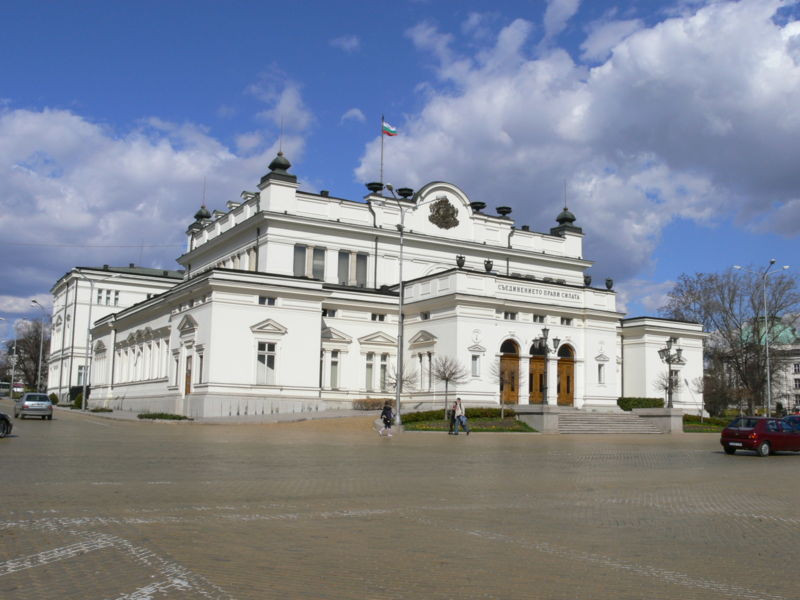
National Assembly
National Assembly politically is either a legislature, or the lower house of a bicameral legislature in some countries. In the English language it generally means "an assembly composed of the representatives of the nation." The population base represented by this name is manifestly the nation as a whole, as opposed to a geographically select population, such as that represented by a provincial assembly. Its powers vary according to the type of government. It may possess all the powers, generally governing by committee, or it may function within the legislative branch of the government. The name also must be distinguished from the concept. Conceptually such an institution may appear under variety of names, especially if "national assembly" is being used to translate foreign names of the same concept into English. Also, the degree to which the National Assembly speaks for the nation is a variable. To achieve a quorum, the ancient Athenian Assembly employed Scythian police to arrest citizens at random from the street. On the other hand, the early Parliaments of Europe were mainly of an aristocratic composition. The word had its origins and inspirations from the National Assembly that was responsible for drafting a constitution during the French Revolution. The exact words, "national assembly," have been used prolifically in the international community of nations since the 18th and 19th centuries, considered the Age of Revolution in western Europe. Nations that formed republics in this age subsequently formed empires. Extensive cross-cultural influences brought much of their language and institutions to the provinces. When these empires collapsed finally, the emancipated countries formed states and other institutions on the model of the former imperial nations. Some examples of international influences are as follows: In Germany, a Nationalversammlung was elected following the revolutions of 1848–1849 and 1918–1919, to be replaced by a permanent parliament later. The legislature of the Estado Novo regime in Portugal was known as the National Assembly, while the Corporative Chamber was a purely advisory chamber. The national assembly was also defined in the Republic of China constitution. This is different from the Legislative Yuan by the ROC constitution. In 2005, Taiwan revised the constitution and national assembly was abolished. Examples have multiplied greatly under the policy of self-determination adopted by the western nations. Many more are to be found in the articles listed below.
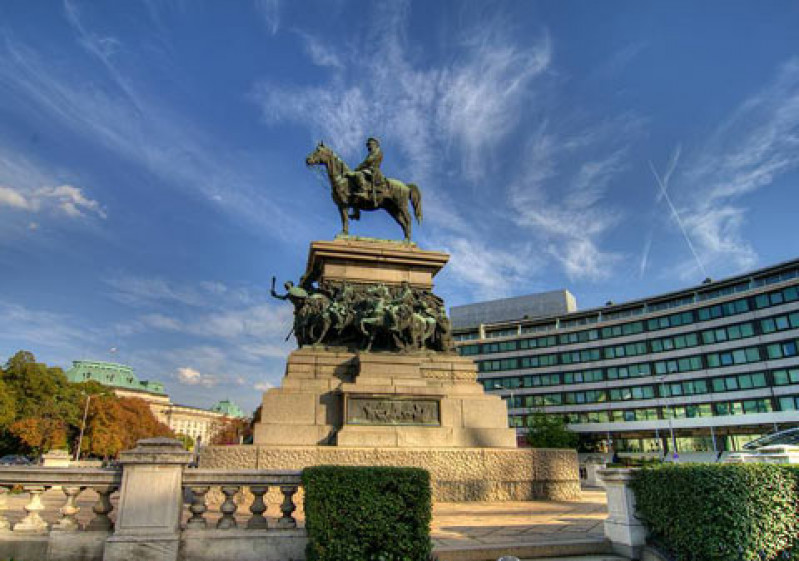
Monument to the Tsar Liberator
The Monument to the Tsar Liberator is an equestrian monument in the centre of Sofia, the capital of Bulgaria. It was erected in honour of Russian Emperor Alexander II who liberated Bulgaria from Ottoman rule during the Russo-Turkish War of 1877-78. The Neoclassical memorial's author is Italian sculptor Arnoldo Zocchi, who won the project in competition with 31 other artists from 12 countries in the end of the 19th century. Bulgarian architect Nikola Lazarov participated in the monument's architectural design. The foundation stone was laid on 23 April 1901, St George's Day, in the presence of Knyaz Ferdinand I of Bulgaria, and the monument was completed on 15 September 1903. Ferdinand also attended the monument's inauguration on 30 August 1907 together with his sons Boris and Kiril, Grand Duke Vladimir Alexandrovich of Russia, son of Alexander II, together with his wife and his son, as well as other notable figures. Erected of black polished granite from Vitosha, the Monument to the Tsar Liberator consists of a pedestal, a middle part with figures and a massive Neo-Renaissance cornice finished with the sculpture of the Russian Tsar on a horse. The bronze wreath at the foot was donated by Romania in memory of the Romanian soldiers that died during the war. The main bronze bas-relief in the middle part depicts a group of Russian and Bulgarian soldiers led by the goddess of victory , who raises her sword high above. Portraits of Grand Duke Nicholas Nicolaievich, Count Ignatiev and the generals Joseph Vladimirovich Gourko and Mikhail Skobelev surround the group. Other bas-reliefs feature scenes from the Battle of Stara Zagora, the signing of the Treaty of San Stefano and the opening ceremony of the Constituent National Assembly in Veliko Tarnovo, as well as portraits of Petko Slaveykov, Stoyan Zaimov, Ivan Vazov, Stefan Stambolov and other prominent figures from the period. The Monument to the Tsar Liberator is on Tsar Osvoboditel Boulevard, facing the National Assembly of Bulgaria and with the Radisson SAS hotel behind it.
Share on Pinterest
