- 14 sights
- 1 h 30 min
- 7.47 km / 4.64 mi
The Art of Faith
The City of London Corporation and the Diocese of London have created a self-guided walk to discover contemporary works of art in the City’s historic churches, including work by Henry Moore, Damien Hirst and Jacob Epstein.
Source: www.cityoflondon.gov.uk/things-to-do/visit-the-city/walks/Documents/Art%20of%20Faith%20Accessible.pdf

Sights
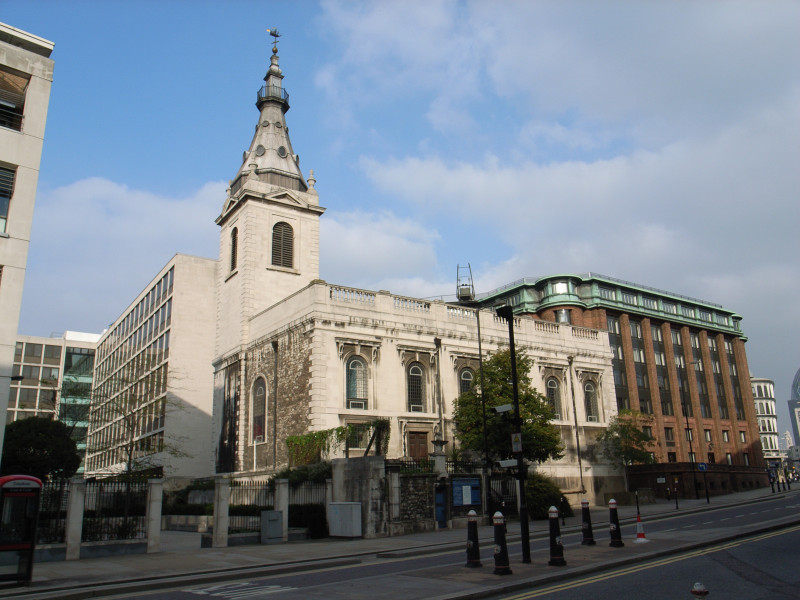
St Nicholas Cole Abbey
St. Nicholas Cole Abbey is a church in the City of London located on what is now Queen Victoria Street. Recorded from the twelfth century, the church was destroyed in the Great Fire of London in 1666 and rebuilt by the office of Sir Christopher Wren. The church suffered substantial bomb damage from German bombs during the London Blitz in the Second World War and was reconstructed by Arthur Bailey in 1961–2.
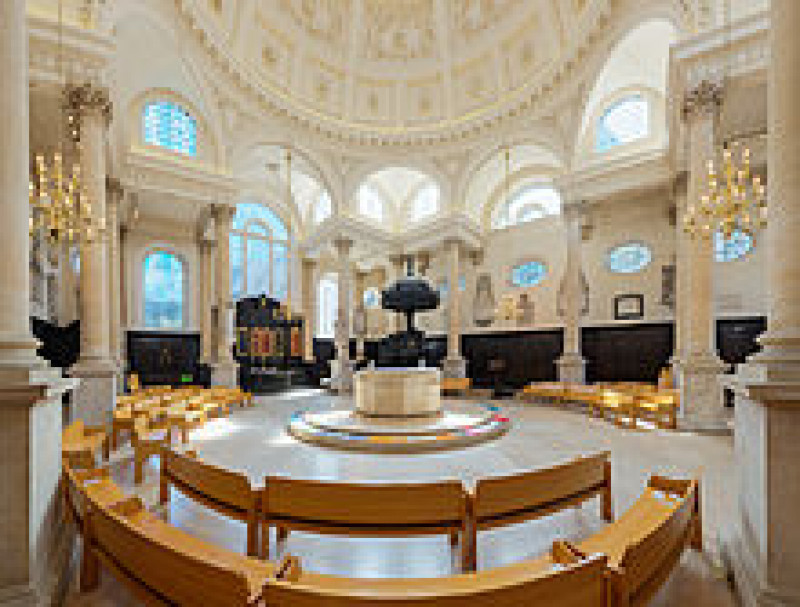
St Stephen Walbrook
St Stephen Walbrook is a church in the City of London, part of the Church of England's Diocese of London. The present domed building was erected to the designs of Sir Christopher Wren following the destruction of its medieval predecessor in the Great Fire of London in 1666. It is located in Walbrook, next to the Mansion House, and near to Bank and Monument Underground stations.
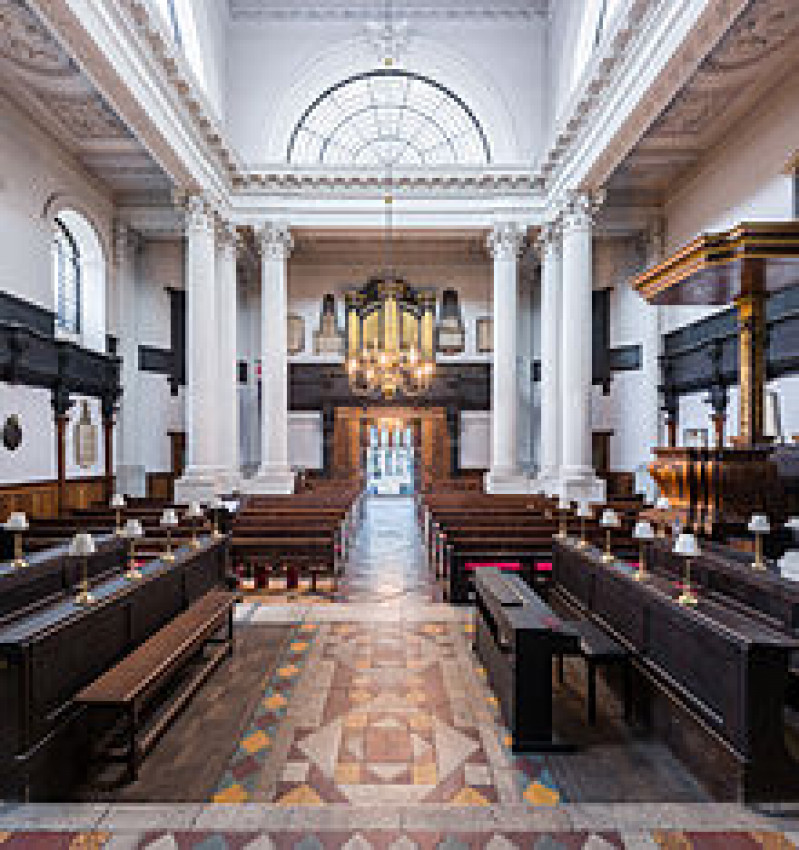
St Mary Woolnoth
St. Mary Woolnoth is an Anglican church in the City of London, located on the corner of Lombard Street and King William Street near Bank junction. The present building is one of the Queen Anne Churches, designed by Nicholas Hawksmoor. The parish church continues to be actively used for services, with Holy Communion every Tuesday. St Mary Woolnoth lies in the ward of Langbourn.
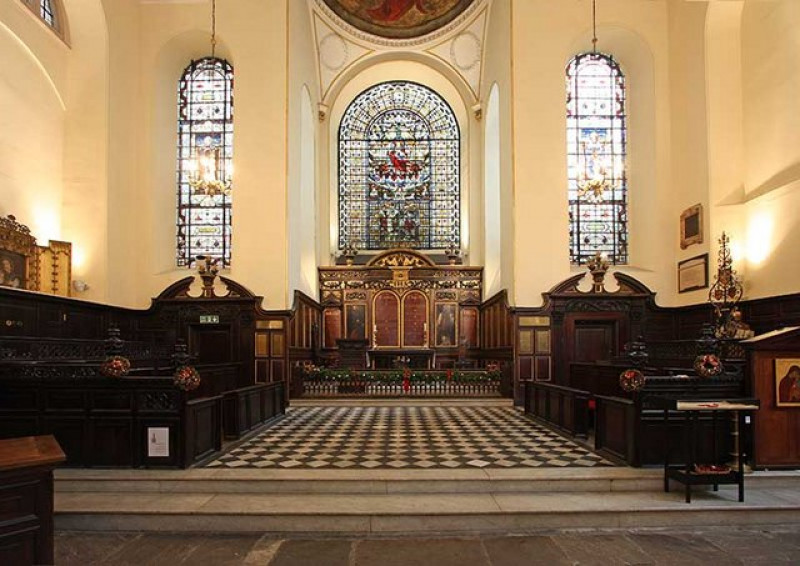
St Edmund King and Martyr
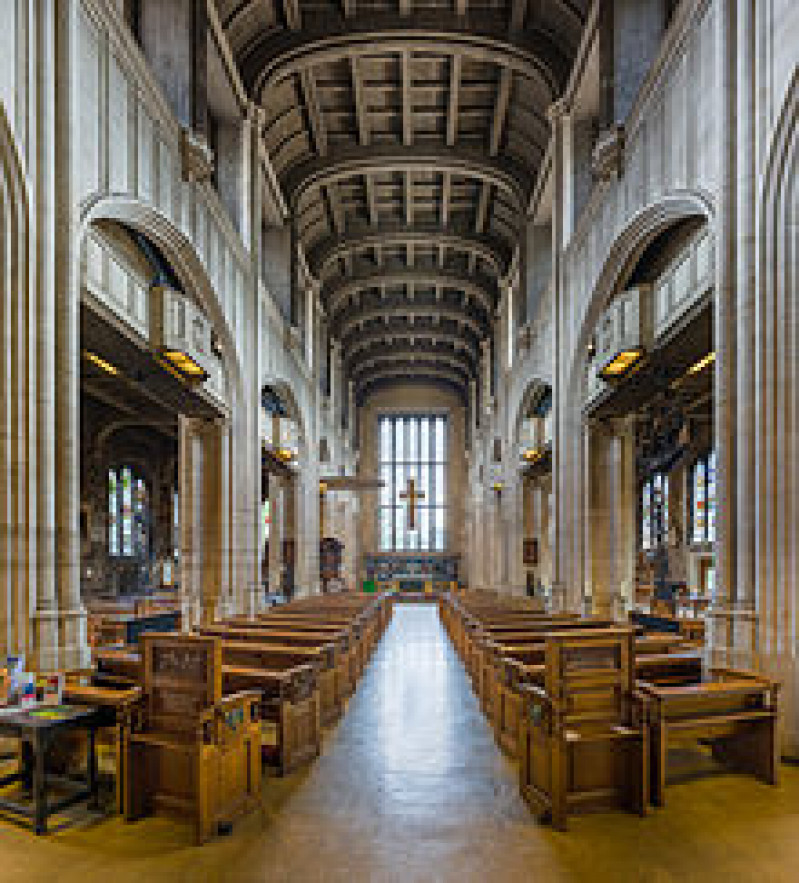
All Hallows by the Tower
All Hallows-by-the-Tower, also previously dedicated to St Mary the Virgin and sometimes known as All Hallows Barking, is an ancient Anglican church on Byward Street in the City of London, overlooking the Tower of London. Founded in 675, it is one of the oldest churches in London, and contains inside a 7th-century Anglo-Saxon arch with recycled Roman tiles, the oldest surviving piece of church fabric in the city. (St Pancras Old Church in King's Cross has been a place of Christian worship since the sixth century.)
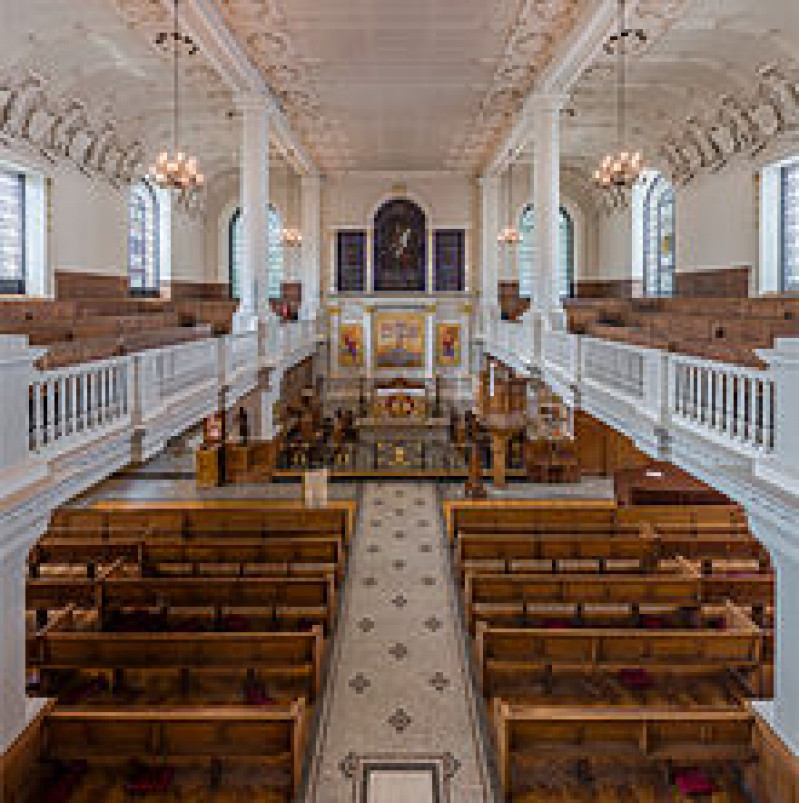
St Botolph Aldgate
St Botolph without Aldgate was an ancient parish in the metropolitan area of London. The parish was partly within the City of London and partly in the County of Middlesex. Each part operated as a separate parish for civil administration with its own local government, but it was a single parish for ecclesiastical purposes. The part in Middlesex was sometimes known as East Smithfield. It was a heavily built-upon parish with a high population density.
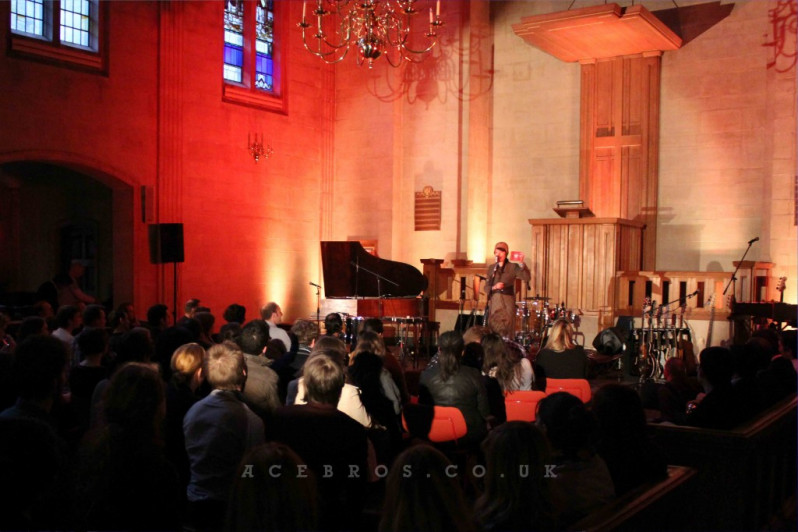
Dutch Centre
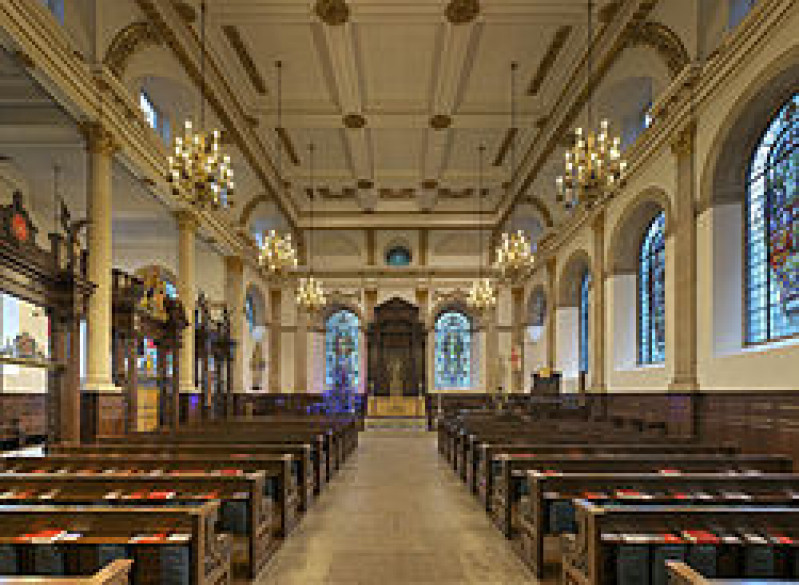
St Lawrence Jewry
St Lawrence Jewry next Guildhall is a Church of England guild church in the City of London on Gresham Street, next to Guildhall. It was destroyed in the Great Fire of London in 1666, and rebuilt to the designs of Sir Christopher Wren. It is the official church of the Lord Mayor of London.
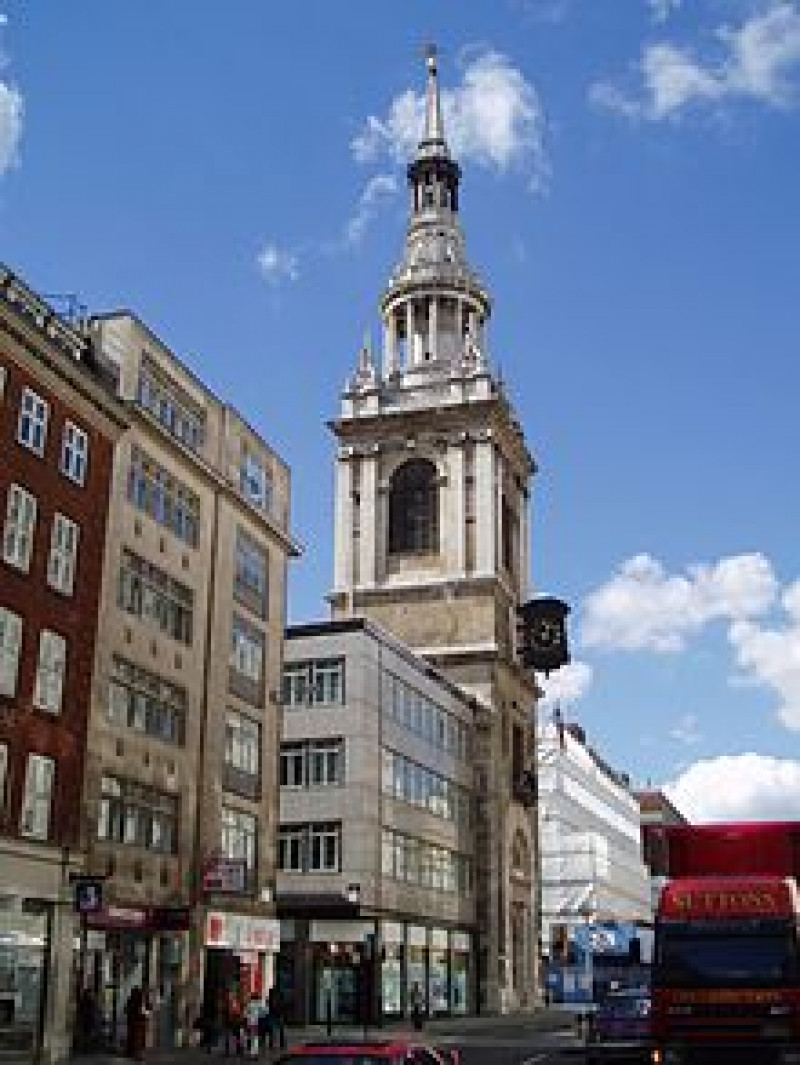
St Mary-le-Bow
St Mary-le-Bow is an historic church rebuilt after the Great Fire of 1666 by Sir Christopher Wren in the City of London on the main east–west thoroughfare, Cheapside. According to tradition a true Cockney must be born within earshot of the sound of Bow Bells (which refers to this church's bells rather than St Mary and Holy Trinity, Bow Road, in Bow, an outlying village until the 19th century).
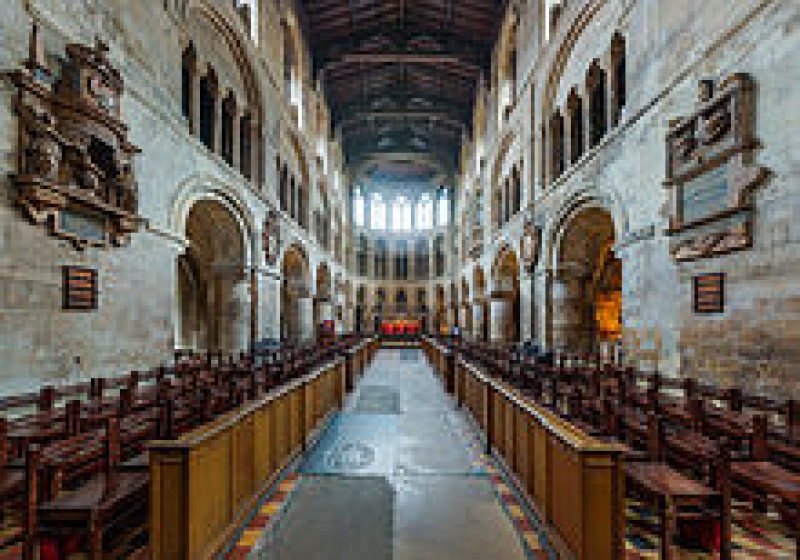
St Bartholomew the Great
The Priory Church of St Bartholomew the Great, sometimes abbreviated to Great St Bart's, is an Anglican church in West Smithfield within the City of London. The building was founded as an Augustinian priory in 1123. It adjoins St Bartholomew's Hospital of the same foundation.
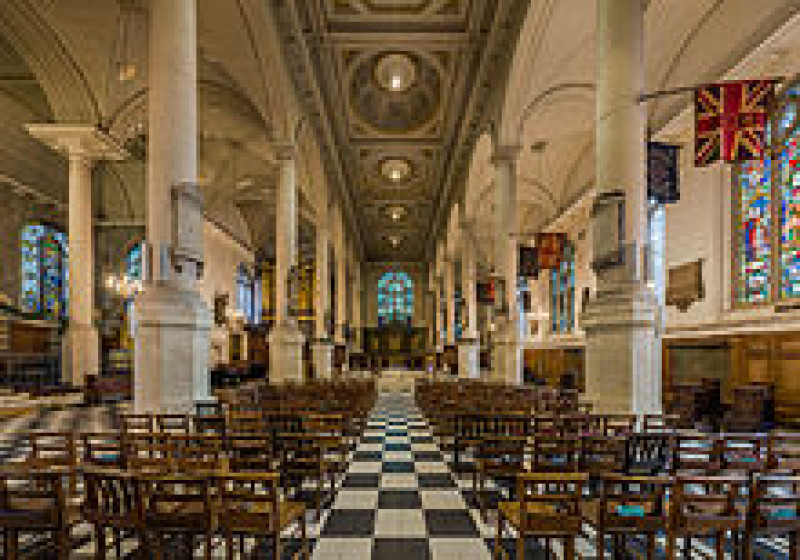
St Sepulchre's Church
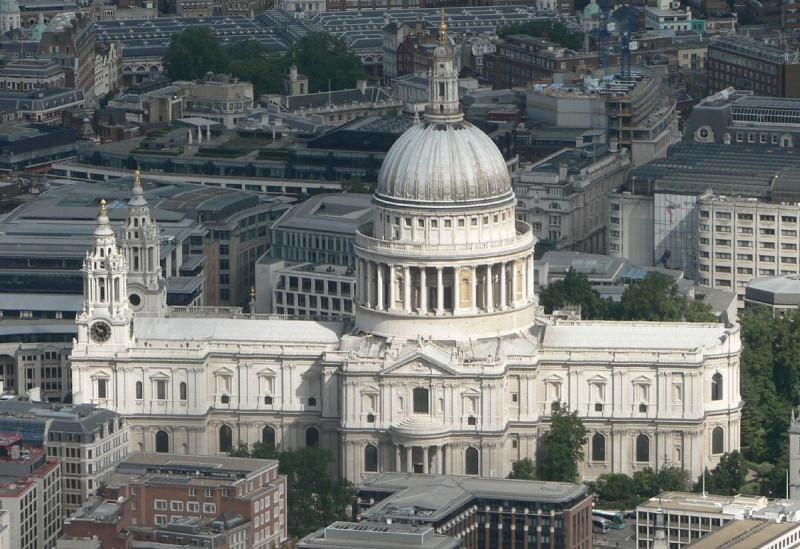
St Paul's Cathedral
St Paul's Cathedral, London, is an Anglican cathedral, the seat of the Bishop of London and the mother church of the Diocese of London. It sits on Ludgate Hill at the highest point of the City of London and is a Grade I listed building. Its dedication to Paul the Apostle dates back to the original church on this site, founded in AD 604. The present cathedral, dating from the late 17th century, was designed in the English Baroque style by Sir Christopher Wren. Its construction, completed in Wren's lifetime, was part of a major rebuilding programme in the City after the Great Fire of London. The cathedral is one of the most famous and most recognisable sights of London. Its dome, framed by the spires of Wren's City churches, has dominated the skyline for over 300 years. At 365 feet (111 m) high, it was the tallest building in London from 1710 to 1967. The dome is among the highest in the world. St Paul's is the second-largest church building in area in the United Kingdom after Liverpool Cathedral. St Paul's Cathedral occupies a significant place in the national identity. It is the central subject of much promotional material, as well as of images of the dome surrounded by the smoke and fire of the Blitz. Services held at St Paul's have included the funerals of Admiral Nelson, the Duke of Wellington, Sir Winston Churchill and Baroness Thatcher; jubilee celebrations for Queen Victoria; peace services marking the end of the First and Second World Wars; the wedding of Charles, Prince of Wales and Lady Diana Spencer; the launch of the Festival of Britain; and the thanksgiving services for the Silver, Golden and Diamond Jubilees and the 80th and 90th birthdays of Elizabeth II. St Paul's Cathedral is a working church with hourly prayer and daily services. The tourist entry fee at the door is £18 for adults (March 2017, cheaper online), but no charge is made to worshippers.
St Dunstan-in-the-West
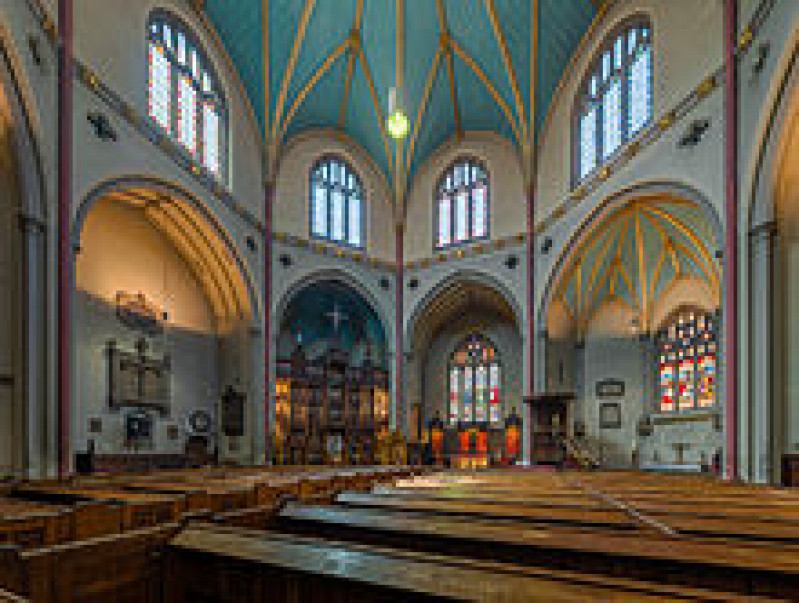
The Guild Church of St Dunstan-in-the-West is in Fleet Street in the City of London. It is dedicated to a former Bishop of London and Archbishop of Canterbury. The church is of medieval origin, although the present building, with an octagonal nave, was constructed in the 1830s to the designs of John Shaw.
Temple Church
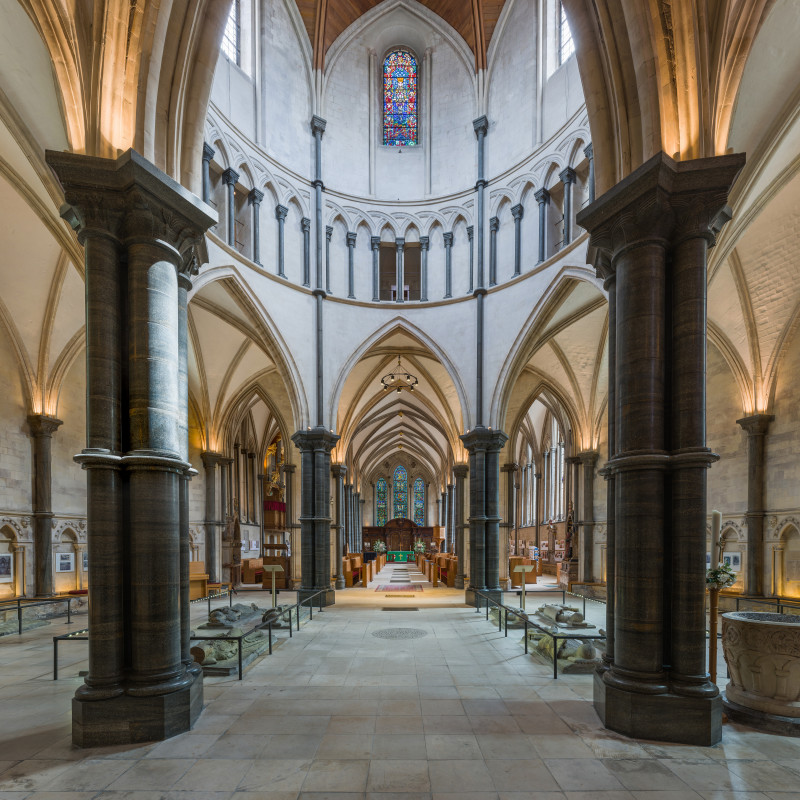
The Temple Church is a late 12th-century church in the City of London located between Fleet Street and the River Thames, built by the Knights Templar as their English headquarters. During the reign of King John (1199–1216) it served as the royal treasury, supported by the role of the Knights Templars as proto-international bankers. It is jointly owned by the Inner Temple and Middle Temple Inns of Court, bases of the English legal profession. It is famous for being a round church, a common design feature for Knights Templar churches, and for its 13th and 14th century stone effigies. It was heavily damaged by German bombing during World War II and has since been greatly restored and rebuilt. The area around the Temple Church is known as the Temple and nearby formerly in the middle of Fleet Street stood the Temple Bar, an ornamental processional gateway. Nearby is the Temple Underground station.
Share on Pinterest