- 7 sights
- 0 h 58 min
- 4.86 km / 3.02 mi
London 2025
From the Tower of London to Tate Modern

Anonymous user
published 1 year ago
Sights
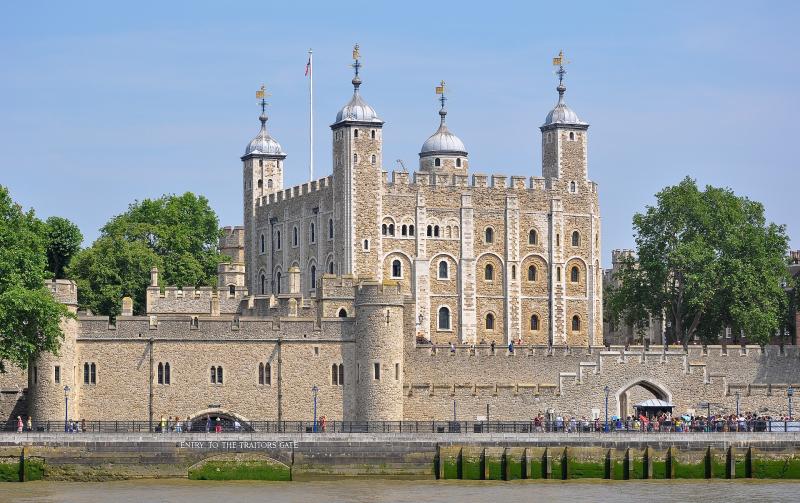
Photo: Bob Collowan, CC BY-SA 3.0
Tower of London
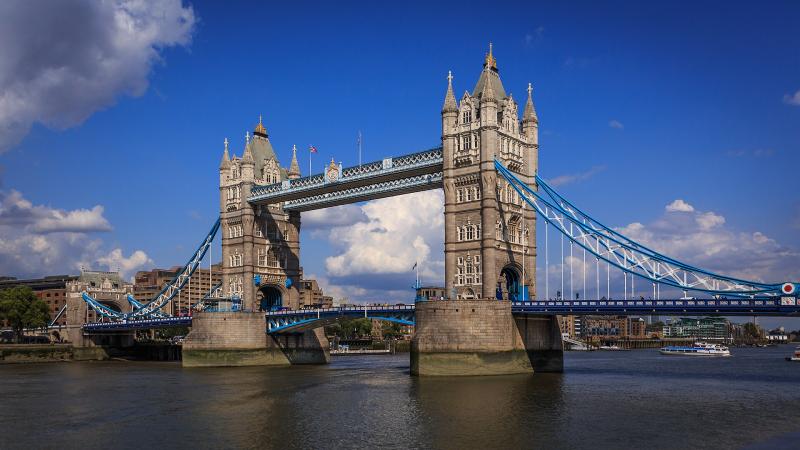
Photo: Barcex, CC BY-SA 3.0
Tower Bridge
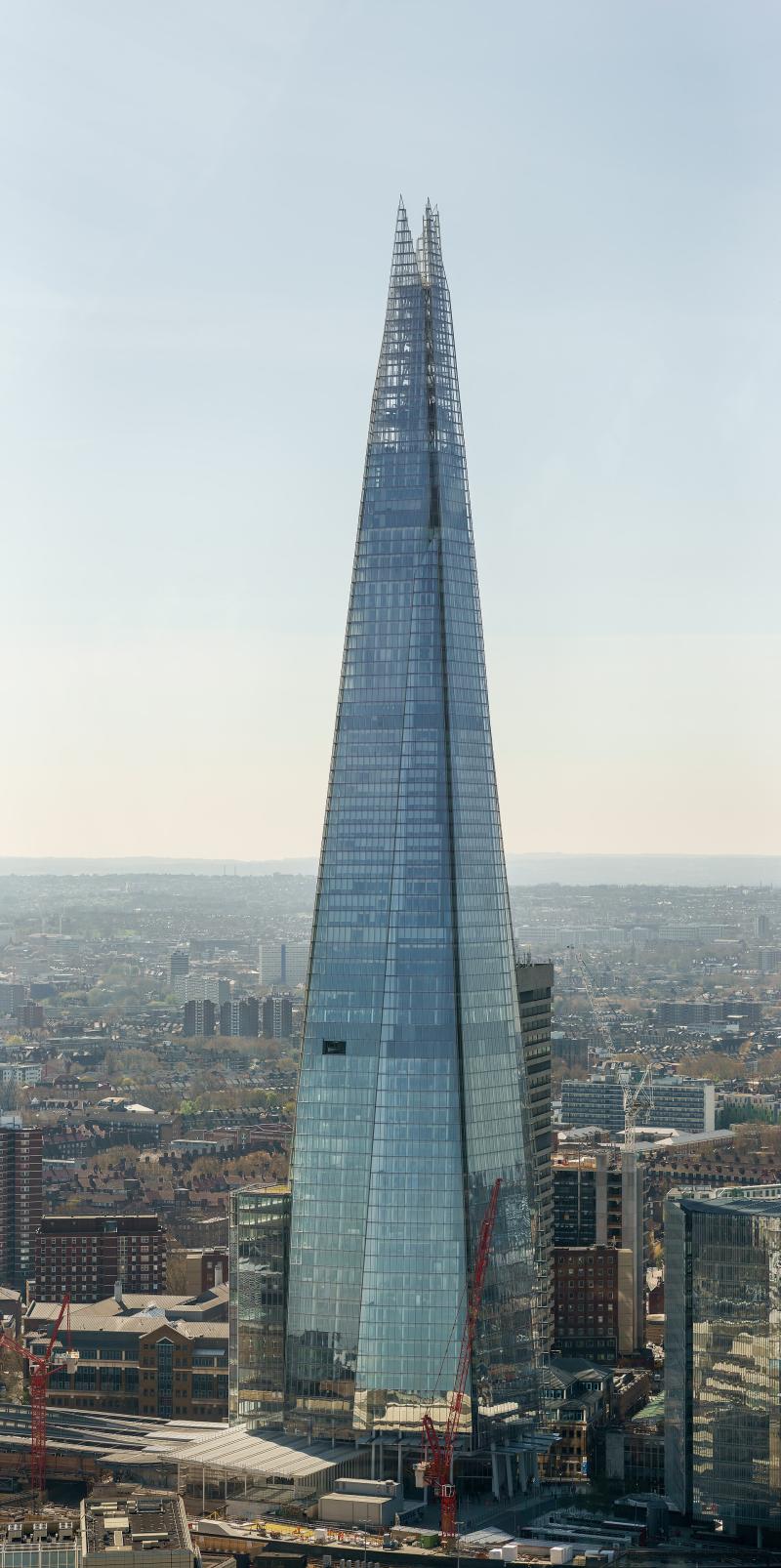
Photo: Colin, CC BY-SA 4.0
The Shard
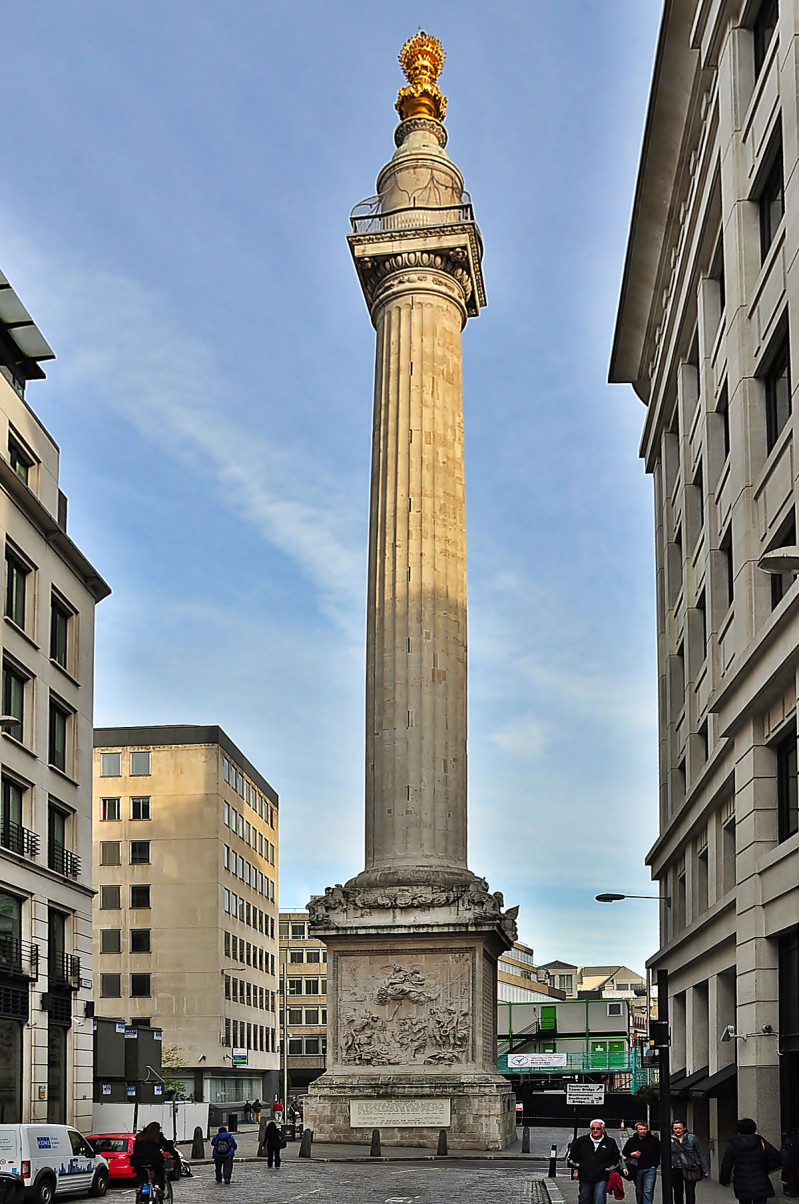
Monument to the Great Fire of London
The Monument to the Great Fire of London, more commonly known simply as the Monument, is a Doric column in the City of London, near the northern end of London Bridge, that commemorates the Great Fire of London. It stands at the junction of Monument Street and Fish Street Hill, 202 ft (62 m) tall and 202 ft (62 m) from the spot in Pudding Lane where the Great Fire started on 2 September 1666. Another monument, the Golden Boy of Pye Corner, marks the point near Smithfield where the fire was stopped. Constructed between 1671 and 1677, it was built on the site of St. Margaret's, Fish Street, the first church to be burnt down by the Great Fire. The Monument comprises a fluted Doric column built of Portland stone topped with a gilded urn of fire. It was designed by Christopher Wren and Robert Hooke. Its height marks its distance from the site of the shop of Thomas Farriner (or Farynor), the king's baker, where the Great Fire began. The viewing platform near the top of the Monument is reached by a narrow winding staircase of 311 steps. A mesh cage was added in the mid-19th century to prevent people jumping off, after six people had committed suicide there between 1788 and 1842. Three sides of the base carry inscriptions in Latin. The one on the south side describes actions taken by King Charles II following the fire. The one on the east describes how the Monument was started and brought to perfection, and under which mayors. Inscriptions on the north side describe how the fire started, how much damage it caused, and how it was eventually extinguished. The Latin words "Sed Furor Papisticus Qui Tamdiu Patravit Nondum Restingvitur" (but Popish frenzy, which wrought such horrors, is not yet quenched) were added to the end of the inscription on the orders of the Court of Aldermen in 1681 during the foment of the Popish Plot. Text on the east side originally falsely blamed Roman Catholics for the fire ("burning of this protestant city, begun and carried on by the treachery and malice of the popish faction"), which prompted Alexander Pope (himself a Catholic) to say of the area: The words blaming Catholics were chiselled out with Catholic Emancipation in 1830. The west side of the base displays a sculpture, by Caius Gabriel Cibber, in alto and bas relief, of the destruction of the City; with Charles II and his brother, James, the Duke of York (later James II), surrounded by liberty, architecture, and science, giving directions for its restoration. The nearest London Underground station is Monument. It is a Grade I listed building and a scheduled monument.
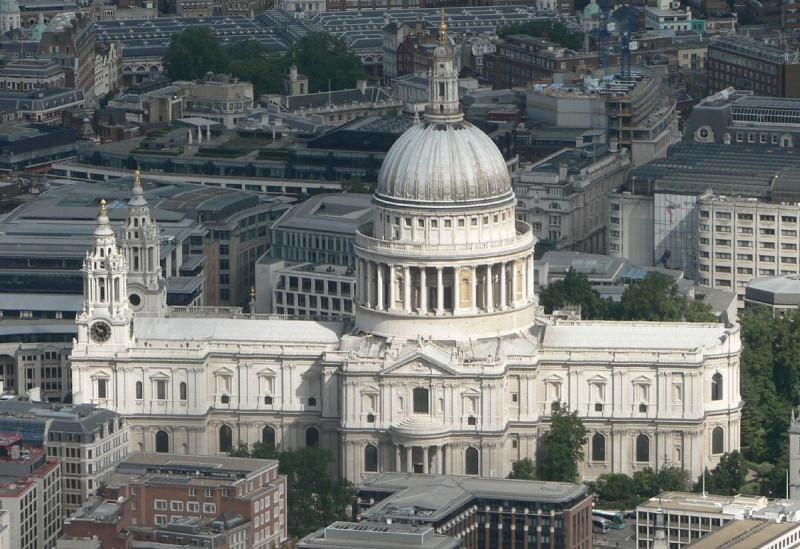
St Paul's Cathedral
St Paul's Cathedral, London, is an Anglican cathedral, the seat of the Bishop of London and the mother church of the Diocese of London. It sits on Ludgate Hill at the highest point of the City of London and is a Grade I listed building. Its dedication to Paul the Apostle dates back to the original church on this site, founded in AD 604. The present cathedral, dating from the late 17th century, was designed in the English Baroque style by Sir Christopher Wren. Its construction, completed in Wren's lifetime, was part of a major rebuilding programme in the City after the Great Fire of London. The cathedral is one of the most famous and most recognisable sights of London. Its dome, framed by the spires of Wren's City churches, has dominated the skyline for over 300 years. At 365 feet (111 m) high, it was the tallest building in London from 1710 to 1967. The dome is among the highest in the world. St Paul's is the second-largest church building in area in the United Kingdom after Liverpool Cathedral. St Paul's Cathedral occupies a significant place in the national identity. It is the central subject of much promotional material, as well as of images of the dome surrounded by the smoke and fire of the Blitz. Services held at St Paul's have included the funerals of Admiral Nelson, the Duke of Wellington, Sir Winston Churchill and Baroness Thatcher; jubilee celebrations for Queen Victoria; peace services marking the end of the First and Second World Wars; the wedding of Charles, Prince of Wales and Lady Diana Spencer; the launch of the Festival of Britain; and the thanksgiving services for the Silver, Golden and Diamond Jubilees and the 80th and 90th birthdays of Elizabeth II. St Paul's Cathedral is a working church with hourly prayer and daily services. The tourist entry fee at the door is £18 for adults (March 2017, cheaper online), but no charge is made to worshippers.
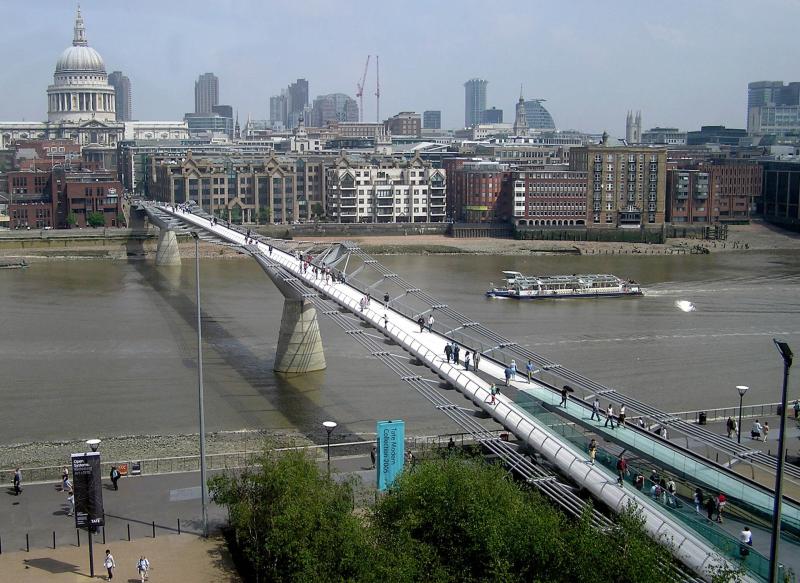
Photo: Wikimedia Commons, Public domain
Millennium Bridge
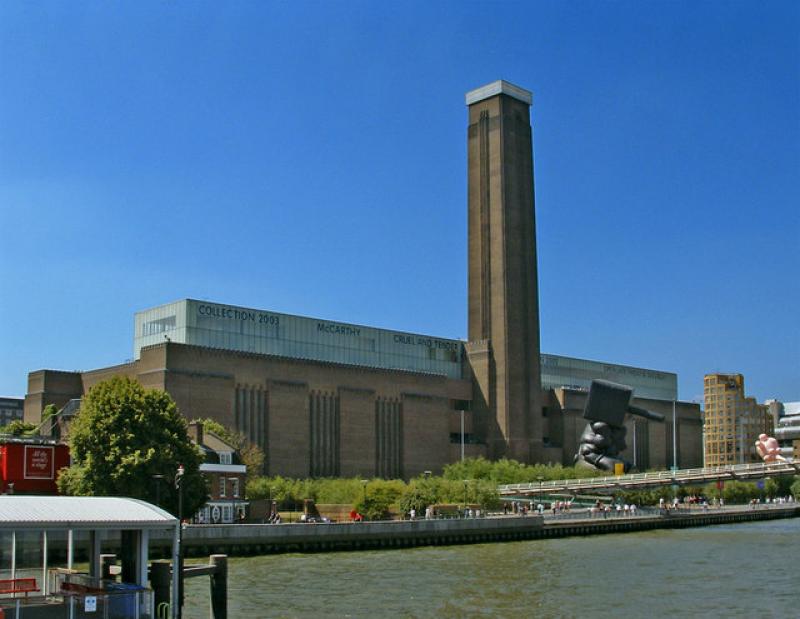
Photo: Christine Matthews, CC BY-SA 2.0
Tate Modern
Share on Pinterest