- Capitol Building
- Funan
- National Gallery Singapore
- Merlion
- Esplanade - Theatres on the Bay
- The Float @ Marina Bay
- The Helix Bridge
- ArtScience Museum
- Louis Vuitton Island Maison
- Flower Dome
- Cloud Forest
- Supertree Grove
- Raffles City Shopping Centre
- Parkroyal on Pickering
- Grids & Circles
- Chinatown Singapore
- Club Street
- Ann Siang Road
- Maxwell Food Centre
- Amoy Street
- Telok Ayer Street
- Duxton Road
- Keong Saik Road
- Outram Park MRT
- 24 sights
- 2 h 23 min
- 11.90 km / 7.39 mi
Singapore 🇸🇬: Day 1
Raffles City Shopping Centre: Some mall.
Capitol Building: The above destination is also linked to this underground (or take outdoors if you like heat). New small mall to look around. Not much but restrooms are nice.
Funan: Newly revamped "tech" mall where they are testing out lots of fancy tech (I think) + coworking cafes.
National Gallery Singapore: With paid attractions if you wanna go but otherwise I think the newly revamped building/structure is fun to explore.
Merlion: You know, that lion thing.
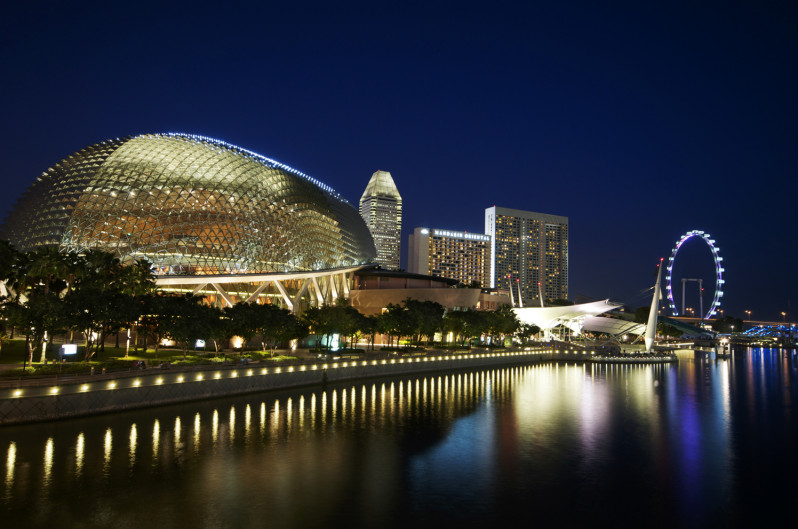
Esplanade: Artsy theatre, an interesting structure shaped like a durian (or mosquito eyes from aerial view).
The Float: A platform built on water. Currently used as testing ground for Voloport (German helicopter taxi) to be available for public in 2021 (I think).
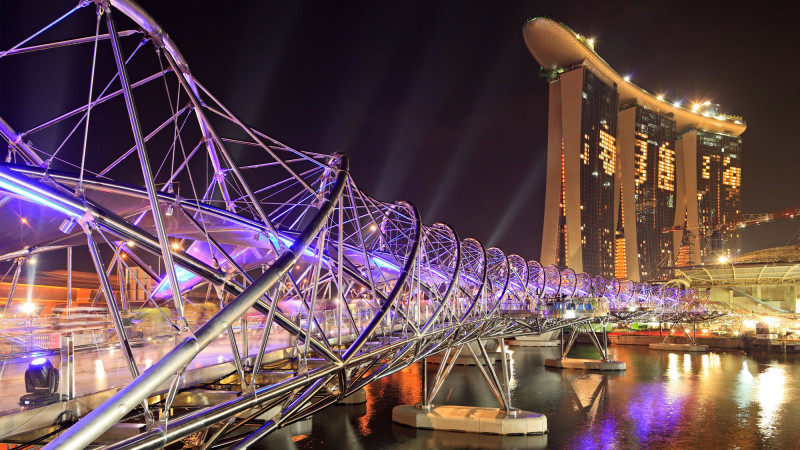
Helix Bridge: Fancy nice bridge. Lights up during the night.
ArtScience Museum: Wow so many nice exhibitions I want to go too! Only been to FutureWorld (very pretty).
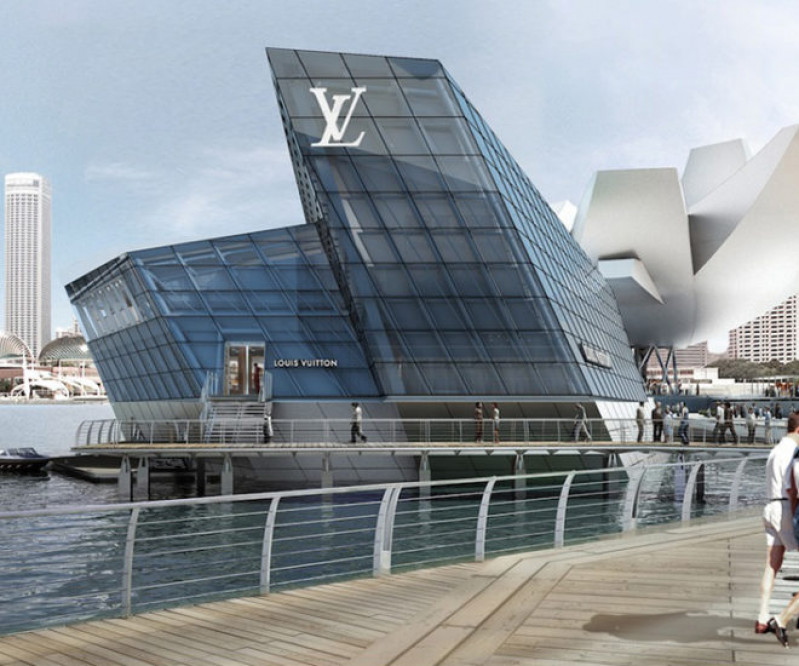
LV Island: Interesting Louis Vuitton Maison on water. Go in explore the shop (act rich, look rich!) and then go underground and it's connected to the main shopping mall.
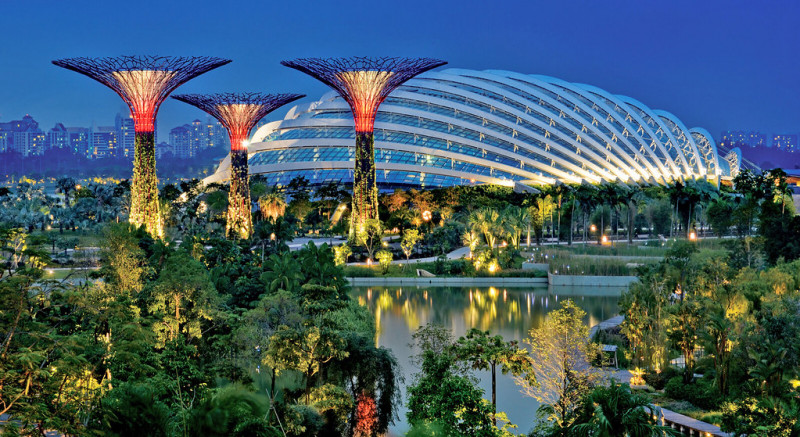
Supertree Grove (Gardens by the bay): Free area to explore, very pretty. Lights up at night. Tell me what you think these things are because I have no clue it's like from the future.
Cloud Forest/Flower Dome: Paid AC area of Gardens by the bay. It's nice to go in but I don't think it's necessary. Up to you.
Amoy/Telok Ayer/Club Street/Ann Siang Road: Our more hipster/expat streets with lines of shophouses but cool bars/shops. Could just take a walk around. As you're visiting on the weekdays, you'll see a lot of "office people" hanging here after work.
Parkroyal on Pickering: Nice looking hotel with very nice restrooms.
Grids & Circles: My favorite cafe to co-work. Free wifi, plugs etc.
Chinatown: Gets busy as it's nearing Chinese new year.
Maxwell Food Centre: Cheap food court with local food.
Duxton/Keong Saik Road: Another mix of hip/local area filled with bars/cafes etc.

Anonymous user
published 6 years ago
Sights
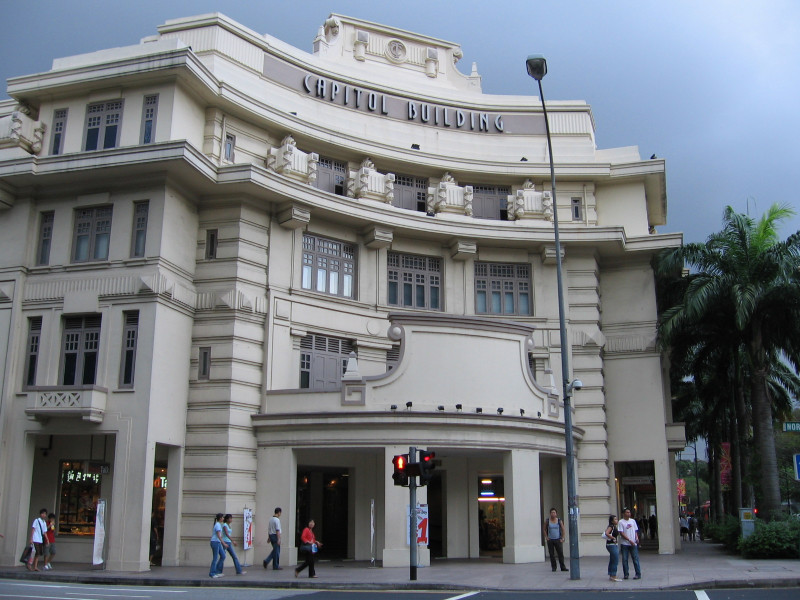
Capitol Building
A capitol is a building in which a legislature meets, including:
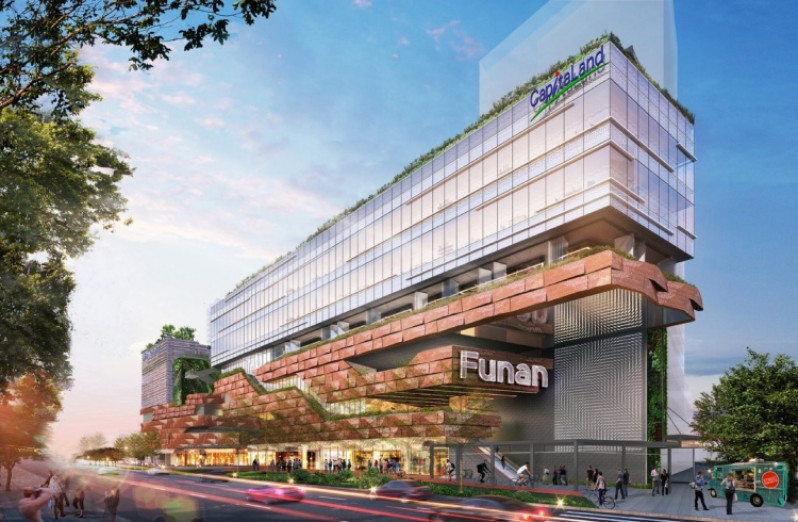
Funan
Funan or Nokor Phnom was the name given by Chinese cartographers, geographers and writers to an ancient Indianised state—or, rather a loose network of states —located in mainland Southeast Asia centered on the Mekong Delta that existed from the first to sixth century CE. The name is found in Chinese historical texts describing the kingdom, and the most extensive descriptions are largely based on the report of two Chinese diplomats, Kang Tai and Zhu Ying, representing the Wu Kingdom of Nanking who sojourned in Funan in the mid-3rd century AD.Funan is known in the modern languages of the region as វ្នំ Vnom or នគរភ្នំ Nokor Phnom , ฟูนาน , and Phù Nam , however, the name Funan is not found in any texts of local origin from the period, and it is not known what name the people of Funan gave to their polity. Some scholars argued that ancient Chinese scholars transcribed the word Funan from a word related to the Khmer word bnaṃ or vnaṃ , others however thought that Funan may not be a transcription at all- rather it meant what it says in Chinese. Like the very name of the kingdom, the ethno-linguistic nature of the people is the subject of much discussion among specialists. The leading hypotheses are that the Funanese were mostly Mon–Khmer, or that they were mostly Austronesian, or that they constituted a multi-ethnic society. The available evidence is inconclusive on this issue. Michael Vickery has said that, even though identification of the language of Funan is not possible, the evidence strongly suggests that the population was Khmer. The results of archaeology at Oc Eo have demonstrated "no true discontinuity between Oc Eo and pre-Angkorian levels", indicating Khmer linguistic dominance in the area under Funan control.Based on the testimony of the Chinese historians, the polity Funan is believed to have been established in the 1st century CE in the Mekong Delta, but archaeological research has shown that extensive human settlement in the region may have gone back as far as the 4th century BCE. Though regarded by Chinese authors as a single unified polity, some modern scholars suspect that Funan may have been a collection of city-states that sometimes were at war with one another and at other times constituted a political unity. From archaeological evidence, which includes Roman, Chinese, and Indian goods excavated at the ancient mercantile centre of Óc Eo in southern Vietnam, it is known that Funan must have been a powerful trading state. Excavations at Angkor Borei in southern Cambodia have likewise delivered evidence of an important settlement. Since Óc Eo was linked to a port on the coast and to Angkor Borei by a system of canals, it is possible that all of these locations together constituted the heartland of Funan.
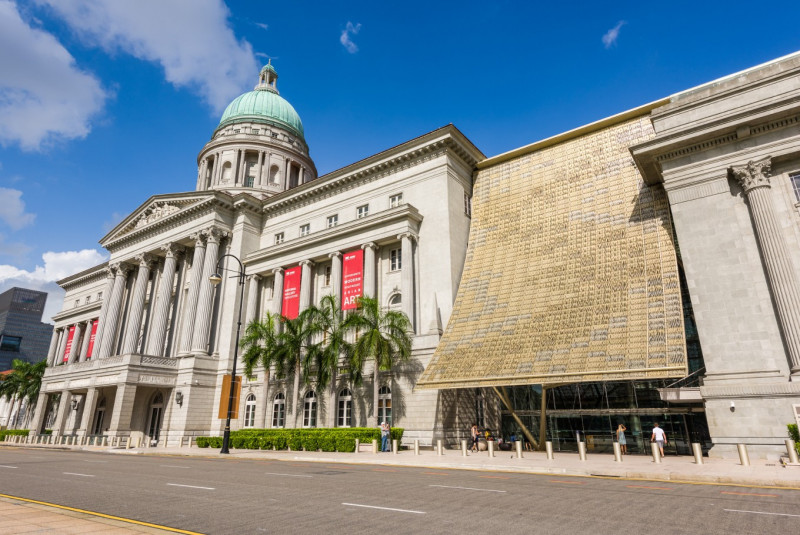
National Gallery Singapore
The National Gallery Singapore is an art museum located in the Downtown Core of Singapore. Opened on 24 November 2015, it oversees the world’s largest public collection of Singaporean and Southeast Asian art, consisting of over 8,000 artworks. It aims to provide an understanding and appreciation of art and culture through a variety of media, focusing on Singapore's culture and heritage and its relationship with other Asian cultures and the world. Situated in Singapore’s Civic District, the Gallery consists of two national monuments, the former Supreme Court Building and City Hall, and has a combined floor area of 64,000 square metres , making it the largest visual arts venue and largest museum in Singapore. A total cost of S$532 million has gone into National Gallery Singapore’s development.
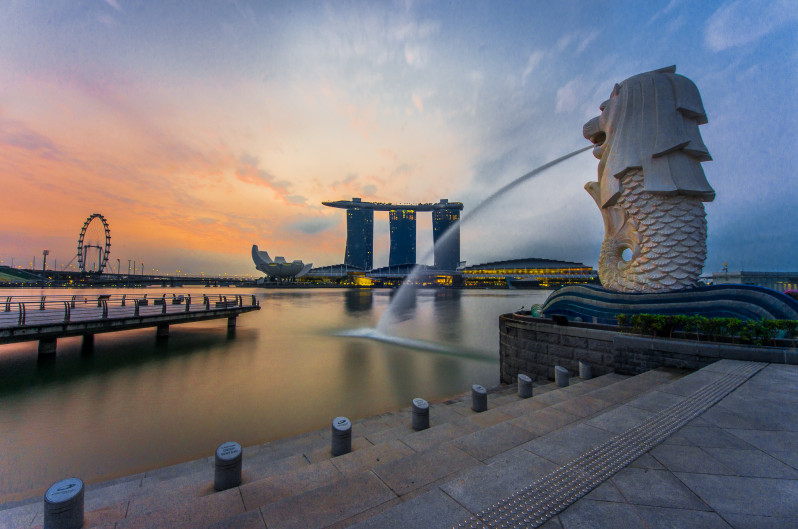
Merlion
The Merlion is the official mascot of Singapore, depicted as a mythical creature with a lion's head and the body of a fish. Being of prominent symbolic nature to Singapore and Singaporeans in general, it is widely used to represent both the city state and its people in sports teams, advertising, branding, tourism and as a national personification.The Merlion was first used in Singapore as the logo for the tourism board.
Esplanade - Theatres on the Bay
Esplanade – Theatres on the Bay is a performing arts centre located in Downtown Core near the mouth of the Singapore River. Named after the nearby Esplanade Park, it consists of a concert hall which seats about 1,600 and a theatre with a capacity of about 2,000 for the performing arts.

The Float @ Marina Bay
The Float at Marina Bay, stylised as The Float@Marina Bay and also known as the Marina Bay Floating Platform, is the world's largest floating stage located on the waters of the Marina Reservoir in Marina Bay, Singapore.Made entirely of steel, the floating platform on Marina Bay measures 120 by 83 metres , which is 5% larger than the football pitch at the National Stadium. The platform can bear up to 1,070 tonnes, equivalent to the total weight of 9,000 people, 200 tonnes of stage props and three 30-tonne military vehicles. The gallery at the stadium has a seating capacity of 27,000 people.The floating stadium will be a venue for events on the waters of Marina Bay for five years from 2007. These events may include sports, concerts, exhibitions, and the arts and cultural performances. The National Day Parade was held there annually for five years, as a temporary venue in place of the National Stadium in Kallang which was demolished to be rebuilt as part of the Singapore Sports Hub.This stadium is part of the Marina Bay Street Circuit Turns 17 and 18, which hosted the Formula One Singapore Grand Prix. More infamously, it was where Nelson Piquet, Jr. crashed his car which led to the Renault Formula One crash controversy. Following Singapore's successful bid to host the inaugural 2010 Summer Youth Olympics, the floating stadium was under the spotlight during the Games, as the venue for the Games' opening and closing ceremonies.The Marina Bay Floating Platform will continue to hold National Day Parade 2020 and 2021, together with River Hongbao and F1, before it will be demolished in 2022 for the construction of "NS Square"..
The Helix Bridge
The Helix Bridge, officially The Helix, and previously known as the Double Helix Bridge, is a pedestrian bridge linking Marina Centre with Marina South in the Marina Bay area in Singapore. It was officially opened on 24 April 2010 at 9 pm; however, only half was opened due to ongoing construction at the Marina Bay Sands. It is located beside the Benjamin Sheares Bridge and is accompanied by a vehicular bridge, known as the Bayfront Bridge. The entire bridge was opened on 18 July 2010 to complete the entire walkway around Marina Bay.
ArtScience Museum
ArtScience Museum is a museum located within the integrated resort of Marina Bay Sands in the Downtown Core of the Central Area in Singapore. Opened on 17 February 2011 by Singapore's Prime Minister Lee Hsien Loong, it is the world's first ArtScience museum.Although it has a permanent exhibition, ArtScience Gallery, the ArtScience Museum mainly hosts touring exhibitions curated by other museums.
Louis Vuitton Island Maison
Flower Dome
Gardens by the Bay is a nature park spanning 101 hectares of reclaimed land in the Central Region of Singapore, adjacent to the Marina Reservoir. The park consists of three waterfront gardens: Bay South Garden , Bay East Garden and Bay Central Garden . The largest of the gardens is the Bay South Garden at 54 hectares designed by Grant Associates. Its Flower Dome is the largest glass greenhouse in the world.Gardens by the Bay is part of the nation's plans to transform its "Garden City" to a "City in a Garden", with the aim of raising the quality of life by enhancing greenery and flora in the city. First announced by the Prime Minister, Lee Hsien Loong, at the National Day Rally in 2005, Gardens by the Bay was intended to be Singapore's premier urban outdoor recreation space, and a national icon. Being one of the popular tourist attractions in Singapore, the park received 6.4 million visitors in 2014, while topping its 20 millionth visitor mark in November 2015 and over 50 million in 2018.
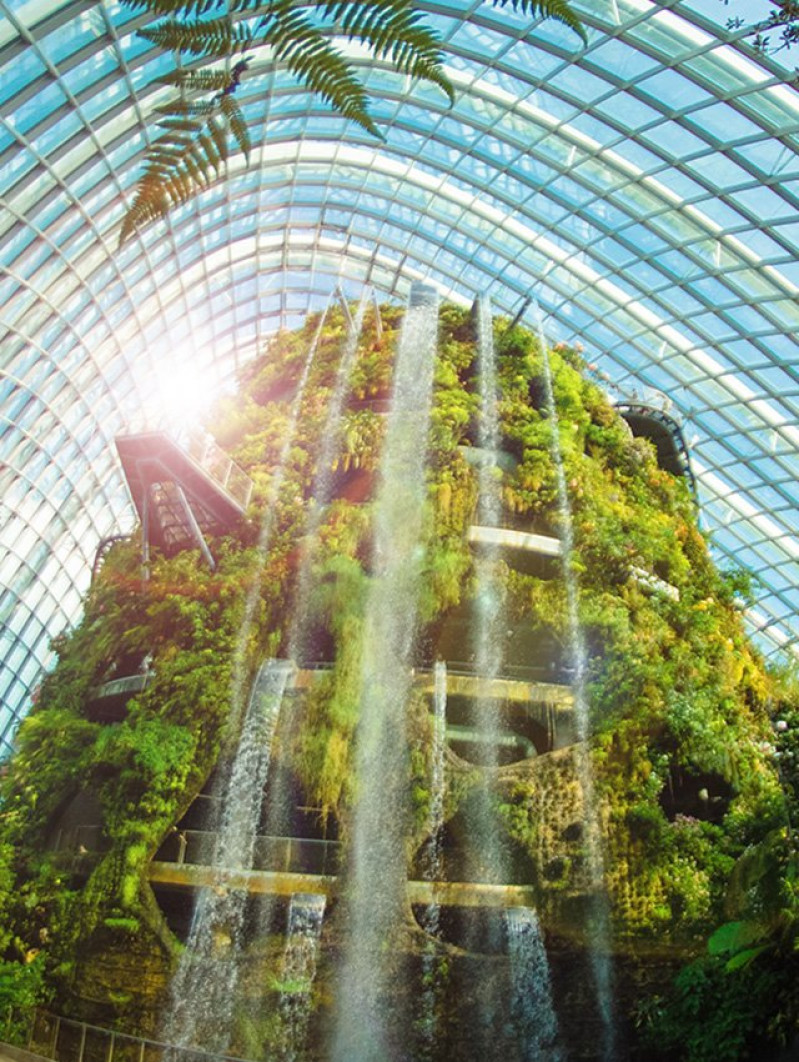
Cloud Forest
A cloud forest, also called a water forest, primas forest, or tropical montane cloud forest , is a generally tropical or subtropical, evergreen, montane, moist forest characterized by a persistent, frequent or seasonal low-level cloud cover, usually at the canopy level, formally described in the International Cloud Atlas as silvagenitus. Cloud forests often exhibit an abundance of mosses covering the ground and vegetation, in which case they are also referred to as mossy forests. Mossy forests usually develop on the saddles of mountains, where moisture introduced by settling clouds is more effectively retained.
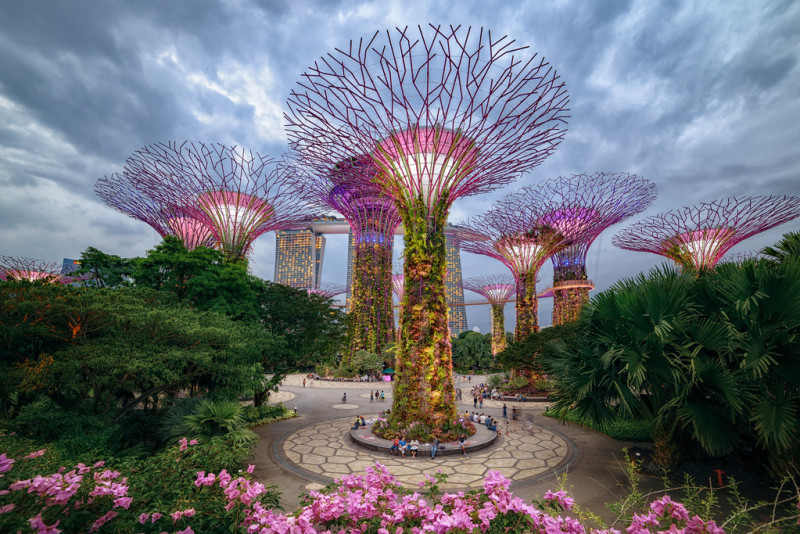
Supertree Grove
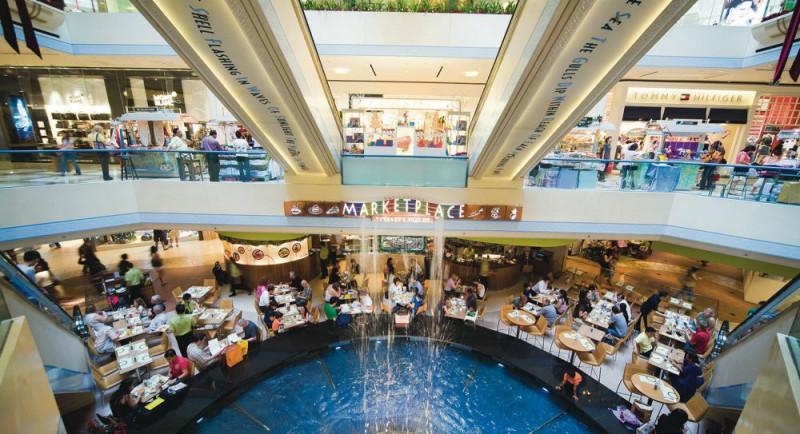
Raffles City Shopping Centre
Raffles City is a large complex located in the Civic District within the Downtown Core of the city-state of Singapore. Occupying an entire city block bounded by Stamford Road, Beach Road, Bras Basah Road and North Bridge Road, it houses two hotels and an office tower over a podium which contains a shopping complex and a convention centre. The mall is managed by CapitaCommercial Trust and CapitaMall Trust. It was completed in 1986. Built on the former site of Raffles Institution, the first school in Singapore, and located beside the historic Raffles Hotel, its aluminium-finish and simple geometric designs gave a stark, modernist contrast to Victorian architecture and classical architecture which used to characterise architecture in that district. The embassy of Hungary is located on the 29th floor of the Raffles City Tower, which also houses the delegation office of the European Union.
Parkroyal on Pickering
Parkroyal Collection Pickering, Singapore is a luxury hotel located in the Central Area of Singapore. The building's "hotel-in-a-garden" design has been lauded for its unique architecture that incorporates 15,000 m2 of elevated terraced gardens.
Grids & Circles
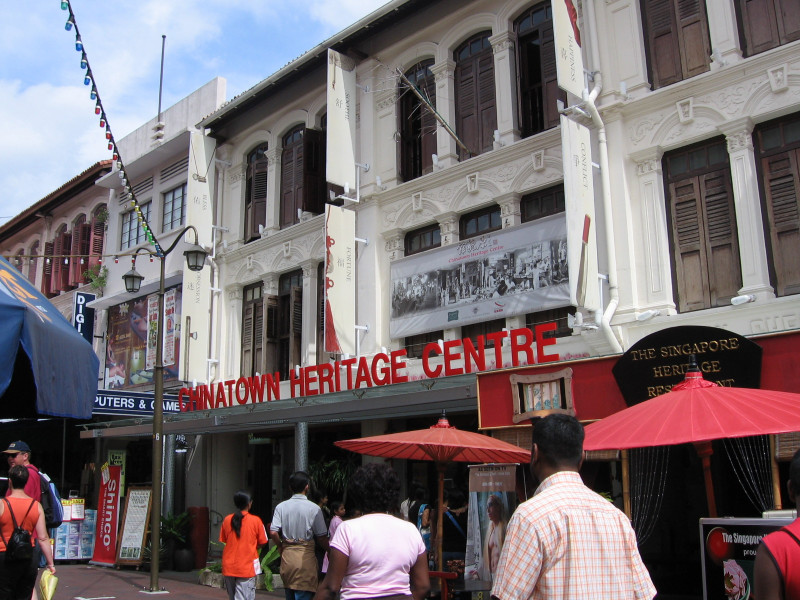
Chinatown Singapore
A Chinatown is an ethnic enclave of Chinese people located outside mainland China, Hong Kong, Macau or Taiwan, most often in an urban setting. Areas known as "Chinatown" exist throughout the world, including Europe, North America, South America, Asia, Africa, Australia, Zealandia and the Middle East. The development of most Chinatowns typically resulted from mass migration to an area without any or with very few Chinese residents. Binondo in Manila, established in 1594, is recognized as the world's oldest Chinatown. Notable early examples outside Asia include San Francisco's Chinatown in the United States and Melbourne's Chinatown in Australia, which were founded in the mid-19th century during the California gold rush and Victoria gold rush, respectively. A more modern example, in Montville, Connecticut, was caused by the displacement of Chinese workers in the Manhattan Chinatown following the September 11th attacks in 2001.
Club Street
Club Street is a street located in Chinatown within the Outram Planning Area in Singapore. Club Street links Cross Street with Ann Siang Hill, which leads to South Bridge Road. The street is lined with conserved shops that are occupied by restaurants, bars and several galleries. Restaurant groups Da Paolo and IndoChine Group have branches located on this street, and it is home to a number of bars and cafes.
Ann Siang Road
Ann Siang Hill is a small hill, and the name of a one-way road located in Chinatown, Singapore. It was named after Chia Ann Siang, a wealthy businessman. The road links Club Street and Ann Siang Road to South Bridge Road. Ann Siang Road connects Ann Siang Hill to Kadayanallur Street.
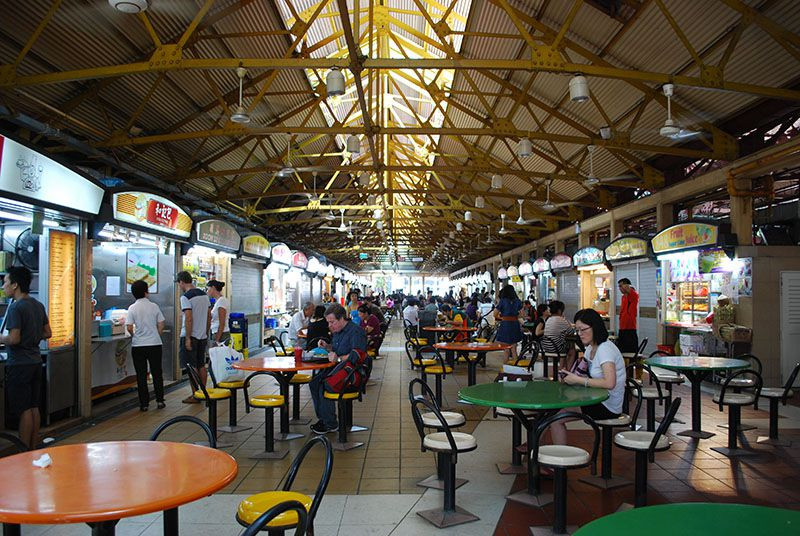
Maxwell Food Centre
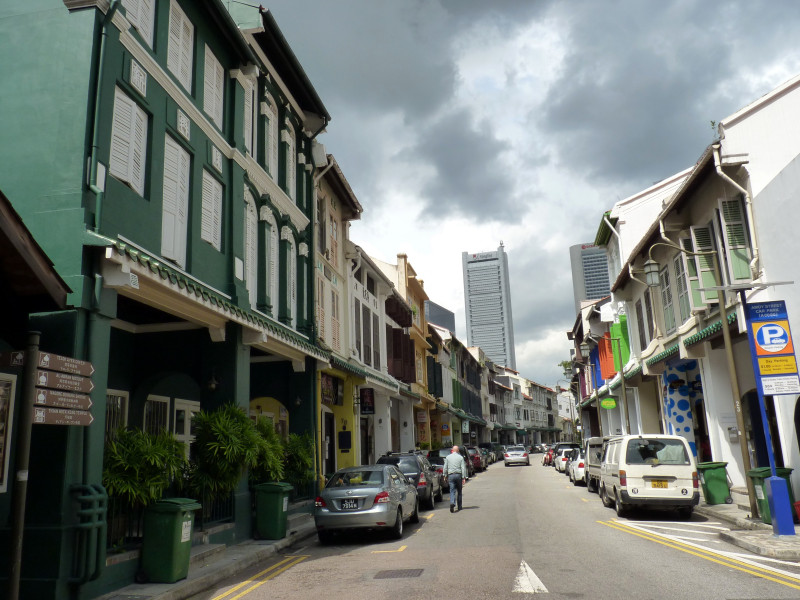
Amoy Street
Amoy Street is the name of the following streets: Amoy Street in Wan Chai, Hong Kong Island, Hong Kong Amoy Street, Singapore in Chinatown, Singapore
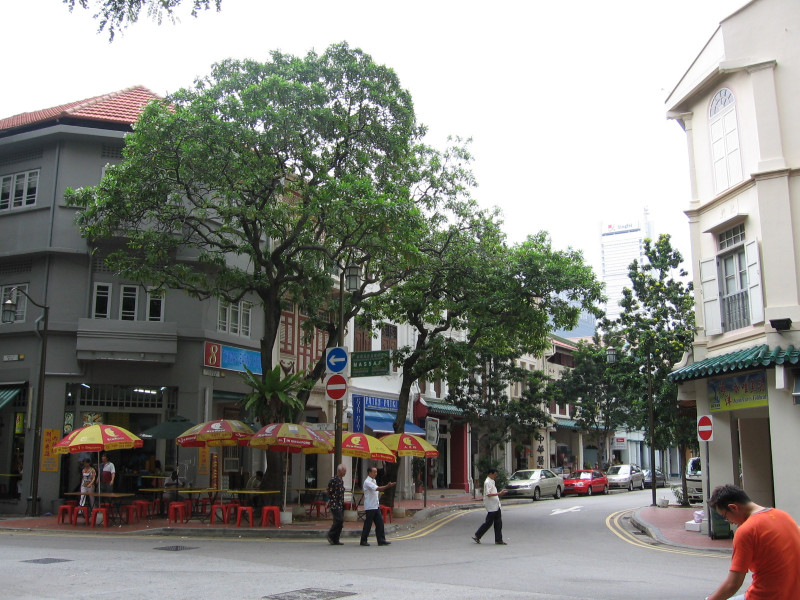
Telok Ayer Street
Telok Ayer Street is a street located in Singapore's Chinatown within the Outram district, linking Church Street to Cecil Street. Telok Ayer MRT station is located at the junction of Cross Street and this road.
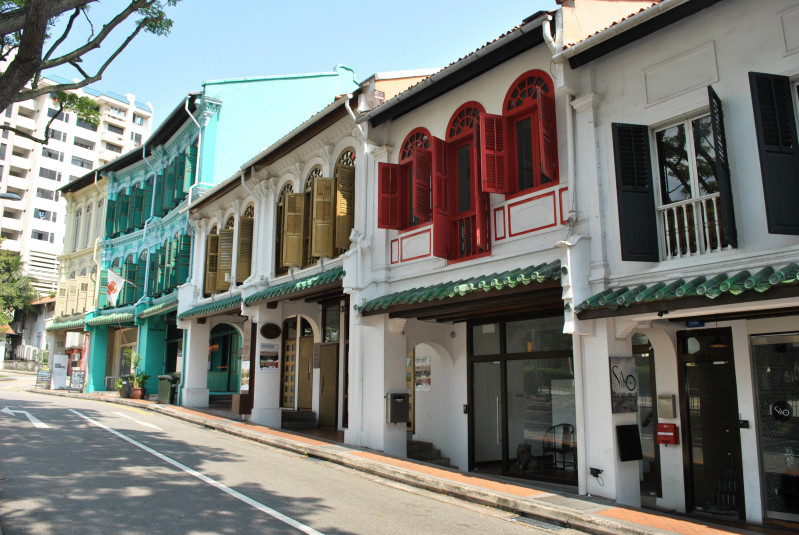
Duxton Road
Duxton Hill is a small hill, as well as the name of a road, located in Tanjong Pagar in the Downtown Core district of Singapore. The road leads from Tanjong Pagar Road to the peak of the hill, and is intersected by Duxton Road . Duxton Road is a one-way road linking Neil Road to Craig Road.
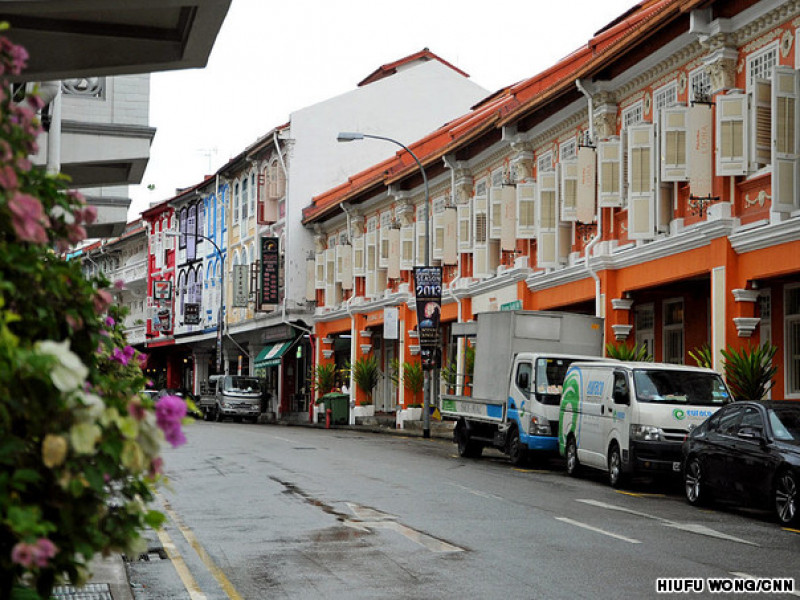
Keong Saik Road
Keong Saik Road is a one-way road located in Chinatown within the Outram Planning Area in Singapore. The road links New Bridge Road to Neil Road, and is intersected by Kreta Ayer Road.
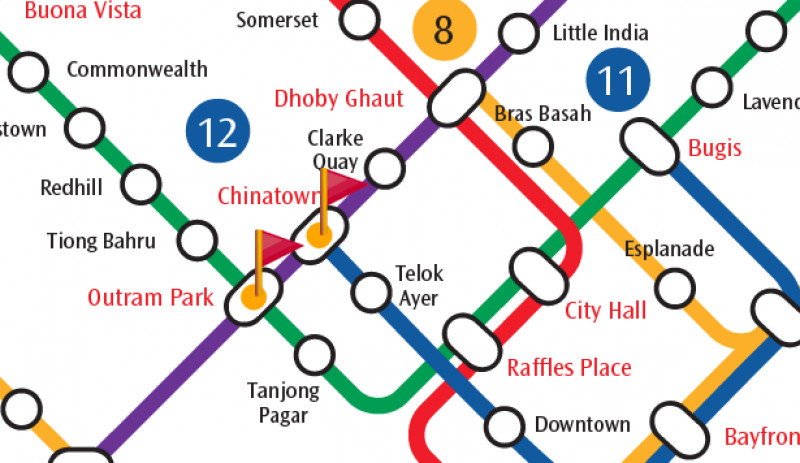
Outram Park MRT
Share on Pinterest
