- 6 sights
- 0 h 56 min
- 4.68 km / 2.90 mi

Sights
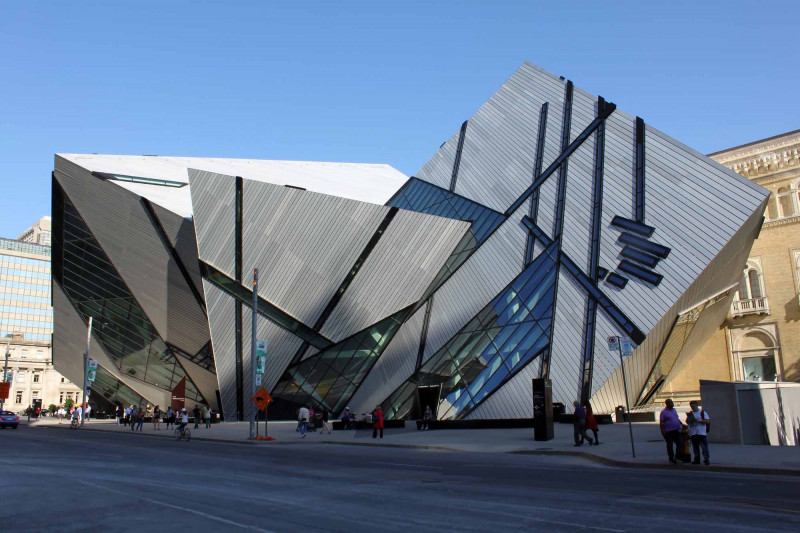
Royal Ontario Museum
The Royal Ontario Museum (ROM, French: Musée royal de l'Ontario) is a museum of art, world culture and natural history in Toronto, Ontario, Canada. It is one of the largest museums in North America, and the largest in Canada. It attracts more than one million visitors every year, making the ROM the most visited museum in Canada. The museum is north of Queen's Park, in the University of Toronto district, with its main entrance on Bloor Street West. The Museum subway station of the Toronto Transit Commission is named after the ROM, and since 2008, it is decorated to resemble the institution's collection. Established on 16 April 1912 and opened on 19 March 1914, the museum has maintained close relations with the University of Toronto throughout its history, often sharing expertise and resources. The museum was under the direct control and management of the University of Toronto until 1968, when it became an independent Crown agency of the government of Ontario. Today, the museum is Canada's largest field-research institution, with research and conservation activities that span the globe. With more than six million items and forty galleries, the museum's diverse collections of world culture and natural history contribute to its international reputation. The museum contains notable collections of dinosaurs, minerals and meteorites, Near Eastern and African art, Art of East Asia, European history, and Canadian history. It houses the world's largest collection of fossils from the Burgess Shale with more than 150,000 specimens. The museum also contains an extensive collection of design and fine arts, including clothing, interior, and product design, especially Art Deco.
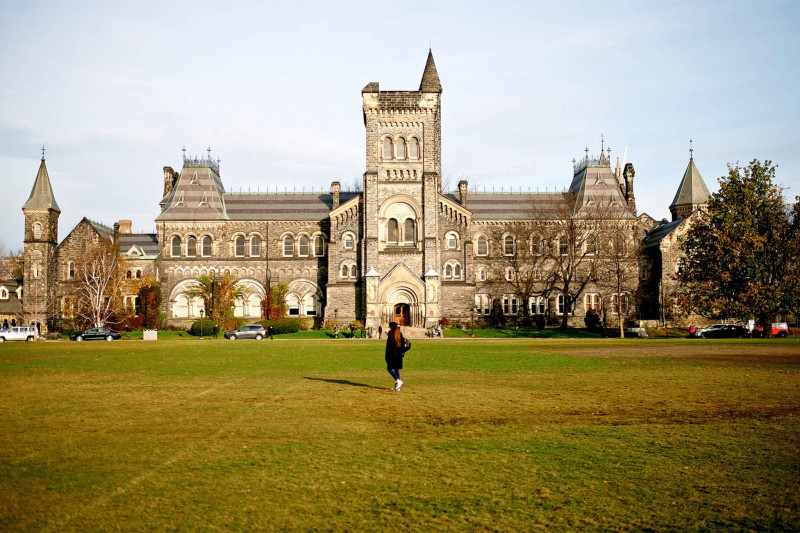
University of Toronto
The University of Toronto (U of T, UToronto, or Toronto) is a public research university in Toronto, Ontario, Canada on the grounds that surround Queen's Park. It was founded by royal charter in 1827 as King's College, the first institution of higher learning in the colony of Upper Canada. Originally controlled by the Church of England, the university assumed the present name in 1850 upon becoming a secular institution. As a collegiate university, it comprises twelve colleges, which differ in character and history, each with substantial autonomy on financial and institutional affairs. It has two satellite campuses in Scarborough and Mississauga. Academically, the University of Toronto is noted for influential movements and curricula in literary criticism and communication theory, known collectively as the Toronto School. The university was the birthplace of insulin and stem cell research, and was the site of the first practical electron microscope, the development of multi-touch technology, the identification of the first black hole Cygnus X-1, and the development of the theory of NP-completeness. By a significant margin, it receives the most annual scientific research funding of any Canadian university. It is one of two members of the Association of American Universities outside the United States, the other being McGill University in Montreal, Quebec. The Varsity Blues are the athletic teams that represent the university in intercollegiate league matches, with long and storied ties to gridiron football and ice hockey. The university's Hart House is an early example of the North American student centre, simultaneously serving cultural, intellectual and recreational interests within its large Gothic-revival complex. The University of Toronto has educated three Governors General of Canada and four Prime Ministers of Canada, four foreign leaders, fourteen Justices of the Supreme Court, and has been affiliated with ten Nobel laureates.
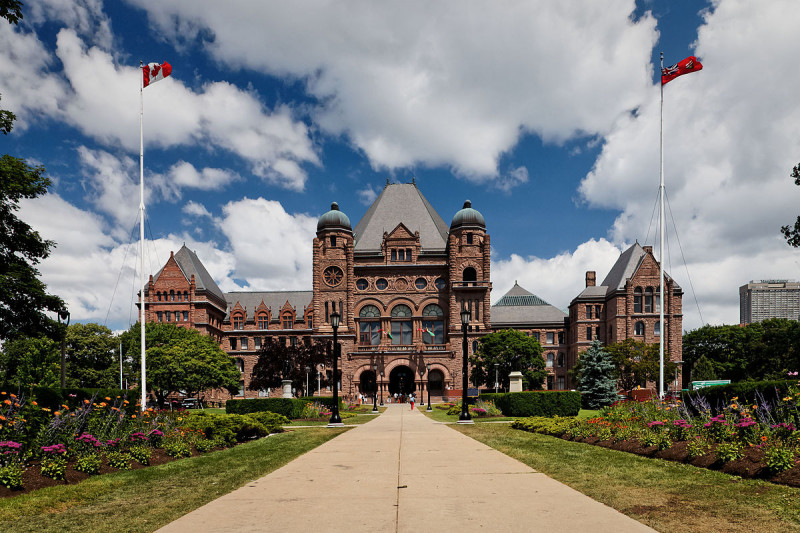
Ontario Legislative Building
The Ontario Legislative Building (French: L'édifice de l'Assemblée législative de l'Ontario) is a structure in central Toronto, Ontario that houses the Legislative Assembly of Ontario, as well as the viceregal suite of the Lieutenant Governor of Ontario and offices for members of the provincial parliament (MPPs). The building is surrounded by Queen's Park, sitting on that part south of Wellesley Street, which is the former site of King's College (later the University of Toronto), and which is leased from the university by the provincial Crown for a "peppercorn" payment of CAD$1 per annum on a 999-year term. The building and the provincial government are both often referred to by the metonym "Queen's Park".
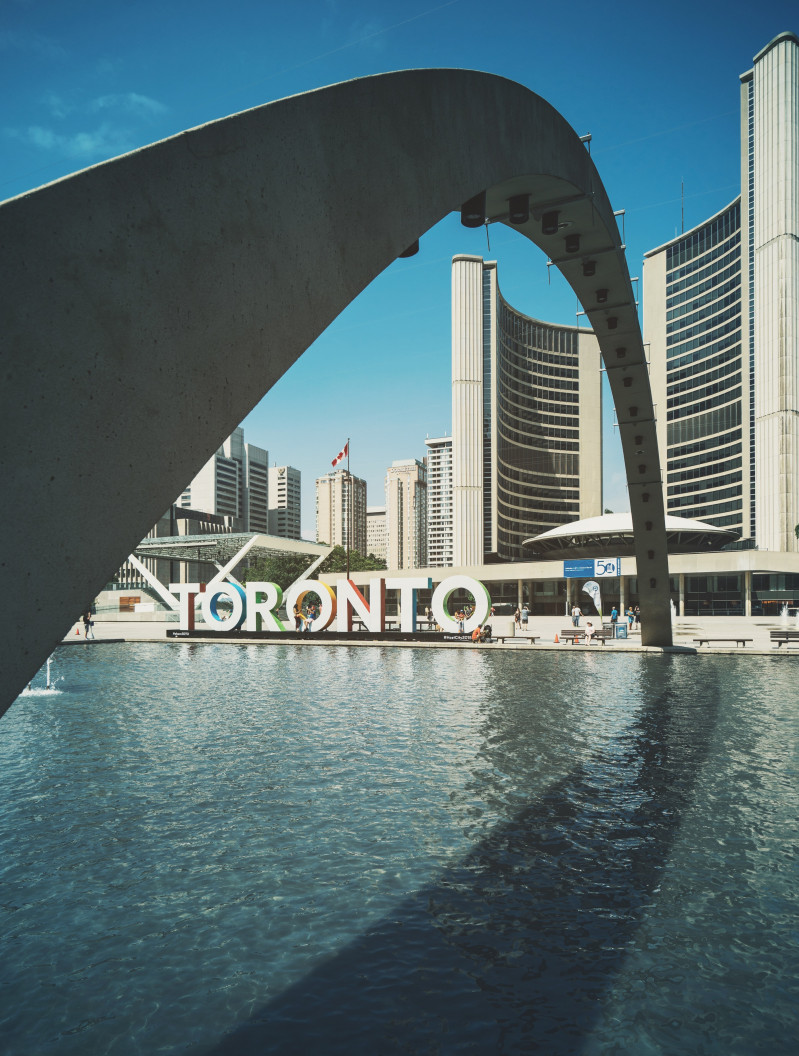
Toronto City Hall
The Toronto City Hall, or New City Hall, is the seat of the municipal government of Toronto, Ontario, Canada, and one of the city's most distinctive landmarks. Designed by Finnish architect Viljo Revell (with Heikki Castrén, Bengt Lundsten, and Seppo Valjus) and landscape architect Richard Strong, and engineered by Hannskarl Bandel, the building opened in 1965. It was built to replace Old City Hall, which had housed city offices since 1899. The current city hall, located at Nathan Phillips Square, is the city's fourth and was built to replace its predecessor which the city outgrew shortly after its completion. The area of Toronto City Hall and the civic square was formerly the location of Toronto's Old Chinatown, which was expropriated and bulldozed during the mid-1950s in preparation for a new civic building.

Financial District
A financial district is the central area in some large cities where banks, insurance companies and other large corporations have head offices. Financial districts are often home to skyscrapers.
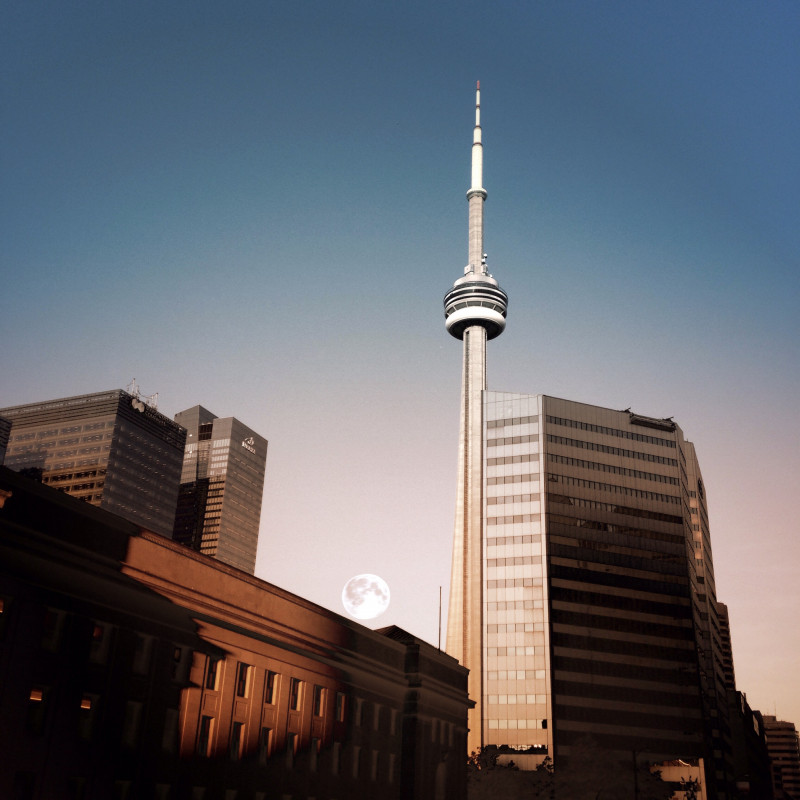
CN Tower
The CN Tower (French: Tour CN) is a 553.3 m-high (1,815.3 ft) concrete communications and observation tower in downtown Toronto, Ontario, Canada. Built on the former Railway Lands, it was completed in 1976, and held the record for the world's tallest free-standing structure for 32 years from 1975–2007 and was the world's tallest tower until 2009 being overtaken by Burj Khalifa and Canton Tower, respectively. It is now the third tallest tower in the world and remains the tallest free-standing structure in the Western Hemisphere, a signature icon of Toronto's skyline, attracting more than two million international visitors annually. Its name "CN" originally referred to Canadian National, the railway company that built the tower. Following the railway's decision to divest non-core freight railway assets prior to the company's privatization in 1995, it transferred the tower to the Canada Lands Company, a federal Crown corporation responsible for real estate development. In 1995, the CN Tower was declared one of the modern Seven Wonders of the World by the American Society of Civil Engineers. It also belongs to the World Federation of Great Towers.
Share on Pinterest
