- 12 sights
- 2 h 07 min
- 10.50 km / 6.52 mi

Sights
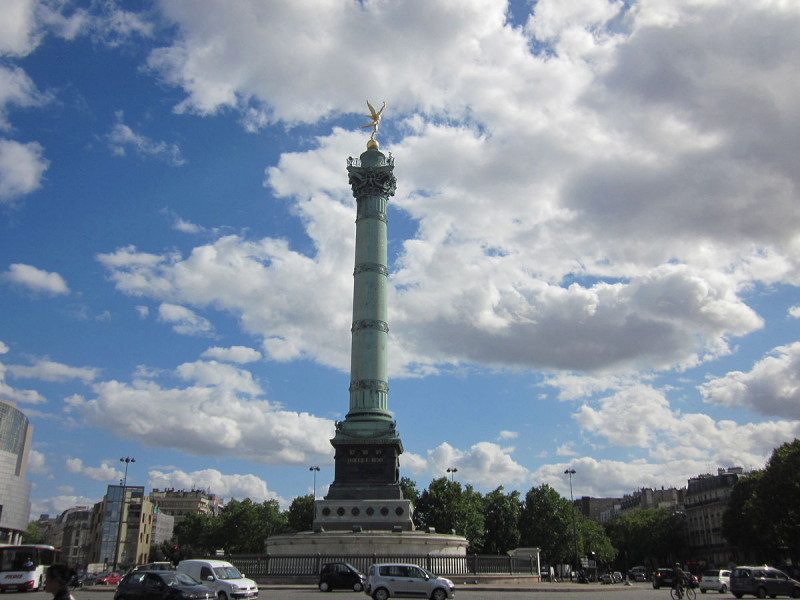
Place de la Bastille
The Place de la Bastille is a square in Paris where the Bastille prison stood until the "Storming of the Bastille" and its subsequent physical destruction between 14 July 1789 and 14 July 1790 during the French Revolution. No vestige of the prison remains. The square straddles 3 arrondissements of Paris, namely the 4th, 11th and 12th. The square and its surrounding areas are normally called simply Bastille. The July Column (Colonne de Juillet) which commemorates the events of the July Revolution (1830) stands at the center of the square. Other notable features include the Bastille Opera, the Bastille subway station and a section of the Canal Saint Martin. Prior to 1984, the former Bastille railway station stood where the opera house now stands. The square is home to concerts and similar events. The north-eastern area of Bastille is busy at night with its many cafés, bars, night clubs, and concert halls. As a consequence of its historical significance, the square is often the site or point of departure of political demonstrations, including the massive anti-CPE demonstration of 28 March 2006.
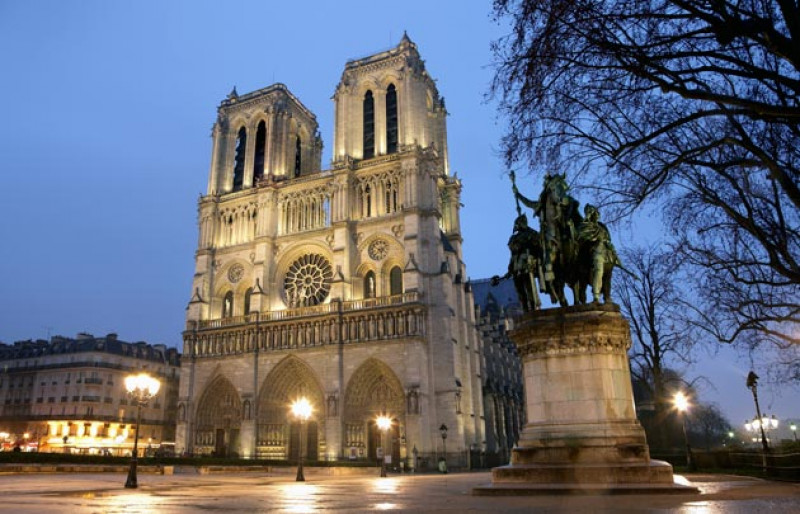
Cathedral of Notre Dame de Paris
Notre-Dame de Paris (French: [nɔtʁə dam də paʁi] ( listen); meaning "Our Lady of Paris"), also known as Notre-Dame Cathedral or simply Notre-Dame, is a medieval Catholic cathedral on the Île de la Cité in the fourth arrondissement of Paris, France. The cathedral is widely considered to be one of the finest examples of French Gothic architecture, and it is among the largest and best-known church buildings in the Catholic Church in France, and in the world. The naturalism of its sculptures and stained glass serve to contrast it with earlier Romanesque architecture. As the cathedral of the Archdiocese of Paris, Notre-Dame contains the cathedra of the Archbishop of Paris, currently Cardinal André Vingt-Trois. The cathedral treasury contains a reliquary, which houses some of Catholicism's most important relics, including the purported Crown of Thorns, a fragment of the True Cross, and one of the Holy Nails. In the 1790s, Notre-Dame suffered desecration in the radical phase of the French Revolution when much of its religious imagery was damaged or destroyed. An extensive restoration supervised by Eugène Viollet-le-Duc began in 1845. A project of further restoration and maintenance began in 1991.
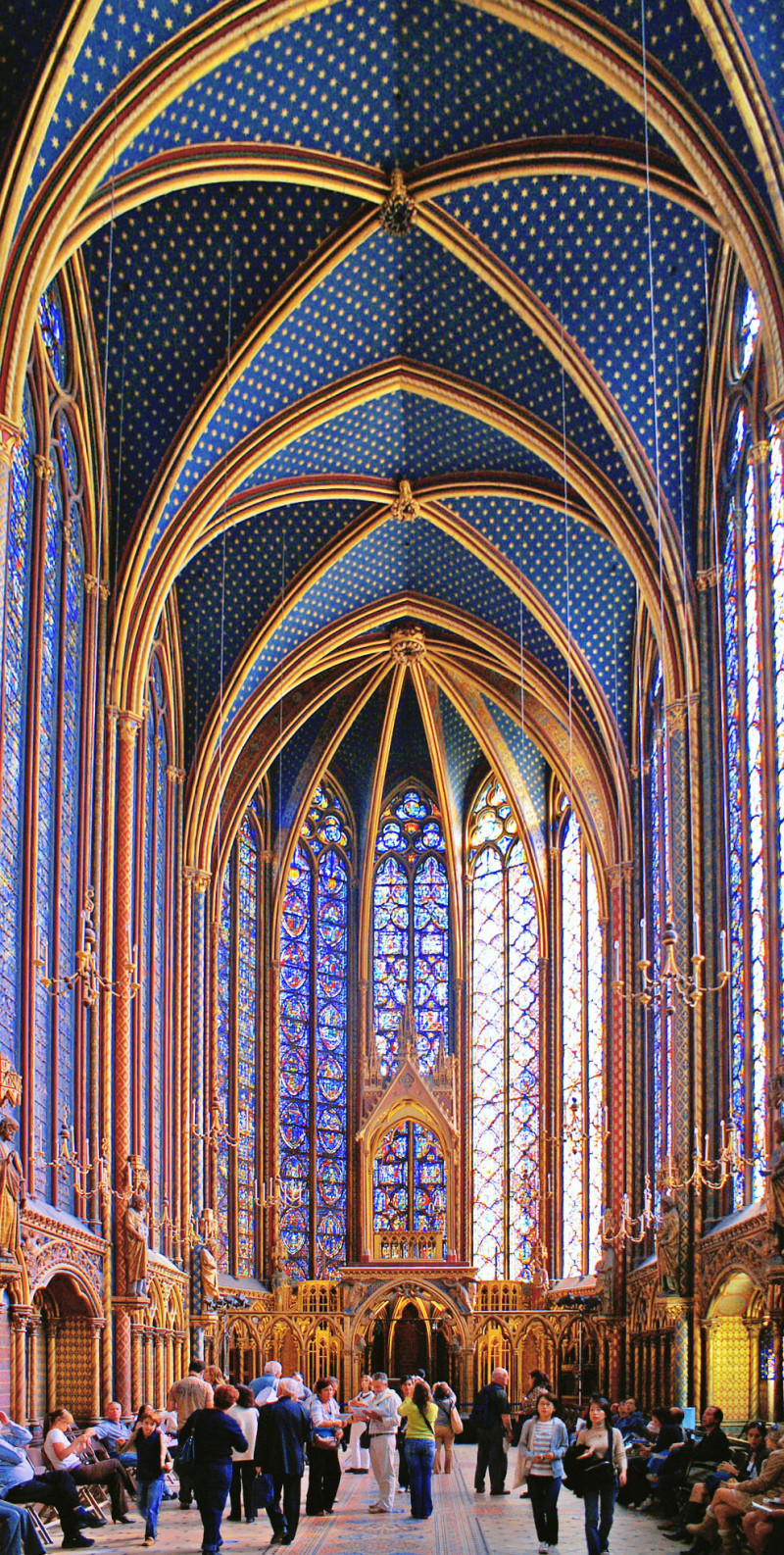
Sainte Chapelle
The Sainte-Chapelle (French pronunciation: [sɛ̃t ʃapɛl], Holy Chapel) is a royal chapel in the Gothic style, within the medieval Palais de la Cité, the residence of the Kings of France until the 14th century, on the Île de la Cité in the heart of Paris, France. Begun some time after 1238 and consecrated on 26 April 1248, the Sainte-Chapelle is considered among the highest achievements of the Rayonnant period of Gothic architecture. It was commissioned by King Louis IX of France to house his collection of Passion relics, including Christ's Crown of Thorns—one of the most important relics in medieval Christendom. Along with the Conciergerie, the Sainte-Chapelle is one of the earliest surviving buildings of the Capetian royal palace on the Île de la Cité. Although damaged during the French Revolution, and restored in the 19th century, it has one of the most extensive 13th-century stained glass collections anywhere in the world.
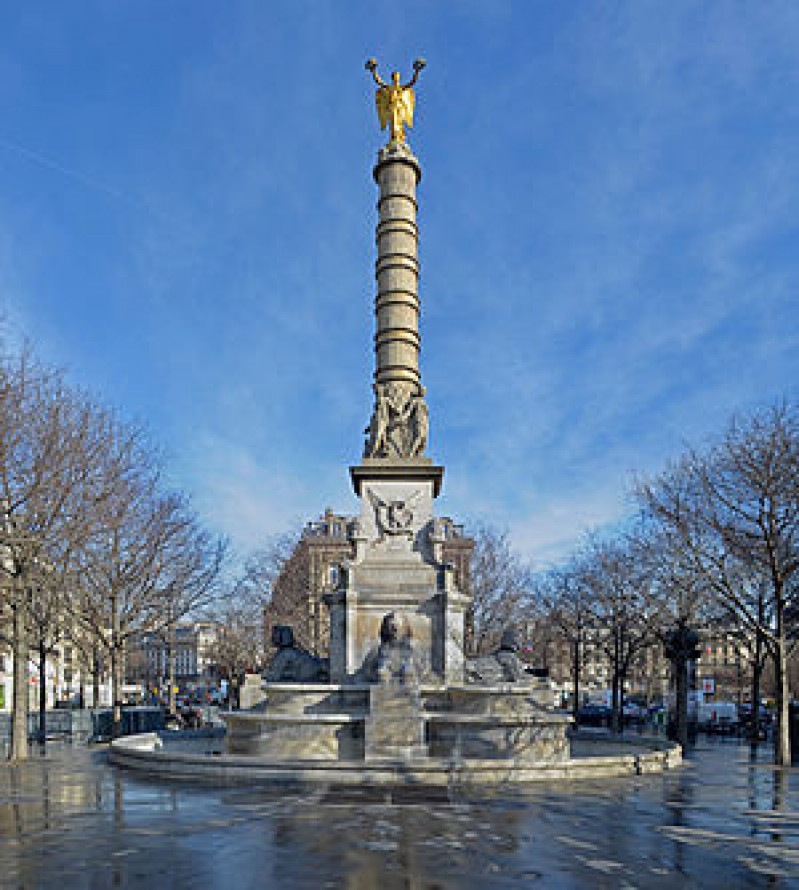
Châtelet Place
The Place du Châtelet (French pronunciation: [plas dy ʃatlɛ]) is a public square in Paris, on the right bank of the river Seine, on the borderline between the 1st and 4th arrondissements. It lies at the north end of the Pont au Change, a bridge that connects the Île de la Cité, near the Palais de Justice and the Conciergerie, to the right bank. The closest métro station is Châtelet
Musée du Louvre
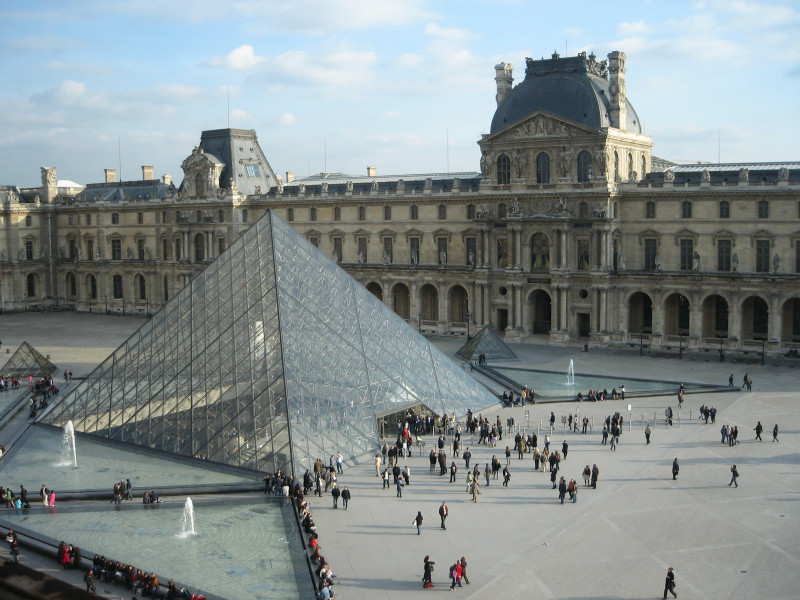
The Louvre (US: ), or the Louvre Museum (French: Musée du Louvre [myze dy luvʁ] ( listen)), is the world's largest art museum and a historic monument in Paris, France. A central landmark of the city, it is located on the Right Bank of the Seine in the city's 1st arrondissement (district or ward). Approximately 38,000 objects from prehistory to the 21st century are exhibited over an area of 72,735 square metres (782,910 square feet). In 2016, the Louvre was the world's most visited art museum, receiving 7.3 million visitors. The museum is housed in the Louvre Palace, originally built as a fortress in the late 12th to 13th century under Philip II. Remnants of the fortress are visible in the basement of the museum. Due to the urban expansion of the city, the fortress eventually lost its defensive function and, in 1546, was converted by Francis I into the main residence of the French Kings. The building was extended many times to form the present Louvre Palace. In 1682, Louis XIV chose the Palace of Versailles for his household, leaving the Louvre primarily as a place to display the royal collection, including, from 1692, a collection of ancient Greek and Roman sculpture. In 1692, the building was occupied by the Académie des Inscriptions et Belles Lettres and the Académie Royale de Peinture et de Sculpture, which in 1699 held the first of a series of salons. The Académie remained at the Louvre for 100 years. During the French Revolution, the National Assembly decreed that the Louvre should be used as a museum to display the nation's masterpieces. The museum opened on 10 August 1793 with an exhibition of 537 paintings, the majority of the works being royal and confiscated church property. Because of structural problems with the building, the museum was closed in 1796 until 1801. The collection was increased under Napoleon and the museum was renamed Musée Napoléon, but after Napoleon's abdication many works seized by his armies were returned to their original owners. The collection was further increased during the reigns of Louis XVIII and Charles X, and during the Second French Empire the museum gained 20,000 pieces. Holdings have grown steadily through donations and bequests since the Third Republic. The collection is divided among eight curatorial departments: Egyptian Antiquities; Near Eastern Antiquities; Greek, Etruscan and Roman Antiquities; Islamic Art; Sculpture; Decorative Arts; Paintings; Prints and Drawings.
Tuileries Garden
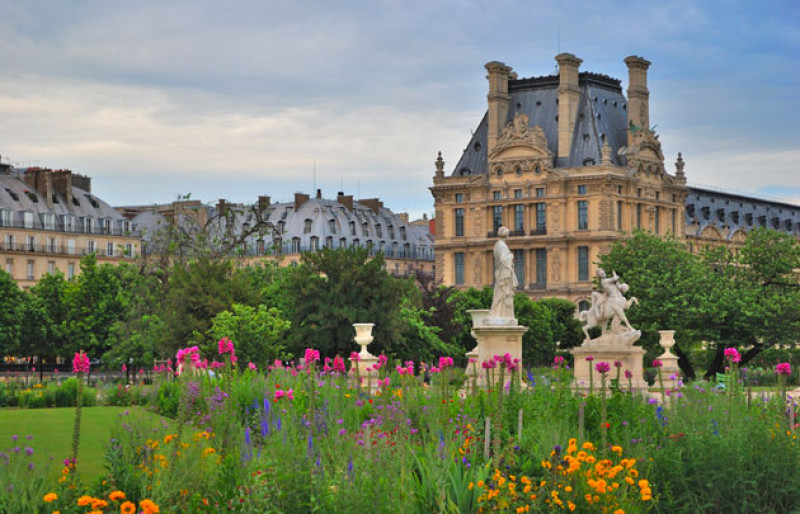
The Tuileries Garden is a public garden located between the Louvre and the Place de la Concorde in the 1st arrondissement of Paris, France. Created by Catherine de' Medici as the garden of the Tuileries Palace in 1564, it was eventually opened to the public in 1667 and became a public park after the French Revolution. In the 19th and 20th centuries, it was a place where Parisians celebrated, met, strolled and relaxed.
Place de la Concorde
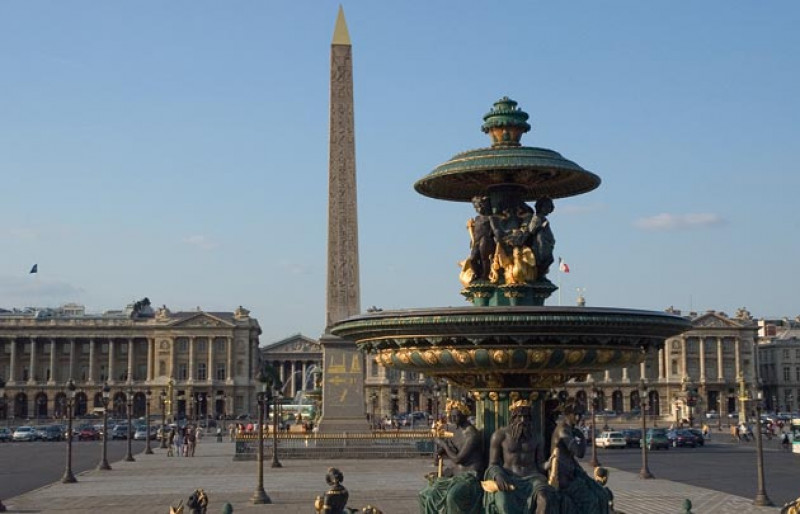
The Place de la Concorde (French pronunciation: [plas də la kɔ̃kɔʁd]) is one of the major public squares in Paris, France. Measuring 8.64 hectares (21.3 acres) in area, it is the largest square in the French capital. It is located in the city's eighth arrondissement, at the eastern end of the Champs-Élysées. It was the site of many notable public executions of royalty during the French Revolution.
Champs-Élysées Avenue
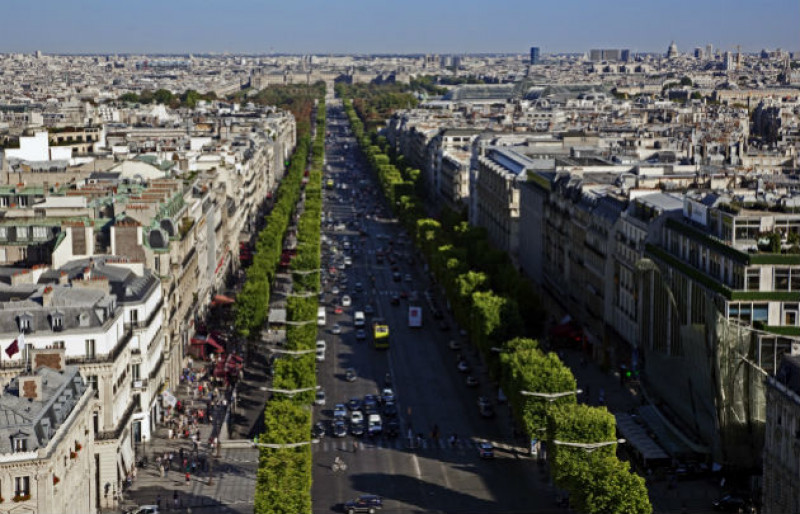
The Avenue des Champs-Élysées ) is an avenue in the 8th arrondissement of Paris, France, 1.9 kilometres long and 70 metres wide, running between the Place de la Concorde and the Place Charles de Gaulle, where the Arc de Triomphe is located. It is known for its theatres, cafés, and luxury shops, for the annual Bastille Day military parade, and as the finish of the Tour de France cycle race. The name is French for the Elysian Fields, the paradise for dead heroes in Greek mythology. Champs-Élysées is widely regarded to be one of the most recognisable avenues in the world.
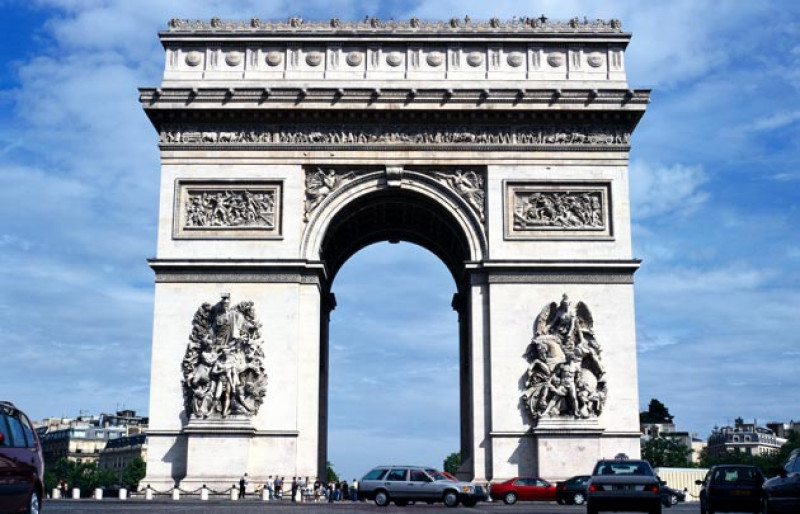
Arc de Triomphe
The Arc de Triomphe de l'Étoile (French pronunciation: [aʁk də tʁijɔ̃f də letwal] ( listen), Triumphal Arch of the Star) is one of the most famous monuments in Paris, standing at the western end of the Champs-Élysées at the center of Place Charles de Gaulle, formerly named Place de l'Étoile — the étoile or "star" of the juncture formed by its twelve radiating avenues. The Arc de Triomphe should not be confused with a smaller arch, the Arc de Triomphe du Carrousel, which stands west of the Louvre. The Arc de Triomphe honours those who fought and died for France in the French Revolutionary and Napoleonic Wars, with the names of all French victories and generals inscribed on its inner and outer surfaces. Beneath its vault lies the Tomb of the Unknown Soldier from World War I. As the central cohesive element of the Axe historique (historic axis, a sequence of monuments and grand thoroughfares on a route running from the courtyard of the Louvre to the Grande Arche de la Défense), the Arc de Triomphe was designed by Jean Chalgrin in 1806, and its iconographic program pits heroically nude French youths against bearded Germanic warriors in chain mail. It set the tone for public monuments with triumphant patriotic messages. Inspired by the Roman Arch of Titus, the Arc de Triomphe has an overall height of 50 metres (164 ft), width of 45 m (148 ft), and depth of 22 m (72 ft), while its large vault is 29.19 m (95.8 ft) high and 14.62 m (48.0 ft) wide. The smaller transverse vaults are 18.68 m (61.3 ft) high and 8.44 m (27.7 ft) wide. Three weeks after the Paris victory parade in 1919 (marking the end of hostilities in World War I), Charles Godefroy flew his Nieuport biplane under the arch's primary vault, with the event captured on newsreel. Paris's Arc de Triomphe was the tallest triumphal arch until the completion of the Monumento a la Revolución in Mexico City in 1938, which is 67 metres (220 ft) high. The Arch of Triumph in Pyongyang, completed in 1982, is modelled on the Arc de Triomphe and is slightly taller at 60 m (197 ft).
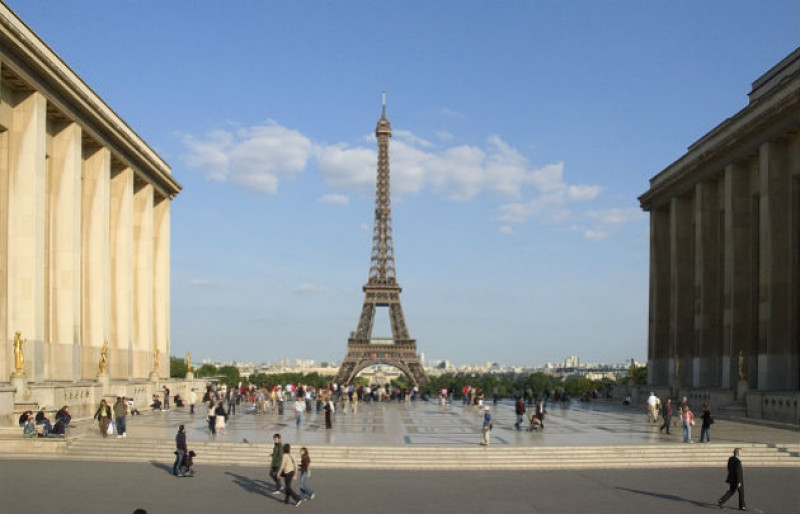
Esplanade du Trocadéro
The Trocadéro, pronounced [trɔ.ka.de.ʁo], site of the Palais de Chaillot, [pa.lɛ də ʃa.jo], is an area of Paris, France, in the 16th arrondissement, across the Seine from the Eiffel Tower. The hill of the Trocadéro is the hill of Chaillot, a former village.
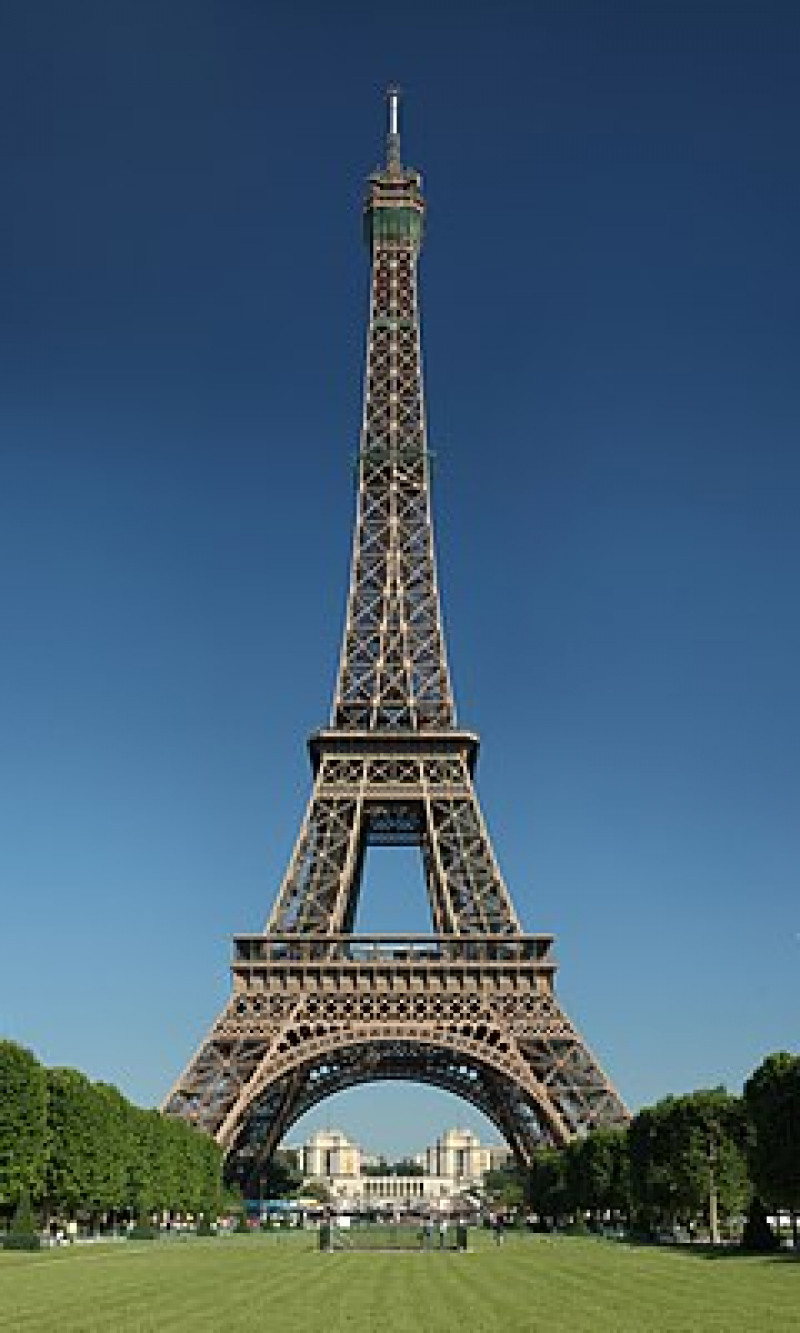
Eiffel Tower
The Eiffel Tower ( EYE-fəl; French: tour Eiffel [tuʁ‿ɛfɛl] ( listen)) is a wrought iron lattice tower on the Champ de Mars in Paris, France. It is named after the engineer Gustave Eiffel, whose company designed and built the tower. Constructed from 1887–89 as the entrance to the 1889 World's Fair, it was initially criticized by some of France's leading artists and intellectuals for its design, but it has become a global cultural icon of France and one of the most recognisable structures in the world. The Eiffel Tower is the most-visited paid monument in the world; 6.91 million people ascended it in 2015. The tower is 324 metres (1,063 ft) tall, about the same height as an 81-storey building, and the tallest structure in Paris. Its base is square, measuring 125 metres (410 ft) on each side. During its construction, the Eiffel Tower surpassed the Washington Monument to become the tallest man-made structure in the world, a title it held for 41 years until the Chrysler Building in New York City was finished in 1930. Due to the addition of a broadcasting aerial at the top of the tower in 1957, it is now taller than the Chrysler Building by 5.2 metres (17 ft). Excluding transmitters, the Eiffel Tower is the second-tallest structure in France after the Millau Viaduct. The tower has three levels for visitors, with restaurants on the first and second levels. The top level's upper platform is 276 m (906 ft) above the ground – the highest observation deck accessible to the public in the European Union. Tickets can be purchased to ascend by stairs or lift (elevator) to the first and second levels. The climb from ground level to the first level is over 300 steps, as is the climb from the first level to the second. Although there is a staircase to the top level, it is usually accessible only by lift.
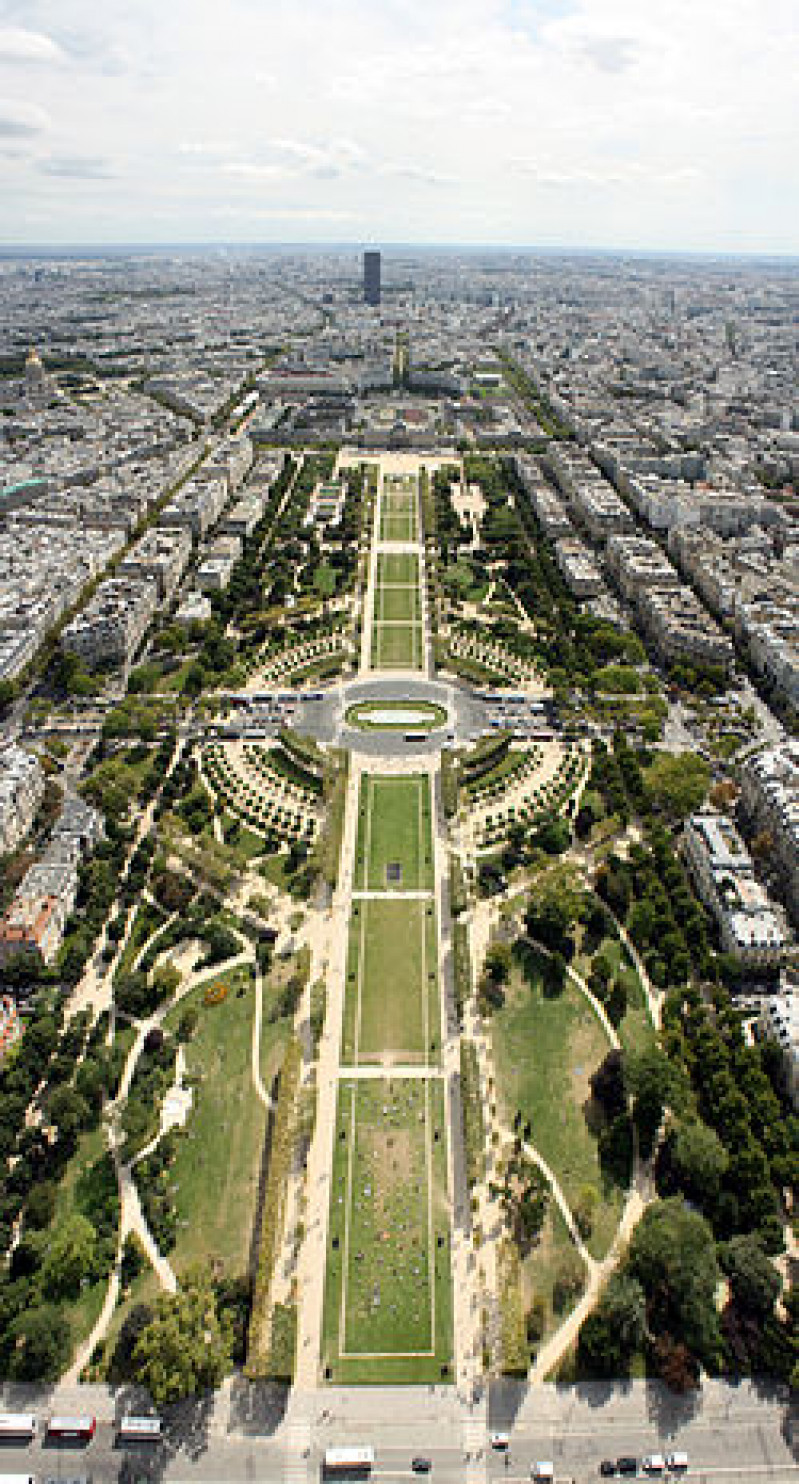
Champ de Mars
The Champ de Mars (French pronunciation: [ʃɑ̃ də maʁs] ; English: Field of Mars) is a large public greenspace in Paris, France, located in the seventh arrondissement, between the Eiffel Tower to the northwest and the École Militaire to the southeast. The park is named after the Campus Martius ("Mars Field") in Rome, a tribute to the Latin name of the Roman God of war. The name also alludes to the fact that the lawns here were formerly used as drilling and marching grounds by the French military. The nearest Métro stations are La Motte-Picquet–Grenelle, École Militaire, and Champ de Mars-Tour Eiffel, an RER suburban-commuter-railway station. A disused station, Champ de Mars is also nearby.
Share on Pinterest
