- Saint Joseph's Oratory
- Kondiaronk Belvedere
- Mount Royal Chalet
- Mary Queen of the World Cathedral
- Promenades Cathédrale
- St. Patrick's Basilica
- Rue St-Paul
- Place D'Armes
- Notre-Dame Basilica of Montreal
- Place Jacques-Cartier
- City Hall
- Bonsecours Market
- Notre-Dame-de-Bon-Secours Chapel
- Old Port of Montreal
- Peel Basin
- 15 sights
- 2 h 45 min
- 13.65 km / 8.48 mi
Must see in Montreal
Most popular sights to see in Montreal.

Sights
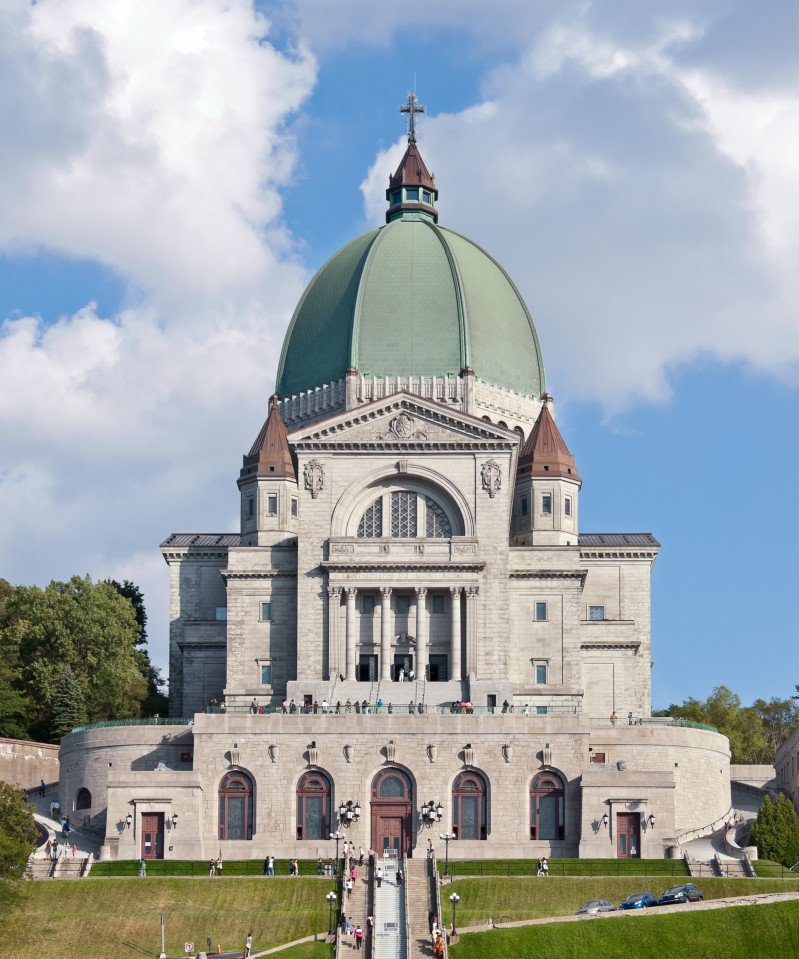
Saint Joseph's Oratory
Saint Joseph's Oratory of Mount Royal (French: Oratoire Saint-Joseph du Mont-Royal) is a Roman Catholic minor basilica and national shrine on Mount Royal's Westmount Summit in Montreal, Quebec. It is Canada's largest church. Its dome is the third-largest of its kind in the world after Saint Peter's Basilica in Rome and the Basilica of Our Lady of Peace of Yamoussoukro in Côte d'Ivoire. The basilica enshrines a statue of Saint Joseph, which was authorised a Canonical coronation by Pope Pius X on 19 March 1910 via Cardinal Vincenzo Vannutelli and another from Pope Pius XII on 31 July 1955 via Cardinal Paul-Émile Léger now located within its crypt department. The shrine is also famous due to its association with Brother Andre Bessette who was believed to possess healing powers through his Josephian devotion with its notable oil oinment given freely to its believers.
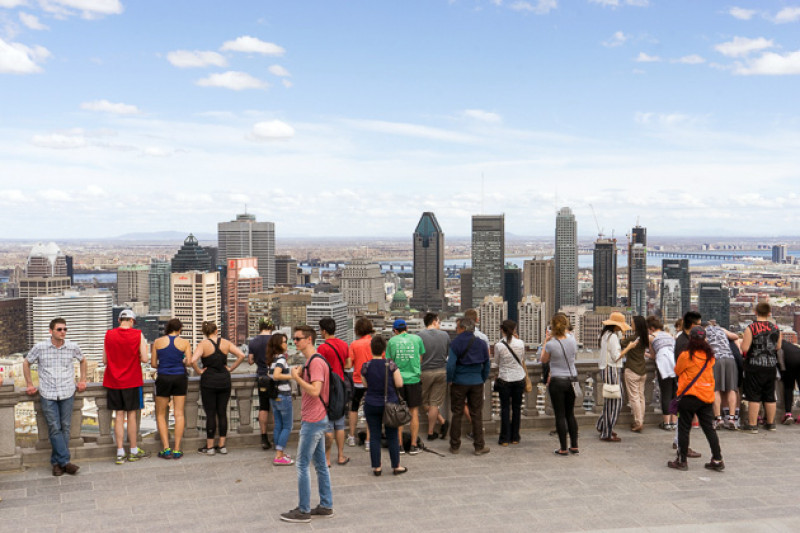
Kondiaronk Belvedere
Mount Royal Chalet (French: Chalet du Mont-Royal) is a building located near the summit of Mount Royal in Montreal, Quebec, Canada. The chalet was constructed in 1932 under the mayoralty of Camillien Houde as a make-work project during the Great Depression. The French Beaux Arts structure was designed by Montreal architect Aristide Beaugrand-Champagne (1876-1950). The building can host various events with room for 300 to 700 patrons. The southside of the building is a bricked courtyard and lookout with a view of Montreal's skyline from Mont-Royal.
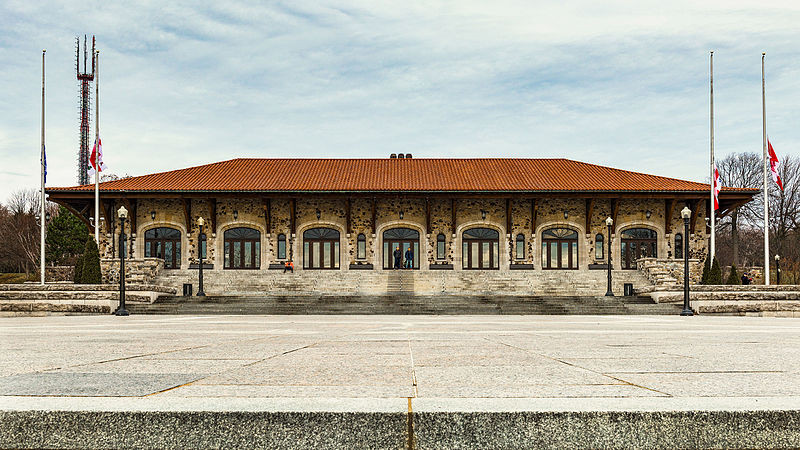
Mount Royal Chalet
Mount Royal Chalet (French: Chalet du Mont-Royal) is a building located near the summit of Mount Royal in Montreal, Quebec, Canada. The chalet was constructed in 1932 under the mayoralty of Camillien Houde as a make-work project during the Great Depression. The French Beaux Arts structure was designed by Montreal architect Aristide Beaugrand-Champagne (1876-1950). The building can host various events with room for 300 to 700 patrons. The southside of the building is a bricked courtyard and lookout with a view of Montreal's skyline from Mont-Royal.
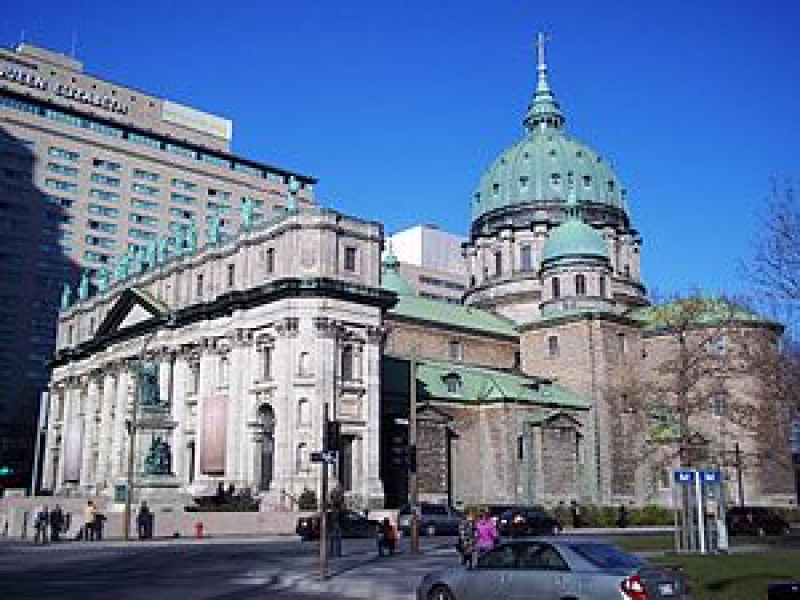
Mary Queen of the World Cathedral
Mary, Queen of the World Cathedral (French: Cathédrale Marie-Reine-du-Monde) is a minor basilica in Montreal, Quebec, Canada, and the seat of the Roman Catholic archdiocese of Montreal. It is the third largest church in Quebec after Saint Joseph's Oratory (also in Montreal) and the Basilica of Sainte-Anne-de-Beaupré east of Quebec City. The building is 101 m (333 ft) in length, 46 m (150 ft) in width, and a maximum height of 77 m (252 ft) at the cupola, the diameter of which is 23 m (75 ft). The church is located at 1085 Cathedral Street at the corner of René Lévesque Boulevard and Metcalfe Street, near the Bonaventure metro station and Central Station in downtown Montreal. It and the connected Archdiocese main buildings form the eastern side of Place du Canada, and occupies of dominant presences on Dorchester Square. The sacrament of baptism is celebrated in the small chapel. The marble baptismal font is surmounted by an impressive stucco crucifix sculpted by Philippe Hébert. The crucifix is one of the most important pieces of religious sculpture in Quebec.
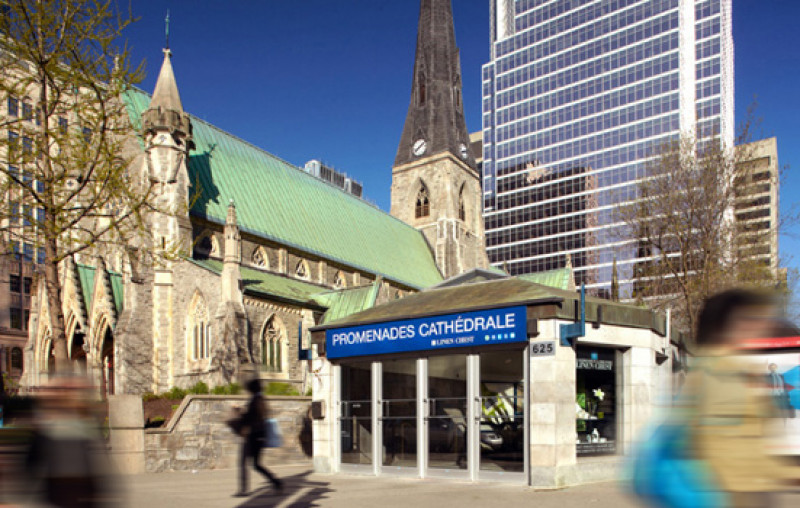
Promenades Cathédrale
Promenades Cathédrale is a 135,495 square foot retail complex on Saint Catherine Street in downtown Montreal, Quebec, Canada. The complex is located beneath Montreal's Anglican Christ Church Cathedral. Constructed in 1987, the mall is integrated into the underground city. The complex is connect to Henry Morgan Building across the street along avenue Union and home to Hudson's Bay Company Montreal store.
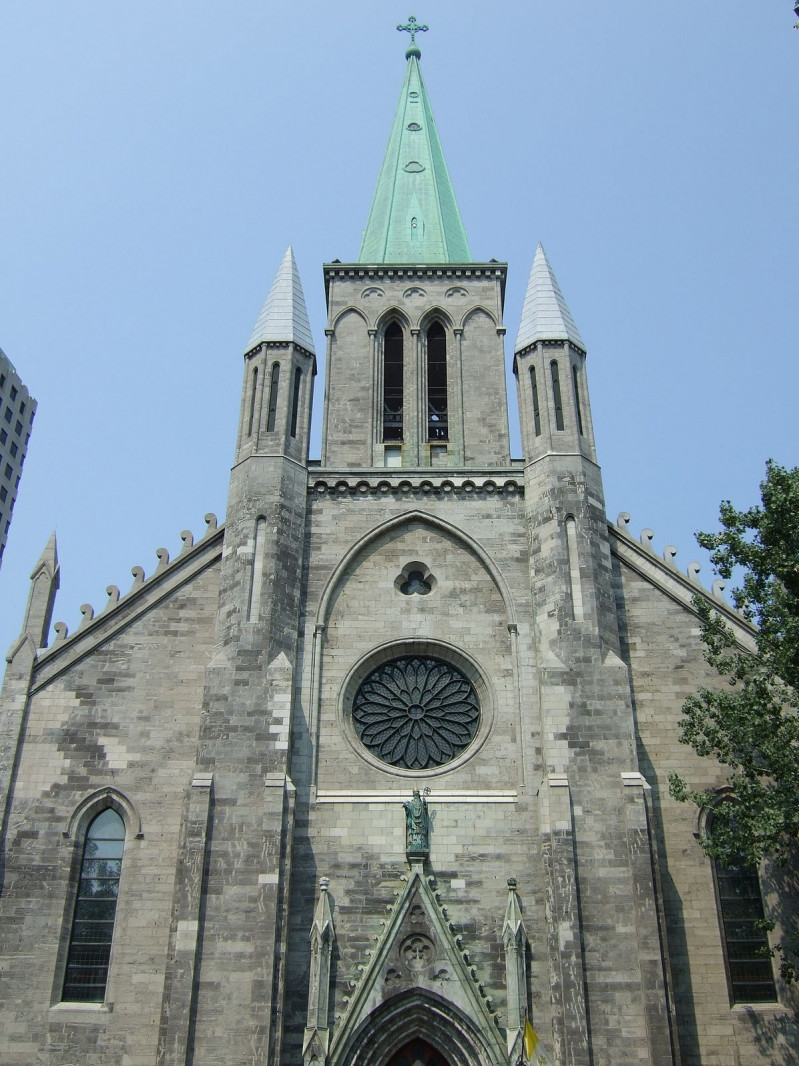
St. Patrick's Basilica
Saint Patrick's Basilica is a Roman Catholic minor basilica on René-Lévesque Boulevard in Downtown Montreal, Quebec, Canada.
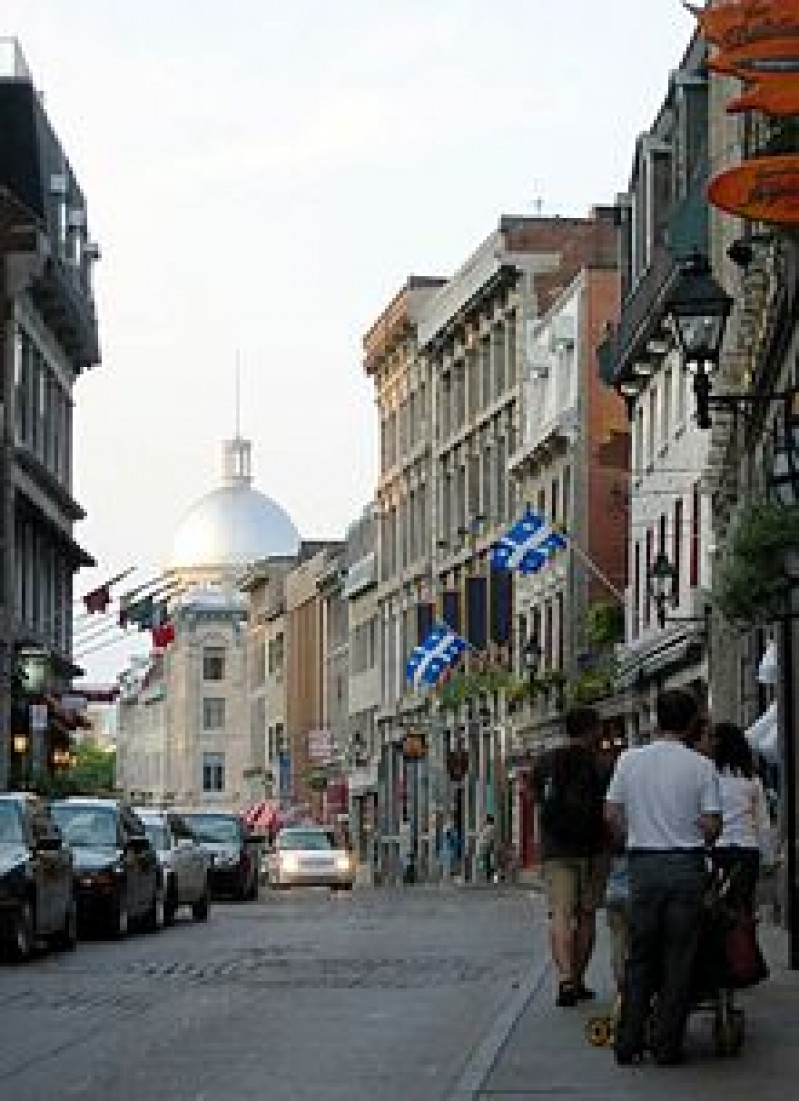
Rue St-Paul
Rue Saint-Paul (Saint Paul Street) is a street in the Old Montreal historic area of Montreal, Quebec. The street was laid out by François Dollier de Casson, along the route of a path that had bordered a former fort. Saint Paul is Montreal's oldest street and for many years served as its main thoroughfare. Paved in 1672, it was named after Paul de Chomedey de Maisonneuve, founder of Montreal, who built a home for himself on it in 1650. The street is home to such landmarks as the Bonsecours Market and Notre-Dame-de-Bon-Secours Chapel. Much of Saint Paul is still paved with cobblestones. Plans to pedestrianize the street in 2008 were dropped by the City of Montreal after complaints from merchants.
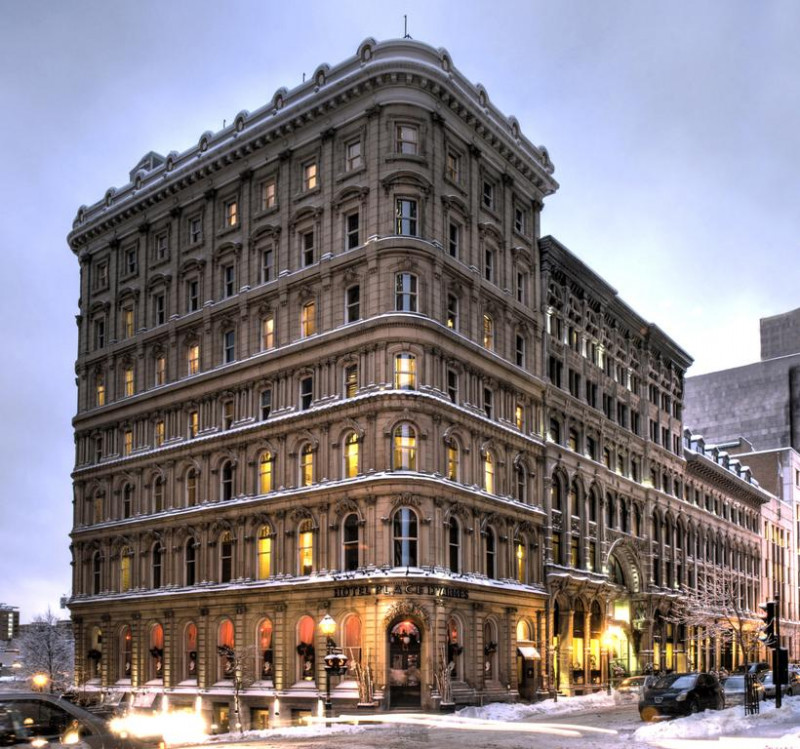
Place D'Armes
Place d'Armes is a square in Old Montreal quarter of Montreal, in Quebec, Canada. In the centre, there is a monument in memory of Paul de Chomedey, founder of Montreal. Buildings that surround it include Notre-Dame Basilica, Saint-Sulpice Seminary, New York Life Building, Aldred Building, Bank of Montreal head office and 500 Place D'Armes.
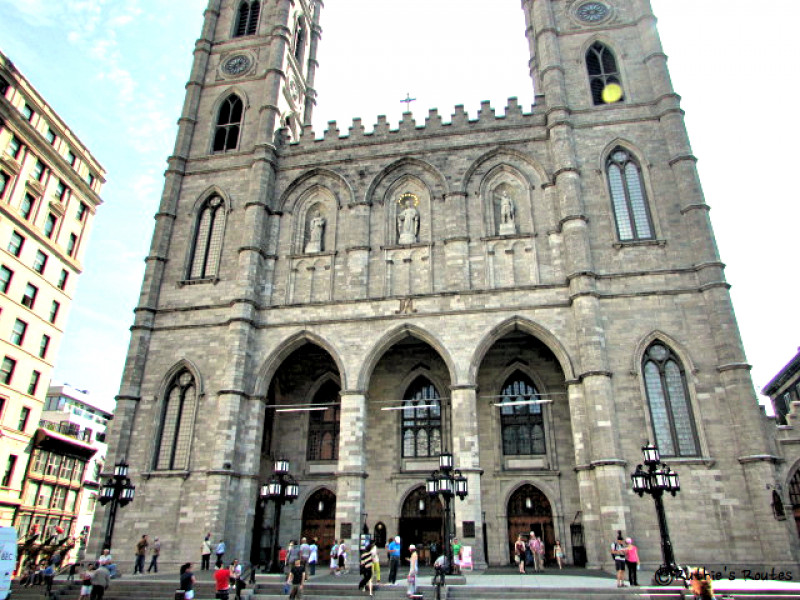
Notre-Dame Basilica of Montreal
Notre-Dame Basilica (French: Basilique Notre-Dame de Montréal) is a basilica in the historic district of Old Montreal, in Montreal, Quebec, Canada. The church is located at 110 Notre-Dame Street West, at the corner of Saint Sulpice Street. It is located next to the Saint-Sulpice Seminary and faces the Place d'Armes square. Built in the Gothic Revival style, the church is highly decorated. The vaults are coloured deep blue and decorated with golden stars, and the rest of the sanctuary is decorated in blues, azures, reds, purples, silver, and gold. It is filled with hundreds of intricate wooden carvings and several religious statues. Unusual for a church, the stained glass windows along the walls of the sanctuary do not depict biblical scenes, but rather scenes from the religious history of Montreal. It also has a Casavant Frères pipe organ, dated 1891, which comprises four keyboards, 92 stops using electropneumatic action and an adjustable combination system, 7000 individual pipes and a pedal board.
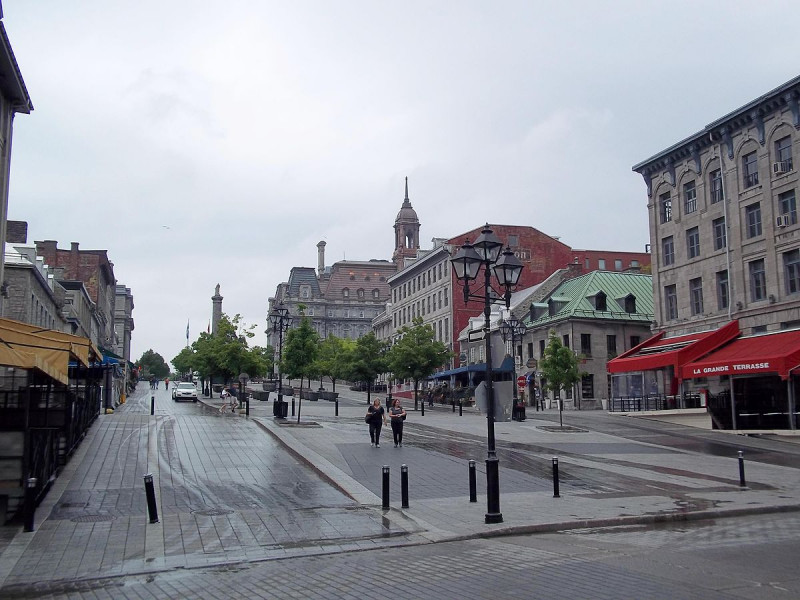
Place Jacques-Cartier
Place Jacques-Cartier (English: Jacques Cartier square) is a square located in Old Montreal, Quebec, Canada. It is an entrance to the Old Port of Montreal.
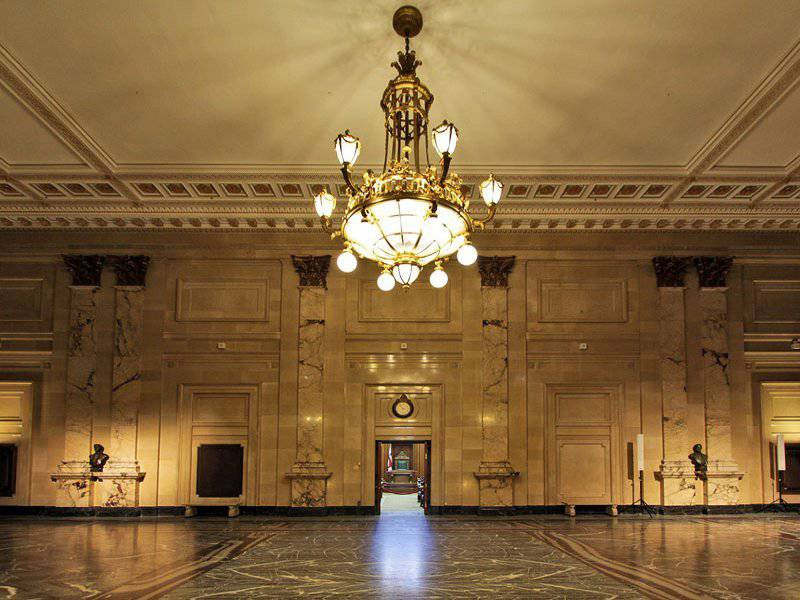
City Hall
The five-story Montreal City Hall (French: Hôtel de Ville de Montréal) is the seat of local government in Montreal, Quebec, Canada. It was designed by architects Henri-Maurice Perrault and Alexander Cowper Hutchison, and built between 1872 and 1878 in the Second Empire style. It is located in Old Montreal, between Place Jacques-Cartier and the Champ de Mars, at 275 Notre-Dame Street East. The closest Metro station is Champ-de-Mars, on the Orange Line. As one of the best examples of the Second Empire style in Canada, and the first city hall to have been constructed in the country solely for municipal administration, it was designated a National Historic Site of Canada in 1984.
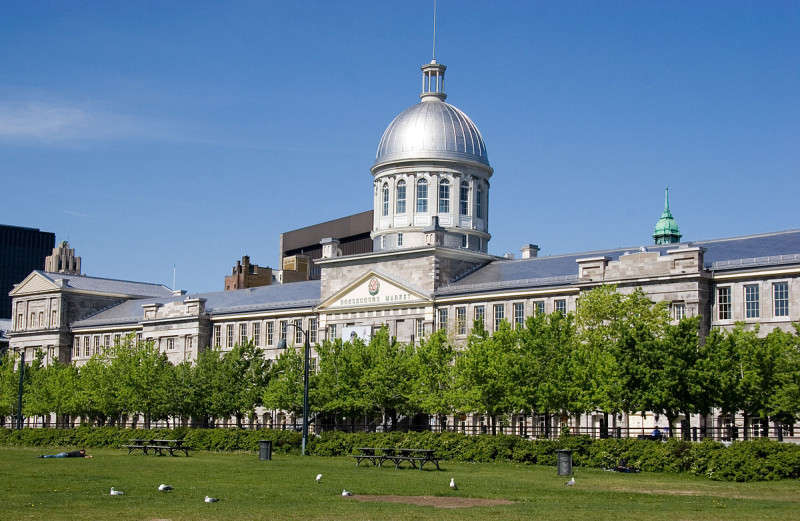
Bonsecours Market
Bonsecours Market (French: Marché Bonsecours), at 350 rue Saint-Paul in Old Montreal, is a two-story domed public market. For more than 100 years, it was the main public market in the Montreal area. It also briefly accommodated the Parliament of United Canada for one session in 1849. Named for the adjacent Notre-Dame-de-Bon-Secours Chapel, it opened in 1847. During 1849 the building was used for the Legislative Assembly of the Province of Canada. The market's design was influenced by Dublin's Customs House.
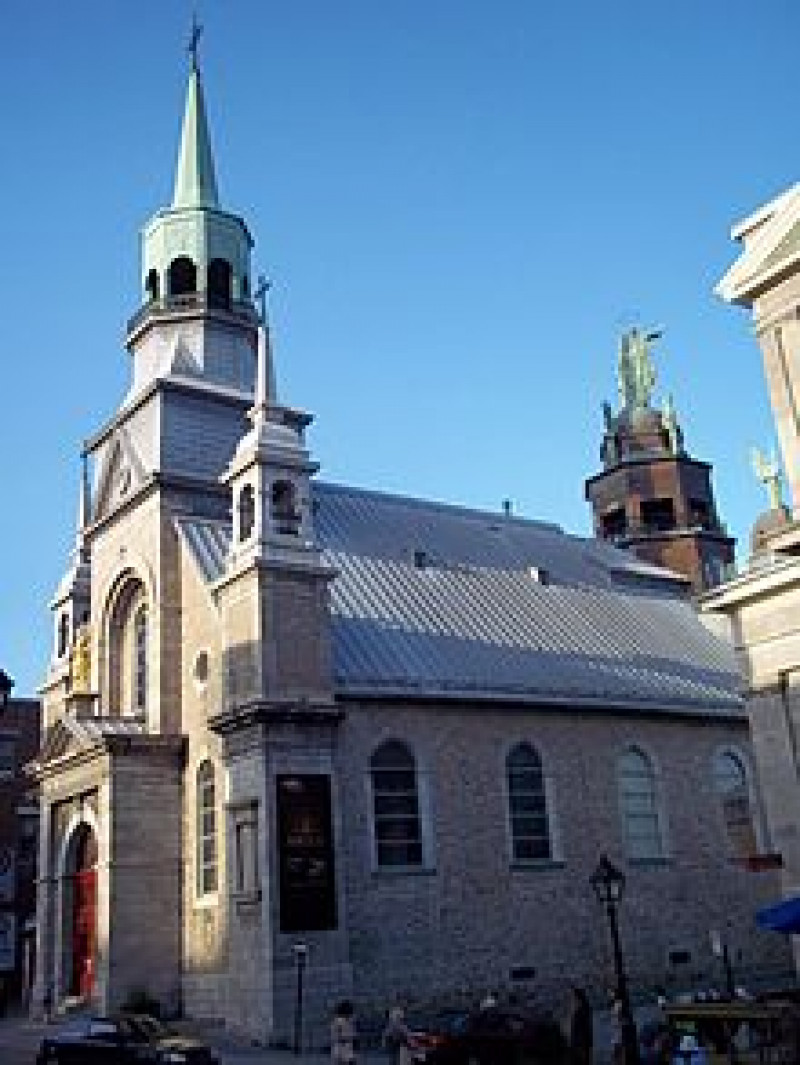
Notre-Dame-de-Bon-Secours Chapel
The Notre-Dame-de-Bon-Secours Chapel (chapelle Notre-Dame-de-Bon-Secours, "Our Lady of Good Help") is a church in the district of Old Montreal in Montreal, Quebec. One of the oldest churches in Montreal, it was built in 1771 over the ruins of an earlier chapel. The church is located at 400 Saint Paul Street East at Bonsecours Street, just north of the Bonsecours Market in the borough of Ville-Marie (Champ-de-Mars metro station).
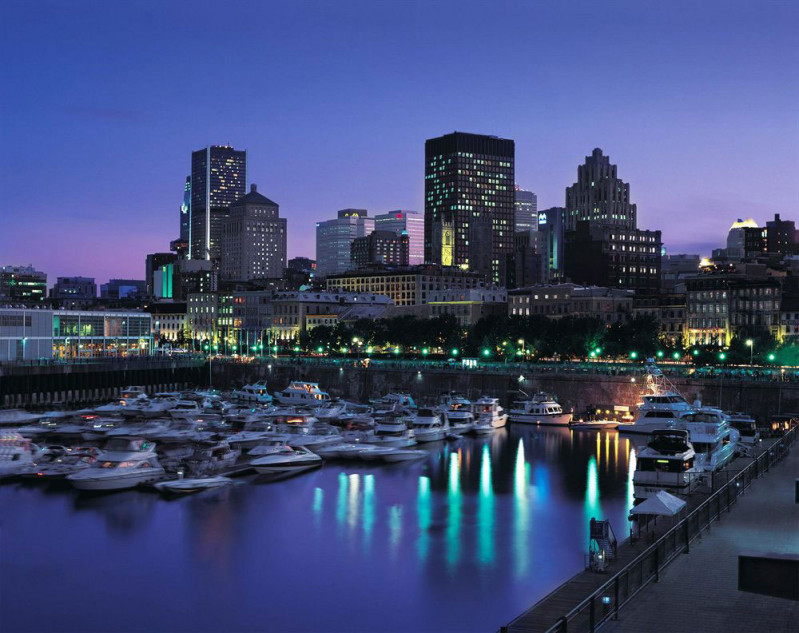
Old Port of Montreal
The Old Port of Montreal (French: Vieux-Port de Montréal) is the historic port of Montreal, Quebec, Canada. Located in Old Montreal, it stretches for over two kilometres along the St-Lawrence River in Old Montreal. It was used as early as 1611, when French fur traders used it as a trading post. In 1976, Montreal's Port activities were moved east to the present Port of Montreal in the borough of Mercier-Hochelaga-Maisonneuve. The Old Port was redeveloped in the early 1990s, under the direction of architects Aurèle Cardinal and Peter Rose. It is today a recreational and historical area and draws six million tourists annually.
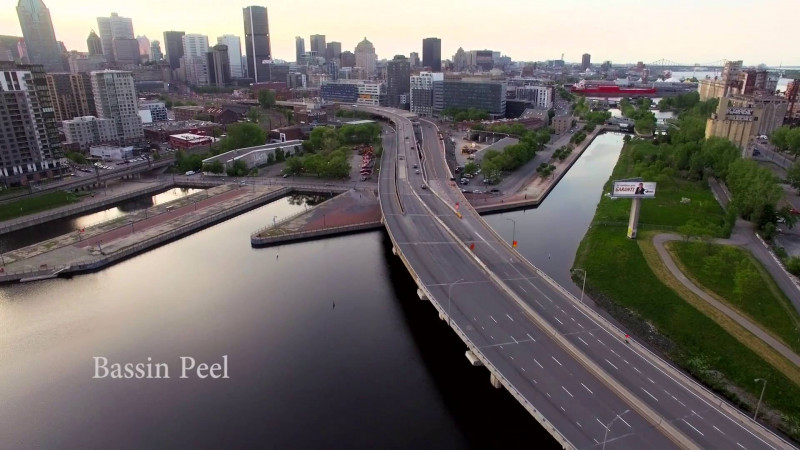
Peel Basin
Share on Pinterest
