- 6 sights
- 0 h 31 min
- 2.55 km / 1.59 mi
The City of London 1
The City of London 1

Anonymous user
published 1 year ago
Sights
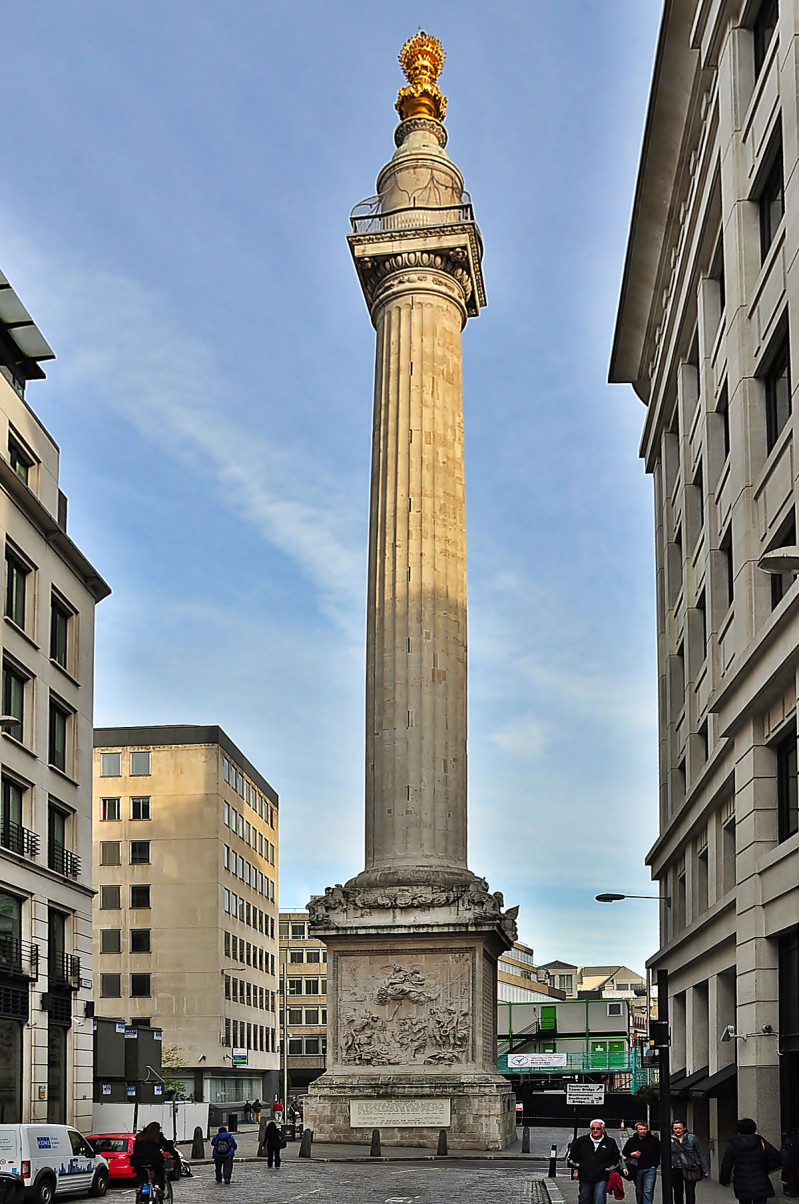
Monument to the Great Fire of London
The Monument to the Great Fire of London, more commonly known simply as the Monument, is a Doric column in the City of London, near the northern end of London Bridge, that commemorates the Great Fire of London. It stands at the junction of Monument Street and Fish Street Hill, 202 ft (62 m) tall and 202 ft (62 m) from the spot in Pudding Lane where the Great Fire started on 2 September 1666. Another monument, the Golden Boy of Pye Corner, marks the point near Smithfield where the fire was stopped. Constructed between 1671 and 1677, it was built on the site of St. Margaret's, Fish Street, the first church to be burnt down by the Great Fire. The Monument comprises a fluted Doric column built of Portland stone topped with a gilded urn of fire. It was designed by Christopher Wren and Robert Hooke. Its height marks its distance from the site of the shop of Thomas Farriner (or Farynor), the king's baker, where the Great Fire began. The viewing platform near the top of the Monument is reached by a narrow winding staircase of 311 steps. A mesh cage was added in the mid-19th century to prevent people jumping off, after six people had committed suicide there between 1788 and 1842. Three sides of the base carry inscriptions in Latin. The one on the south side describes actions taken by King Charles II following the fire. The one on the east describes how the Monument was started and brought to perfection, and under which mayors. Inscriptions on the north side describe how the fire started, how much damage it caused, and how it was eventually extinguished. The Latin words "Sed Furor Papisticus Qui Tamdiu Patravit Nondum Restingvitur" (but Popish frenzy, which wrought such horrors, is not yet quenched) were added to the end of the inscription on the orders of the Court of Aldermen in 1681 during the foment of the Popish Plot. Text on the east side originally falsely blamed Roman Catholics for the fire ("burning of this protestant city, begun and carried on by the treachery and malice of the popish faction"), which prompted Alexander Pope (himself a Catholic) to say of the area: The words blaming Catholics were chiselled out with Catholic Emancipation in 1830. The west side of the base displays a sculpture, by Caius Gabriel Cibber, in alto and bas relief, of the destruction of the City; with Charles II and his brother, James, the Duke of York (later James II), surrounded by liberty, architecture, and science, giving directions for its restoration. The nearest London Underground station is Monument. It is a Grade I listed building and a scheduled monument.
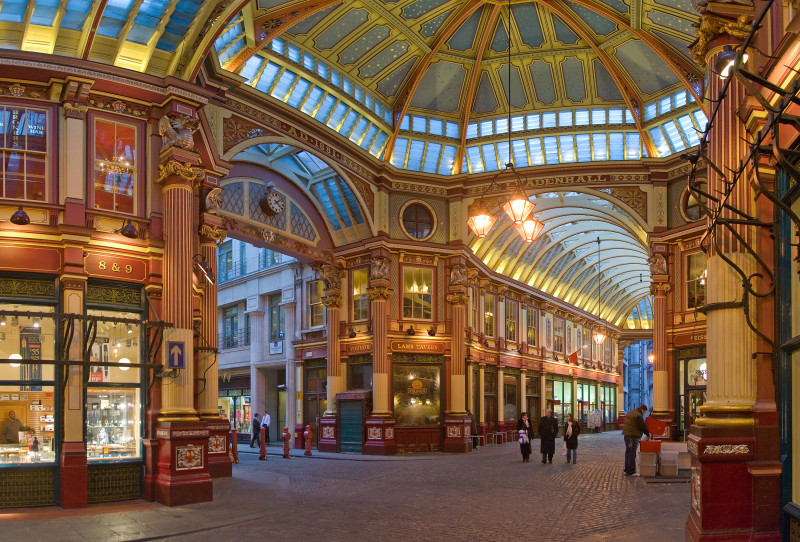
Leadenhall Market
Leadenhall Market is a covered market in London, located on Gracechurch Street but with vehicular access also available via Whittington Avenue to the north and Lime Street to the south and east, and additional pedestrian access via a number of narrow passageways. It is one of the oldest markets in London, dating from the 14th century, and is located in the historic centre of the City of London financial district.
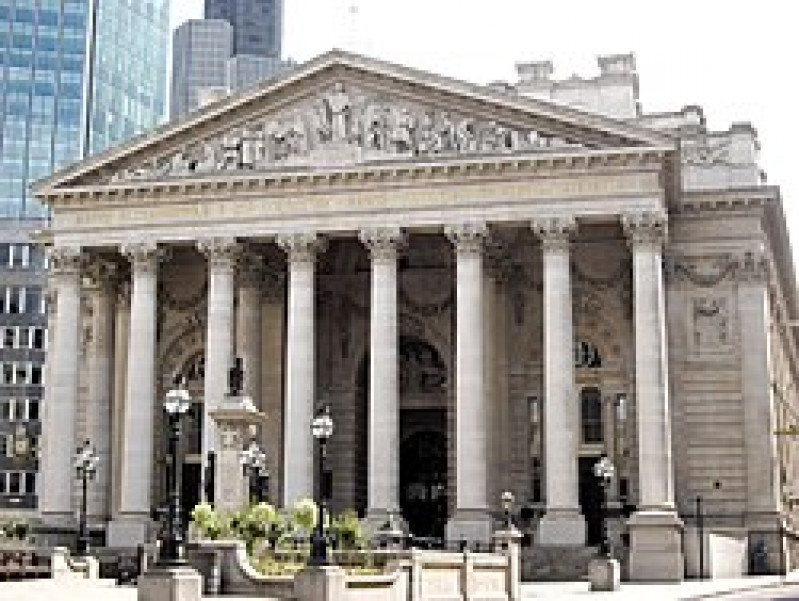
Royal Exchange
The Royal Exchange in London was founded in the 16th century by the merchant Thomas Gresham on the suggestion of his factor Richard Clough to act as a centre of commerce for the City of London. The site was provided by the City of London Corporation and the Worshipful Company of Mercers, who still jointly own the freehold. It is trapezoidal in shape and is flanked by Cornhill and Threadneedle Street, which converge at Bank junction in the heart of the City. The building's original design was inspired by a bourse Gresham had seen in Antwerp and was Britain's first specialist commercial building. It has twice been destroyed by fire and subsequently rebuilt. The present building was designed by William Tite in the 1840s. The site was notably occupied by the Lloyd's insurance market for nearly 150 years. Today the Royal Exchange contains a Courtyard Grand Cafe, Threadneedle Cocktail Bar, Sauterelle Restaurant, luxury shops, and offices (http://www.royalexchange-grandcafe.co.uk/). Traditionally, the steps of the Royal Exchange is the place where certain royal proclamations (such as the dissolution of parliament) are read out by either a herald or a crier. Following the death or abdication of a monarch and the confirmation of the next monarch's accession to the throne by the Accession Council, the Royal Exchange Building is one of the locations where a herald proclaims the new monarch's reign to the public.
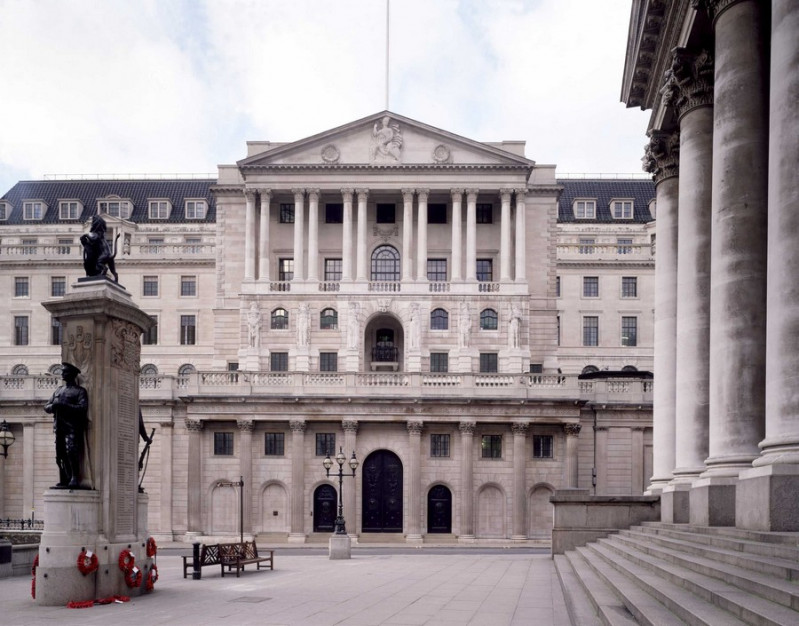
Bank of England
The Bank of England, formally the Governor and Company of the Bank of England, is the central bank of the United Kingdom and the model on which most modern central banks have been based. Established in 1694, it is the second oldest central bank in operation today, after the Sveriges Riksbank. The Bank of England is the world's 8th oldest bank. It was established to act as the English Government's banker and is still one of the bankers for the Government of the United Kingdom. The Bank was privately owned by stockholders from its foundation in 1694 until it was nationalised in 1946. In 1998, it became an independent public organization, wholly owned by the Treasury Solicitor on behalf of the government, with independence in setting monetary policy. The Bank is one of eight banks authorised to issue banknotes in the United Kingdom, but it has a monopoly on the issue of banknotes in England and Wales and regulates the issue of banknotes by commercial banks in Scotland and Northern Ireland. The Bank's Monetary Policy Committee has a devolved responsibility for managing monetary policy. The Treasury has reserve powers to give orders to the committee "if they are required in the public interest and by extreme economic circumstances", but such orders must be endorsed by Parliament within 28 days. The Bank's Financial Policy Committee held its first meeting in June 2011 as a macro prudential regulator to oversee regulation of the UK's financial sector. The Bank's headquarters have been in London's main financial district, the City of London, on Threadneedle Street, since 1734. It is sometimes known by the metonym The Old Lady of Threadneedle Street or The Old Lady, a name taken from the legend of Sarah Whitehead, whose ghost is said to haunt the Bank's garden. The busy road junction outside is known as Bank junction. As a regulator and central bank, the Bank of England has not offered consumer banking services for many years, but it still does manage some public-facing services such as exchanging superseded bank notes. Until 2016, the bank provided personal banking services as a popular privilege for employees.
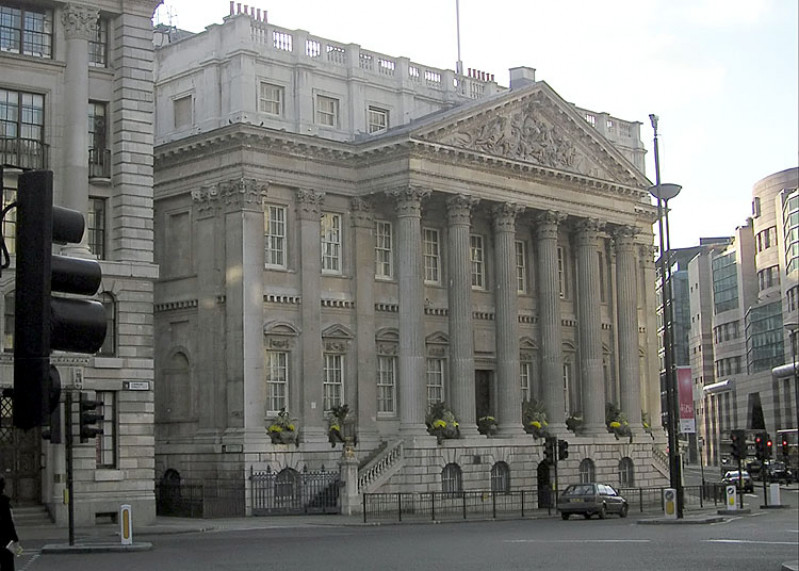
Mansion House
Mansion House is the official residence of the Lord Mayor of London. It is a Grade I listed building. It is used for some of the City of London's official functions, including two annual white tie dinners. At the Easter banquet, the main speaker is the Foreign Secretary, who then receives a reply from the Dean of the Diplomatic Corps who, as of December 2016, is the Ambassador of Kuwait in London. In early June, it is the turn of the Chancellor of the Exchequer to give his "Mansion House Speech" about the state of the British economy.
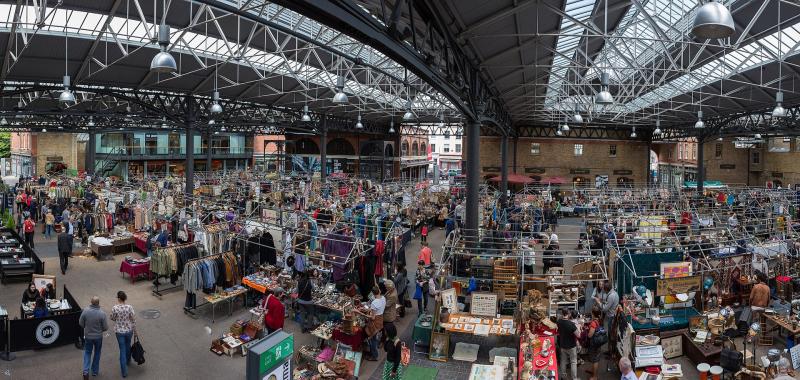
Photo: Diliff, CC BY-SA 3.0
Old Spitalfields Market
Share on Pinterest